
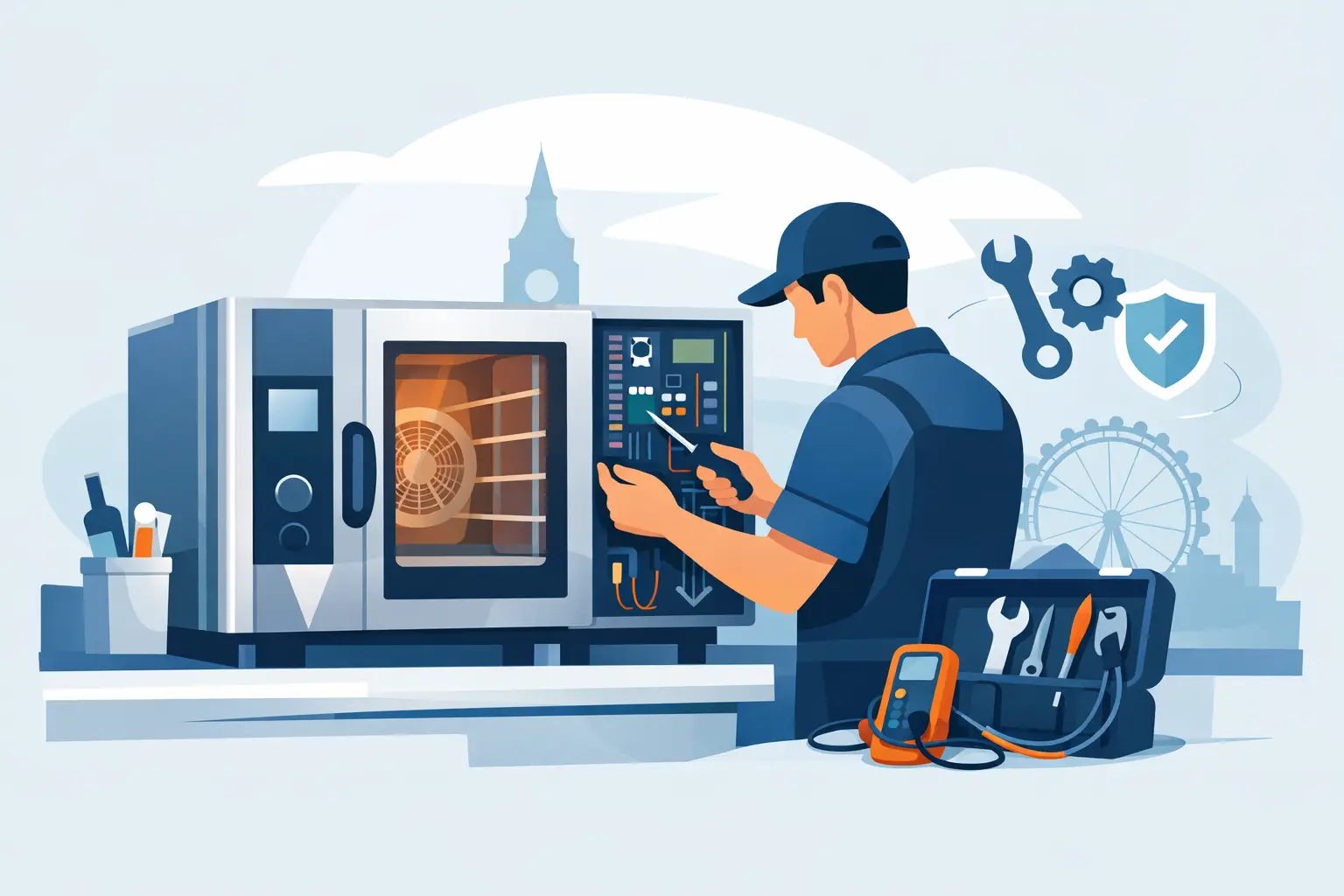
A Rational combi oven rarely fails without warning. More often, service issues show up first as longer heat-up times, patchy results between shelves, cleaning faults, error codes, steam problems or a door that no longer seals as it should. In a busy kitchen, those small changes quickly become lost covers, wasted labour and avoidable downtime. That is why Rational oven servicing UK is not just a maintenance task. It is a practical way to protect output, food quality and the working day.
A Rational oven sits at the centre of service in many professional kitchens. If it is not heating accurately, producing reliable steam or draining correctly, the impact spreads across prep, service timing and consistency. For restaurants, hotels, schools, care settings and contract caterers, one oven issue can affect a full shift.
Regular servicing reduces that risk. It helps catch wear before it becomes failure, keeps core components operating within tolerance and gives operators a clearer picture of what needs replacing now and what can wait. That matters whether you run one SelfCookingCenter or a larger estate of iCombi units across multiple sites.
The financial case is straightforward. Planned service visits usually cost far less than emergency callouts, cancelled bookings, spoiled product and staff standing around waiting for equipment to come back online. A well-maintained oven also tends to hold performance better over time, which matters when you are relying on speed, repeatability and energy control every day.
Not all service visits are equal. A basic inspection may identify obvious faults, but proper Rational oven servicing in the UK should go further than a quick visual check and a reset.
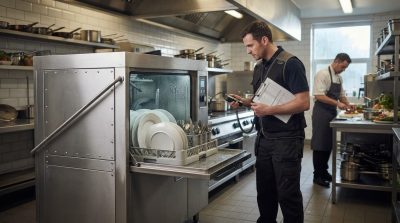
A competent engineer will usually assess heating performance, steam generation, drainage, door seals, fans, probes, controls, wash systems and safety functions. They should test the machine under operating conditions, not just power it on and confirm the display works. On petrol models, petrol safety checks are also part of doing the job properly.
Descaling, cleaning-related checks and water quality assessment are often just as important as electrical or mechanical testing. Limescale is a common cause of reduced performance, particularly in hard water areas. Left alone, it can affect steam production, efficiency and component life. The same applies to blocked drains, worn gaskets and neglected filters – each issue may look minor on its own, but together they shorten the service life of an expensive oven.
A good service visit should also leave you with clear feedback. If parts are wearing, you need to know whether replacement is urgent, advisable at the next service or simply something to monitor. Commercial kitchens do not need vague advice. They need usable information that supports budgeting and planning.
Many operators only call an engineer once the oven stops working. That is understandable when budgets are tight, but it is not always the cheapest route.
Reactive repair means you are paying at the point of failure, often with pressure on parts availability, engineer response times and service continuity. If the oven fails on a Friday before a busy weekend, the true cost is not just the invoice. It is the disruption around it.
Planned servicing shifts the balance back in your favour. It gives engineers the chance to spot failing components early, schedule replacement at a workable time and keep the oven performing consistently. That does not mean every site needs the same service interval. A high-volume site running all day will need more attention than a lower-use kitchen. Usage, water conditions, menu type and cleaning standards all affect how often a Rational should be serviced.
For some kitchens, an annual service is enough. For others, especially sites with heavy daily use, a more frequent schedule makes commercial sense. The right answer depends on workload, not guesswork.
Specialist knowledge matters with Rational equipment. These ovens are sophisticated commercial machines with integrated cooking intelligence, wash systems, sensors and model-specific parts. General catering engineers can be useful for some tasks, but not every provider has the depth of experience needed to diagnose a Rational fault properly.
When comparing service support, look at more than headline callout rates. Ask whether the provider regularly works on Rational ovens, whether they understand both older and newer model ranges, and whether they can supply appropriate parts without delay. Response time matters, but first-time fix rate matters as well.
It is also worth checking whether the same supplier can support the wider kitchen. Many operators would rather deal with one credible specialist who understands ovens, warewashing, refrigeration and petrol work than manage several separate contractors. That becomes even more useful when you are running multiple items of frontline equipment and need support to be joined up rather than fragmented.
A specialist supplier with engineering capability is often in the best position to help because they understand both the machine and the buying decision behind it. If an oven is uneconomical to repair, they can advise on whether refurbishment, replacement or an interim solution makes better sense.
Performance issues are often gradual, which is why they are easy to ignore. The warning signs tend to be operational rather than dramatic.
If cooking times start drifting, if one shelf behaves differently from another, or if the oven struggles to hold consistent humidity, that points to a problem worth investigating. Error codes obviously need attention, but so do less obvious symptoms such as excess noise from fans, poor door closure, water leaks, failed cleaning cycles or unexplained spikes in energy use.
Kitchen teams also notice behavioural changes before managers do. If chefs are adjusting programmes more often than usual to get the same result, or if they stop trusting the oven for certain jobs, servicing is probably overdue. Equipment does not need to be completely down to be costing you money.
Used Rational ovens can offer excellent value, but only if they have been refurbished properly and supported correctly afterwards. A professionally restored unit should be inspected, tested and brought back to a reliable operating standard by technicians who know the equipment inside out.
That makes aftersales servicing especially important. A refurbished oven can perform exceptionally well, but like any hard-working commercial appliance, it still needs maintenance based on how it is used. Buyers should be wary of low prices without technical backup. The purchase price is only one part of the equation. Ongoing reliability is what determines value over the longer term.
This is where a specialist supplier stands apart from a general reseller. If the same business understands refurbishment, parts, diagnostics and field service, support tends to be faster and more practical. Island Catering Equipment Co. works in that space, supplying Rational ovens and supporting commercial kitchens with servicing, callouts and technical aftercare.
There is a tendency to view servicing as a fixed overhead, but in practice it is a cost-control tool. A Rational oven that heats correctly, seals properly and produces steam efficiently works faster and more consistently. That supports portion control, reduces remakes and helps teams hit service times without overcompensating.
It can also extend asset life. For buyers balancing capital expenditure against operating pressure, getting more productive years from a premium oven is a serious advantage. The trade-off is simple: small planned costs now, or larger unplanned costs later.
That said, there is a point where repeated repairs stop being sensible. If an ageing unit needs major parts repeatedly, replacement may be the better commercial decision. In those cases, the best service partner is the one that gives honest advice rather than pushing another repair regardless of value.
A little preparation helps speed up diagnosis. Record the model and serial number, note any error codes, and write down exactly what the oven is doing wrong. If the issue appears only during certain programmes or at certain times of day, that detail is useful.
It also helps to be clear about recent changes. New water treatment issues, cleaning chemical changes, interrupted wash cycles or recent power problems can all affect performance. The more precise the information, the faster an engineer can narrow down the likely cause.
If your kitchen runs multiple Rational ovens, identify whether the fault is isolated or appearing across more than one unit. Patterns matter. A single-machine problem suggests one path. A site-wide issue may point to water, drainage, electrical supply or operating practice.
Reliable equipment support is not about waiting for a major breakdown and hoping for a quick fix. It is about keeping a critical piece of kitchen kit working as it should, shift after shift, with fewer surprises and better control over cost. If your Rational oven is central to service, treat servicing as part of production, not an optional extra.

No account yet?
Create an Account