


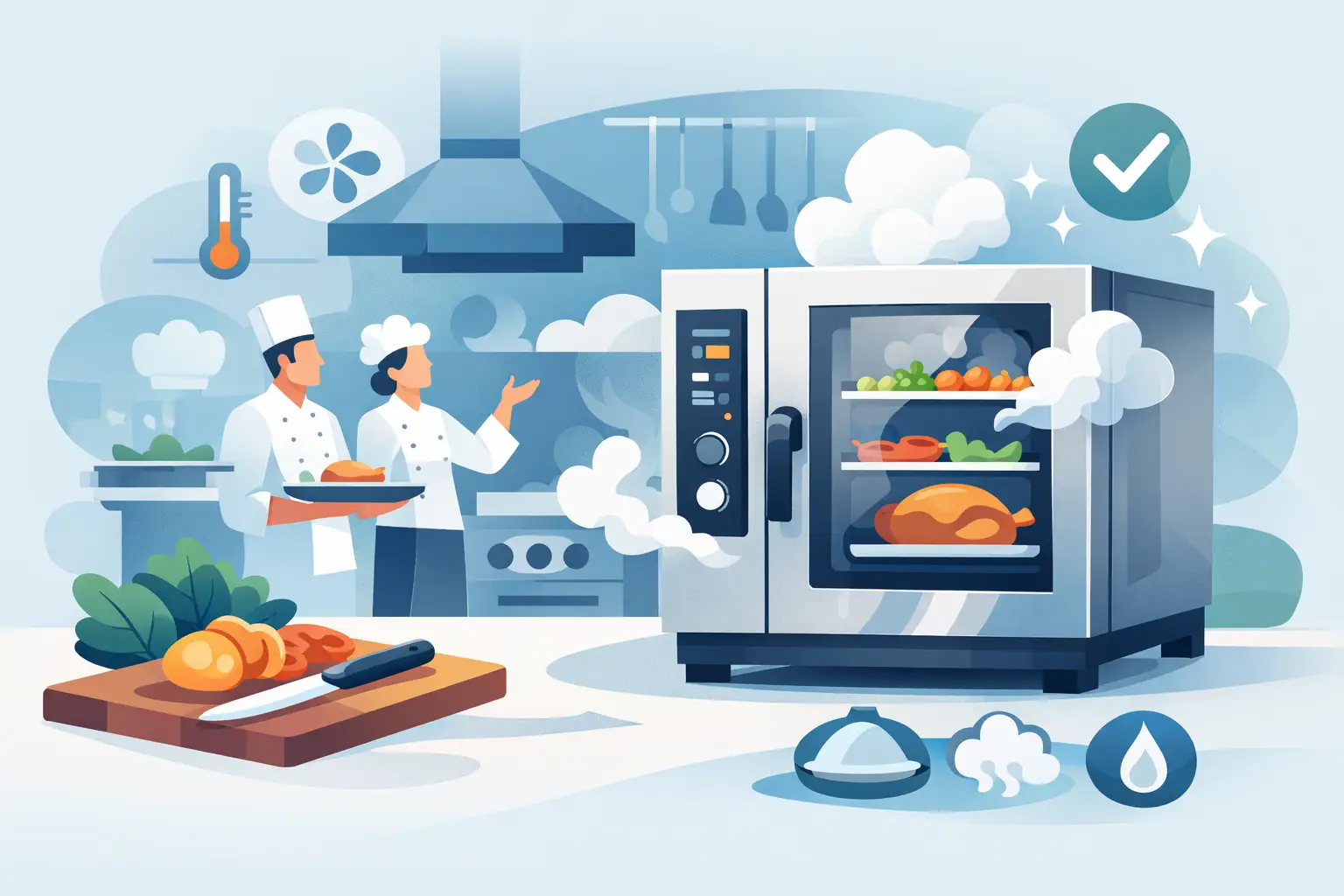
The lunchtime rush exposes every weak point in a commercial kitchen. If service slows, quality slips, or different sections struggle to stay in sync, the issue is often not staffing alone – it is equipment capability. That is why the benefits of combi ovens matter so much for professional operators. A well-specified combi oven can increase output, improve consistency, reduce waste and make better use of labour, all while giving the kitchen more control over busy services.
For many sites, a combi oven is not simply another piece of cooking equipment. It becomes the backbone of production. Restaurants use them to manage à la carte pressure, hotels rely on them for breakfast through to banqueting, and schools, care homes and contract caterers depend on them for volume cooking with repeatable results. The real value comes from how many jobs one machine can do well, and how reliably it can do them day after day.
A combi oven combines dry heat, steam and a mix of both in one cabinet. That gives chefs and kitchen managers far more control than they get from a standard convection oven. You can roast, bake, steam, regenerate, poach and finish products in the same unit, often with better results and less manual intervention.
That flexibility matters commercially. Space is expensive, labour is tight, and every item on the menu needs to be produced consistently. A combi oven helps solve all three problems at once. Instead of relying on several separate appliances and more hands-on oversight, one machine can cover a large part of the cooking process with accurate, programmable control.
Consistency is one of the strongest reasons operators invest in combi ovens. In a busy kitchen, food quality cannot depend on who is on shift. Whether you are serving fifty covers or five hundred, the standard has to hold.
Combi ovens help by controlling temperature and humidity far more precisely than traditional ovens. Proteins can be cooked evenly without drying out, vegetables retain better texture, and baked products have more predictable colour and finish. In sites with multiple staff members using the same equipment, programmed cooking cycles reduce guesswork and help maintain standards across the week.
This is especially useful for group operations, schools, care settings and hotels where menu repetition is common and variation causes complaints. The more repeatable the process, the easier it is to protect margins and service quality.
Speed matters, but not if it comes at the expense of the plate. One of the key benefits of combi ovens is that they can shorten cooking times while still producing a reliable finish. Steam speeds up heat transfer, and combination cooking can bring products through more quickly than dry heat alone.
In practical terms, that means shorter waits during service and better throughput during prep. A kitchen can move from steaming vegetables to roasting meat to regenerating plated meals without changing stations or relying on multiple pieces of equipment. For operators running breakfast, lunch and dinner with tight turnarounds, that flexibility can make a clear difference.
It does depend on product mix. Some items still benefit from specialist equipment, and high-volume frying or chargrilling will always need the right dedicated setup. But for a large share of commercial cooking, a combi oven reduces bottlenecks and keeps production moving.
Most professional kitchens are trying to do more with fewer people. Equipment that cuts supervision time is no longer a luxury. It is part of maintaining service.
Combi ovens support this by automating much of the cooking process. Programmed settings, core temperature probes and self-cleaning functions reduce the need for constant checking, turning and adjustment. Staff can load, select the correct programme and focus on other jobs while the oven handles the cooking environment.
That does not remove the need for skilled chefs, but it does make the brigade more efficient. It also helps less experienced staff produce dependable results, which is valuable in sectors with high turnover or a mixed-skill team.
Food cost control is often where the return on investment becomes obvious. Because combi ovens manage moisture more effectively, products lose less weight during cooking. Meat can stay juicier, fish is easier to handle, and vegetables are less likely to overcook.
Better yield means more portions from the same raw product. Over time, that can make a meaningful difference, particularly for sites cooking high volumes of proteins. Reduced scorching, shrinkage and overproduction also help cut waste.
Regeneration is another advantage. Many kitchens use combi ovens to reheat prepared food without drying it out, which supports batch cooking and cook-chill systems. That allows better planning and can reduce the number of dishes discarded because quality has dropped before service.
Kitchen space is always under pressure. If one machine can replace or reduce reliance on several others, the operational benefit is obvious. A combi oven can often take on jobs that would otherwise require a steamer, convection oven and some reheating equipment.
That does not mean every site can eliminate all specialist appliances. A bakery, for example, may still need dedicated baking equipment for certain lines. But many kitchens can simplify their layout and make better use of floor space with a combi oven at the centre of production.
For refits and new kitchen projects, this can improve workflow as well as capacity. Fewer separate cooking stations can mean shorter movement paths, easier cleaning and a more efficient pass during peak periods.
Running costs matter just as much as purchase price. Modern combi ovens are designed to use heat and steam efficiently, which can help reduce energy consumption compared with operating several standalone appliances.
The saving will vary by model, usage pattern and kitchen discipline. An older unit that is poorly maintained will not perform like a newer, well-specified machine. That is why condition, servicing history and installation quality should all be part of the buying decision.
For operators comparing new and refurbished equipment, this is where specialist advice is important. A professionally restored oven that has been tested properly can offer strong value, especially when capital budget is tight, but the specification still needs to match actual demand.
A combi oven gives chefs more room to add dishes without immediately expanding the battery. Steaming delicate fish, roasting joints, baking traybakes and regenerating plated meals can all happen in one piece of equipment, provided the oven is sized correctly and production is planned properly.
That flexibility helps sites respond to changing trade. A pub adding more food, a hotel increasing events business, or a care facility updating menus for dietary needs can broaden output without rebuilding the kitchen from scratch. It is also useful for seasonal pressure, where demand spikes but space and labour do not.
The trade-off is that the oven has to be chosen with enough capacity and the right feature set. Buying too small can create a fresh bottleneck. Buying beyond your actual requirement ties up capital unnecessarily.
Cleaning time is expensive, and poor cleaning shortens equipment life. Most quality combi ovens offer automated cleaning systems that make daily care more straightforward and more consistent. That helps maintain hygiene standards and reduces the burden on staff at the end of service.
Maintenance also becomes easier when the machine is supported properly. For commercial buyers, this is often overlooked during purchase. The oven itself matters, but so do spare parts, technical support and engineer availability. Downtime on a core cooking appliance can disrupt the whole kitchen.
That is why many operators prefer to buy through a specialist rather than a general reseller. Access to servicing, repairs and informed technical guidance protects the investment after delivery, not just on the day of sale.
Not every business needs to buy new. For many kitchens, a refurbished premium combi oven is the sensible commercial option. The key is refurbishment quality. An oven restored by trained technicians, tested properly and supplied by a specialist can deliver the same operational advantages at a lower upfront cost.
That route is particularly attractive for independent restaurants, pubs, start-ups and expanding operators who want proven Rational performance without the full capital outlay of a brand-new unit. Businesses with larger budgets may still prefer new models for the latest controls, warranty cover and site standardisation.
Either way, the decision should come down to output, menu, budget and support. A cheap oven is not good value if it creates downtime or inconsistent cooking. A premium oven is not automatically the right answer if it is oversized for the operation.
For buyers weighing the numbers carefully, working with a specialist supplier such as Island Catering Equipment Co. makes the process more straightforward because stock, technical advice, refurbishment standards and aftersales support sit in one place.
A combi oven earns its place when it solves real operational problems. If your kitchen needs more consistency, better throughput and tighter control over labour and food cost, it is worth looking closely at where your current setup is slowing you down – and whether one machine could carry far more of the load.





No account yet?
Create an Account