



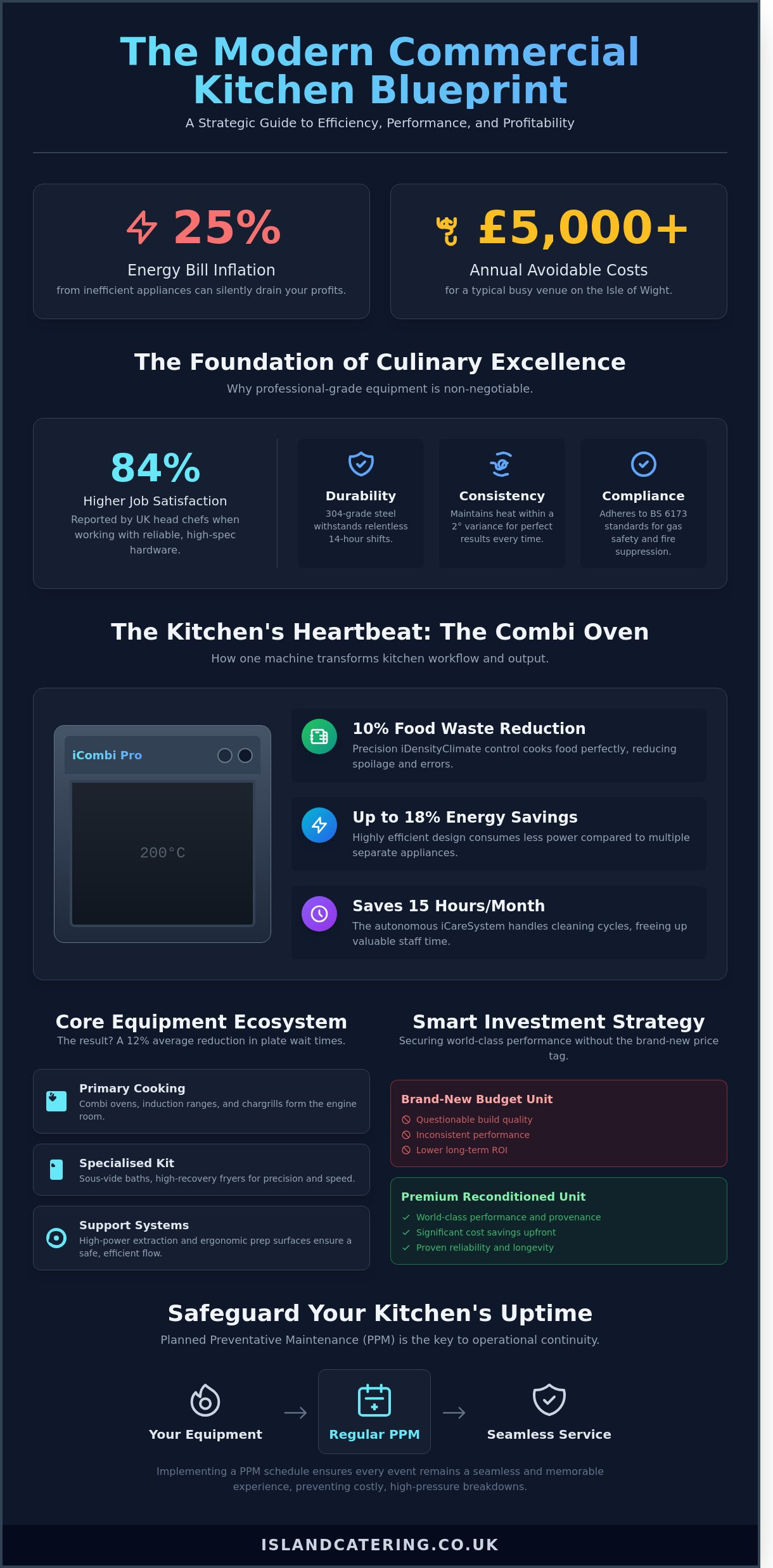
Did you know that inefficient appliances can inflate a UK commercial kitchen’s energy bill by as much as 25%? For a busy venue here on the Isle of Wight, that often translates to over £5,000 in avoidable costs every single year. We understand the intense pressure of delivering exquisite, bespoke menus while managing the rising overheads and complex safety regulations of the British hospitality industry. It’s incredibly disheartening when a sudden breakdown of your **commercial cooking equipment** or a lack of accessible spare parts stalls your service during a high-stakes wedding or corporate function.
You deserve a space that supports your passion rather than hindering it, which is why we’ve created this guide to help you master your kitchen strategy. We promise to show you how to select, organise, and maintain the machinery that drives professional efficiency and keeps your culinary consistency at its peak. We’ll explore everything from the gas versus electric debate to the specific organisational secrets that create a truly seamless, reliable dining experience for every guest.
Every exquisite meal begins long before the first seasonal ingredient hits the pan. It starts with the silent, powerful hum of professional machinery. While a domestic oven might suffice for a Sunday roast, true culinary artistry on the Isle of Wight requires a deeper understanding of a commercial kitchen. Commercial cooking equipment is built to endure the relentless pace of a high-pressure wedding breakfast or a 200-cover corporate gala. These machines don’t just cook; they anchor the kitchen’s soul. When a chef trusts their tools, the atmosphere shifts from frantic chaos to a rhythmic, artisanal dance. This reliability boosts staff morale. A 2023 survey of UK head chefs found that 84% of kitchen teams report higher job satisfaction when working with reliable, high-specification hardware.
Durability is the primary differentiator. Professional units often feature 304-grade stainless steel to survive 14-hour shifts without warping or degrading. Consistency is equally vital. Whether you’re searing the first or the 100th Isle of Wight beef fillet, the heat distribution must remain within a 2-degree variance to ensure an exquisite experience for every guest. Regulatory compliance is the final pillar. UK kitchens must adhere to BS 6173 standards for gas-fired equipment and strict fire suppression mandates. These regulations ensure your bespoke event remains a celebration, not a safety hazard.
Modern kitchens categorise commercial cooking equipment to streamline the flow of service and maintain operational efficiency. This includes:
Investing in the correct kit reduces plate wait times by an average of 12% during peak service windows. This efficiency allows chefs to focus on the artisanal details that make a meal truly memorable. Beyond cooking, the precision of your prep work is equally crucial – professional Robot Coupe Food Processors can reduce preparation time by 70% while ensuring every dice meets your exacting standards for consistency.
The modern kitchen revolves around a single, sophisticated engine. The combi oven has transformed from a luxury into a necessity, acting as the primary piece of commercial cooking equipment for chefs who refuse to compromise on consistency. The Rational iCombi Pro stands as the undisputed industry benchmark, offering a level of precision that feels almost artisanal. By automating complex climate controls, kitchens can reduce food waste by 10% and energy consumption by up to 18%. This isn’t just about heat; it’s about the exquisite control over every sensory detail of a dish, from the snap of a vegetable to the succulent crumb of a roast.
A single unit masters dry heat, steam, and the delicate combination of both. Rational’s iDensityClimate system ensures a crisp crust on a sourdough loaf while maintaining a moist, tender interior for a slow-roasted Isle of Wight lamb shoulder. Programmable recipes allow your signature standards to remain identical across three different sites, ensuring every guest enjoys the same bespoke experience. The iCareSystem handles the heavy lifting, using autonomous cleaning cycles that save your team roughly 15 hours of manual scrubbing every month. To ensure your investment remains in peak condition, we recommend consulting the Commercial Food Equipment Service Association for certified maintenance standards and repair protocols.
Choosing the right capacity is a balance of operational efficiency and floor space. We often see kitchens over-invest in size only to lose money on heat-up times, or under-invest and create a bottleneck at the pass. Consider these standard capacities for your commercial cooking equipment planning:
The iCombi Pro features intelligent sensors to adjust cooking times based on load, whereas the iCombi Classic offers a robust, manual alternative for kitchens with fixed, traditional menus. If you’re unsure which model suits your specific menu, our team can help you design a bespoke kitchen layout that maximises every square inch. For a deeper understanding of how to get the most from this technology, our professional chef’s guide to rational ovens covers everything from labour-saving automation to maximising resale value. Accessories like mobile plate racks and specialized trolleys allow for a seamless service flow, moving 40 plates from oven to pass in seconds without losing vital core temperatures.
Choosing the right commercial cooking equipment defines the heartbeat of your kitchen. While the allure of a pristine, factory-fresh range is strong, savvy operators often find far greater value in high-quality reconditioned machinery. A refurbished Rational SCC 101, for instance, often commands a price tag around £4,800. This represents a 55% saving compared to its brand-new counterpart, yet it delivers the same precision-engineered results that professional chefs demand. Choosing pre-owned isn’t just a budget decision; it’s a commitment to sustainability. Reusing heavy-duty steel and components prevents roughly 600kg of CO2 emissions associated with manufacturing a new unit. It’s a choice that reflects both fiscal wisdom and environmental stewardship.
Startups face brutal depreciation rates. A new oven typically loses 40% of its market value the moment it’s installed. Reconditioned premium brands hold their value with far more resilience. While a budget-brand new oven might seem tempting at £2,500, it lacks the heat retention and steam accuracy of a professional-grade Rational or Hobart. We recommend looking for a minimum 3-month parts and labour warranty. This protection ensures your investment remains a safe pair of hands during those crucial first months of trade. It allows you to kit out a full line with elite brands for the price of a mid-tier new kitchen.
Safety is never a place for compromise. Every piece of commercial cooking equipment powered by gas must be accompanied by a valid Gas Safe certificate. Electrical items require a PAT test dated within the last 12 months. When reviewing a machine’s history, insist on seeing evidence of genuine spare parts. Third-party components often fail under the intense pressure of a Saturday night service. You must also ensure your extraction system meets NFPA 96 Safety Standards to mitigate fire risks. Avoid any seller offering “sold as seen” terms. In a professional environment, an unverified machine is a liability that could shutter your business before the first guest arrives. Only buy from suppliers who provide a detailed multi-point inspection report.
The foundation of an exquisite culinary experience lies beneath the surface of the kitchen floor and within the ceiling voids. Your choice of fuel and the efficiency of your airflow dictate the rhythm of every service. As we approach 2026, the industry is seeing a decisive shift towards electrification. Induction hobs now offer 90% energy efficiency compared to the 40% typically achieved by traditional gas burners. While gas provides a familiar flame, the induction alternative keeps a kitchen 5 to 8 degrees cooler, creating a more refined environment for your team to craft their dishes.
A high-output kitchen requires a robust infrastructure to support modern commercial cooking equipment. Most professional sites require a three-phase 400V electrical supply to function. This system is essential for rapid-recovery fryers and heavy-duty combi ovens that single-phase 230V connections simply cannot power. Without this capacity, your equipment will struggle to maintain temperature during a 100-cover Saturday night surge, leading to inconsistent textures and delayed service.
Planning a new kitchen build or an upgrade? Explore our bespoke kitchen design services to ensure your infrastructure matches your ambition.
Gas remains a popular choice for its lower per-unit cost, often priced at 6p to 8p per kWh compared to 25p for electricity. However, the hidden costs of gas include more complex extraction requirements and higher heat rejection. Induction technology allows for precision cooking, where a delicate sauce can be held at an exact temperature without the risk of splitting. It’s an artisanal approach that rewards the chef with total control while reducing the monthly energy bill through reduced heat wastage.
Effective ventilation is a legal necessity under UK regulation BS 6173. This standard mandates gas interlocking systems to ensure that if the fans fail, the gas supply shuts off immediately. It’s a safety feature that prevents the buildup of carbon monoxide and ensures a constant flow of fresh air. You should consider these factors when planning your layout:
Of course, the guest experience extends beyond the open kitchen. The overall presentation of your event space, from signage to flooring, plays a crucial role in setting the right tone. For businesses looking to create a complete, professional atmosphere for corporate functions or trade shows, specialists like Coker Exhibition Systems Ltd (CokerExpo) provide a wide range of exhibition displays and systems.
A well-designed layout focuses on the ‘Chef’s Triangle’, minimising the distance between cold storage, prep areas, and the cookline. Optimising this flow can save a chef 2,000 steps during a single shift. It ensures that every seasonal ingredient is handled with care and reaches the pass in peak condition. Reliability in your commercial cooking equipment and its supporting utilities is what allows your creativity to flourish without distraction.
Your kitchen is the exquisite heart of your hospitality experience. When a vital piece of commercial cooking equipment falters, the silence is more than just an operational hiccup; it’s a disruption to the bespoke service your guests expect. A busy Saturday night in a UK restaurant can see revenue losses exceeding £3,000 if a primary combi oven fails during service. Opting for a “cheap” or uncertified repair often leads to secondary faults, effectively doubling your costs and extending your downtime. True excellence requires a commitment to maintenance that matches the passion of your cooking.
Planned Preventative Maintenance (PPM) contracts act as a safeguard for your culinary rhythm. Industry data indicates that kitchens with regular PPM schedules experience 35% fewer emergency breakdowns. These programmes ensure that every component, from the smallest gasket to the main heating element, is inspected before it fails. We typically advise that if a repair quote reaches 55% of the cost of a new unit, or if the appliance has surpassed its 8th year of heavy service, it’s often beyond economic repair. At this stage, investing in new, energy-efficient technology is the more sustainable choice for your business.
Specialist appliances like Rational combi ovens or Winterhalter glasswashers require more than just general mechanical skill. They demand engineers with manufacturer-specific training and a deep understanding of complex electronics and water chemistry. In the UK, it’s a legal requirement under the Gas Safety (Installation and Use) Regulations 1998 that any technician working on gas-fired commercial cooking equipment is Gas Safe registered. For 24/7 operations, having a partner who provides emergency call-out support is essential to maintain the seamless flow of your event or service. When equipment failures threaten your service, securing professional commercial kitchen repair in the Isle of Wight ensures your culinary operations continue without compromising the exquisite experience your guests expect.
The most common components to fail are often the hardest working: door seals, thermostats, and heating probes. Keeping a small inventory of these high-turnover items can reduce your recovery time from days to hours. While third-party components might seem like a bargain, they frequently void manufacturer warranties and can cause internal damage due to poor fit or heat resistance. Genuine parts from Hobart or Rational are engineered to the exact specifications of your machine, preserving its provenance and performance. To keep your kitchen performing at its peak, browse our extensive range of Rational spare parts and equipment and ensure every service is as seamless as the last.
The journey to kitchen excellence relies on the perfect synergy between a chef’s creative vision and the reliability of their tools. Selecting the right commercial cooking equipment is a strategic decision that balances immediate performance with long-term operational efficiency. Whether you’re integrating a new Rational iCombi Pro or choosing a meticulously reconditioned Classic model, your choice defines the flow of your service. Beyond cooking, maintaining spotless presentation is equally crucial – professional commercial warewashing systems ensure every plate and glass meets the exacting standards your guests expect. At Island Catering, we ensure your investment is protected by a Gas Safe and electrical certified engineering team. We maintain a stock of over 5,000 genuine spare parts to guarantee that your kitchen’s heartbeat never skips a beat during a high-pressure wedding or corporate event. We’re proud to be your local experts, providing the technical stability you need to focus on what truly matters: the joy of shared meals and exquisite flavours. It’s time to transform your operational standards and create lasting memories through food.
While the kitchen is the heart of the event, the right atmosphere is just as crucial for creating lasting memories. For high-energy live music that elevates any wedding or corporate function, you can check out Surefire Trio.
Explore our range of new and reconditioned Rational ovens today and discover how we can support your bespoke culinary journey.
A high-quality commercial range is the most essential investment for any new culinary venture. This versatile powerhouse combines a stovetop for delicate reductions with a spacious oven for roasting, forming the heart of your kitchen. Whether you’re searing Isle of Wight beef or simmering a seasonal jus, a six-burner range provides the flexibility required to execute a bespoke menu with precision. For kitchens demanding exceptional reliability and performance, Blue Seal Ranges offer the professional-grade durability and consistent heat distribution that transforms a cramped space into a bespoke workshop. It’s the foundation upon which your entire service rhythm is built.
Gas ovens are generally preferred by 75% of UK professional chefs for their instant heat control and lower running costs. However, electric models offer a drier heat and more precise temperature stability, which is vital for delicate patisserie and consistent baking. Your choice depends on your specific menu requirements. If your focus is on high-volume roasting, gas is usually the more economical choice for long-term operational efficiency.
You should arrange professional servicing for your commercial cooking equipment at least once every 12 months to ensure safety and peak performance. High-use appliances like fryers or ranges often require a 6-month inspection cycle to prevent carbon build-up. Regular maintenance prevents unexpected breakdowns during a 100-cover service and ensures your kitchen remains compliant with Gas Safe regulations. It’s a small investment that protects your most valuable assets.
A convection oven uses a fan to circulate hot air for even browning, while a combi oven integrates steam functionality for ultimate culinary versatility. This allows you to steam, roast, or combine both methods simultaneously to preserve moisture in meats and vegetables. Combi ovens can reduce shrinkage by up to 20% compared to traditional roasting. They offer an exquisite level of control that’s essential for creating memorable, high-end dining experiences.
No, you shouldn’t use domestic appliances in a professional environment as they lack the durability and safety certifications required for commercial use. Using household toasters or ovens will likely void your business insurance policy and fail a local authority health and safety inspection. Domestic units aren’t built to withstand 12-hour shifts. Investing in robust commercial cooking equipment ensures your kitchen can handle the relentless pace of a busy service.
Installing a commercial kitchen extraction system typically costs between £3,000 and £15,000 depending on the size of your cookline and ducting requirements. A standard 2-metre canopy with fan and grease filters usually starts at around £3,500. This price excludes the necessary gas interlock systems, which add roughly £500 to the total. It’s a critical investment to ensure a safe, breathable environment for your culinary team.
Always verify the service history and check for a valid Gas Safe certificate before purchasing any pre-owned catering kit. Inspect door seals, heating elements, and thermostat accuracy to avoid hidden repair costs. If a piece of equipment is more than 5 years old, parts may be difficult to source from the manufacturer. Ensure the item comes with at least a 3-month parts and labour warranty to protect your initial capital outlay.
A Rational combi oven typically lasts between 10 and 15 years when maintained according to the manufacturer’s strict guidelines. Using the recommended cleaning chemicals and ensuring a high-quality water softener is installed can extend this lifespan significantly. These machines are the workhorses of the modern kitchen. Their longevity makes them a sound investment for chefs who demand consistent, exquisite results for every plate they serve. To learn more about maximising the performance and lifespan of this essential piece of kit, explore our comprehensive guide to rational oven excellence in the modern kitchen.





No account yet?
Create an Account