



Did you know that foodborne illness costs the UK economy a staggering £10.4 billion every year? It’s a sobering figure that highlights why mastering commercial refrigeration food safety is about so much more than just keeping drinks cold. We know the pressure of a surprise health inspection can feel overwhelming, especially when you’re trying to decode complex laws while running a busy service. It’s frustrating when technical jargon stands in the way of protecting your craft and your customers.
We’re here to help you navigate these standards so you can focus on the joy of creating beautiful meals. In this guide, we’ll break down the essentials of UK regulations for 2026, including why keeping your fridge at 5°C or below is the gold standard for safety. You’ll learn how to slash food waste costs, lower your energy bills through better maintenance, and gain total confidence for your next audit. From understanding the latest F-Gas updates to a simple compliance checklist, we’ve got everything you need to keep your kitchen running smoothly and safely.
The Food Safety Act 1990 might sound like a heavy piece of legislation, but it’s really about protecting the beautiful ingredients you’ve sourced and the people you serve. For those of us in the hospitality trade, commercial refrigeration food safety is the foundation of a successful kitchen. It ensures that every plate leaving the pass is as safe as it is delicious. If things go wrong, the penalties are steep. You could face unlimited fines or even prison time, so getting the basics right is essential for your peace of mind.
One of the most vital food storage principles is understanding the “Danger Zone.” This is the temperature range between 8°C and 63°C where bacteria multiply with frightening speed. Keeping your high-risk foods out of this bracket is non-negotiable. While the law says chilled food must be at 8°C or below, we always suggest aiming for 5°C or lower to give yourself a safety buffer. If your kit isn’t hitting these numbers, ring us on 01983756628 and we’ll help sort it quick for you.
To better understand how these concepts apply in a professional environment, watch this helpful video:
For chilled items, staying below that 8°C legal limit is the bare minimum. If you’re storing delicate local seafood or fine cheeses, a tighter range of 1-5°C is much better for quality and safety. Frozen goods are a different story. They must stay at -18°C or colder to stop bacterial growth entirely. If you’re thawing items, do it slowly in the fridge rather than on a counter. This keeps the food out of the danger zone and protects the texture of your produce.
Once you’ve got your temperatures dialled in, the next step in mastering commercial refrigeration food safety is how you arrange your stock. It’s easy to just shove a delivery in when service is hectic, but bad organisation is a fast track to cross-contamination. We always tell our clients that airflow is your best friend. If you overstuff your fridge, the cold air simply can’t circulate. This forces your compressor to work double time, which leads to early breakdowns and uneven cooling pockets that could ruin your ingredients.
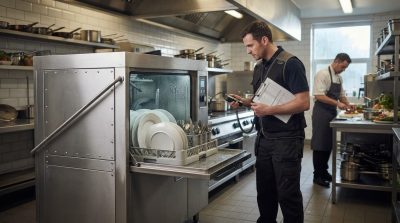
Keeping your storage containers sterile is just as important as the fridge itself. Using high-quality commercial warewashing equipment ensures that every tray and lid is free from lingering bacteria before it touches your fresh produce. It’s all part of a professional workflow that keeps your kitchen compliant with UK food safety regulations. Cleanliness and order go hand in hand when you’re aiming for that five-star hygiene rating.
A well-maintained fridge is a safe fridge. We recommend checking your door seals every day. If they’re split or brittle, cold air escapes and your internal temperatures will bounce around, which is a major red flag during an audit. Once a week, take a look at your condenser coils. Dust acts like a blanket, trapping heat and killing your unit’s efficiency. If you notice your kit struggling to stay cool or making odd noises, ring us on 01983756628 and we’ll get an engineer out to sort it quick for you.
Choosing the right kit is where your journey toward perfect commercial refrigeration food safety truly begins. We’ve spent years working with all types of units, and we always find ourselves returning to trusted names like Foster and Williams. These brands are built for the heat of a busy kitchen. If you’re looking for high standards on a tighter budget, reconditioned commercial catering equipment is a fantastic choice. It gives you the same reliability as a brand-new unit but at a fraction of the price, allowing you to upgrade for compliance without breaking the bank.
Professional servicing is your ultimate legal safety net. It’s far more than just a repair cost; it’s about preventing a crisis before it happens. A Planned Preventative Maintenance contract keeps your kitchen running smoothly, reinforcing your commercial refrigeration food safety standards while avoiding those dreaded emergency call-out fees. If you ever feel your kit isn’t quite right, just ring us on 01983756628. We love helping local businesses stay safe, and we’ll sort quick for you.
Choosing between these top UK brands often comes down to your specific workflow. Foster is renowned for incredible temperature recovery speeds, which is vital if your chefs are constantly opening doors. Williams offers fantastic flexibility with their range of commercial refrigeration counters. Counter fridges are great for prep, but upright cabinets often provide better airflow for bulk storage. Both brands ensure you stay well within legal limits, protecting your artisanal ingredients and your customers.
Your kitchen insurance often depends on who touches your equipment. We only use Gas Safe and electrical certified engineers because your safety is our priority. Using “cheap” generic parts is a gamble that rarely pays off. They can fail at the worst moments, leading to spoilage and failed audits. Investing in catering equipment spare parts UK professionals trust ensures your units remain food-safe for years to come. We keep an extensive stock of these parts to ensure we can get your kitchen back to its best without delay.
Mastering commercial refrigeration food safety isn’t just about avoiding a fine; it’s about the peace of mind that comes from knowing your kitchen is a safe, efficient space for your team to shine. By keeping your chilled storage at 5°C or below and sticking to a strict shelf-by-shelf organisation plan, you’re protecting the artisanal quality of your ingredients and the health of every guest who sits at your table. These daily habits, combined with regular maintenance, are what transform a busy kitchen into a truly professional operation.
We’ve spent over 20 years helping chefs and business owners across the country stay compliant and stress-free. Whether you need nationwide delivery on a new Foster cabinet or a visit from our certified Gas Safe and electrical engineers to check your seals, we’re here to help. Fridge acting up? Ring us on 01983756628 and we’ll sort it quick for you! You’ve worked hard to build your reputation, so let’s make sure your equipment never lets you down. We’re always ready to help you keep things cool and compliant.
The legal maximum for chilled food storage in the UK is 8°C, but we always suggest aiming for 5°C or lower to protect your delicate ingredients. This cooler target provides a vital safety buffer, keeping your produce well away from the bacterial “Danger Zone” where growth accelerates. It ensures your kitchen remains a sanctuary for culinary excellence. If your temperature display seems a bit off, ring us on 01983756628 and we’ll sort it quick.
You should arrange a professional service for your units at least every six months to guarantee consistent commercial refrigeration food safety. Our certified engineers focus on the technical details, like cleaning condenser coils and checking door seals, so you can focus on the passion of your cooking. These bi-annual inspections are essential for kitchen insurance and long-term reliability. They help you avoid the high cost of food waste due to unexpected equipment failure.
Storing raw meat and cooked food in the same unit is perfectly safe if you follow a meticulous shelf-by-shelf organisation strategy. Raw meats must always reside on the bottom shelf in sealed, leak-proof containers to prevent any drips from reaching other items. Ready-to-eat dishes and fresh dairy should be kept on the upper shelves. This simple, disciplined routine protects the integrity of your ingredients and ensures every plate you serve is safe and delicious.
A failed inspection can result in unlimited fines and a significant drop in your hygiene rating, which impacts customer trust. In serious situations, authorities can even close your business until the risks are managed. With foodborne illness costing the UK economy around £10.4 billion annually, inspectors take temperature control very seriously. Keeping your Foster or Williams units well-maintained is the easiest way to approach every audit with total confidence and a celebratory spirit.




No account yet?
Create an Account