


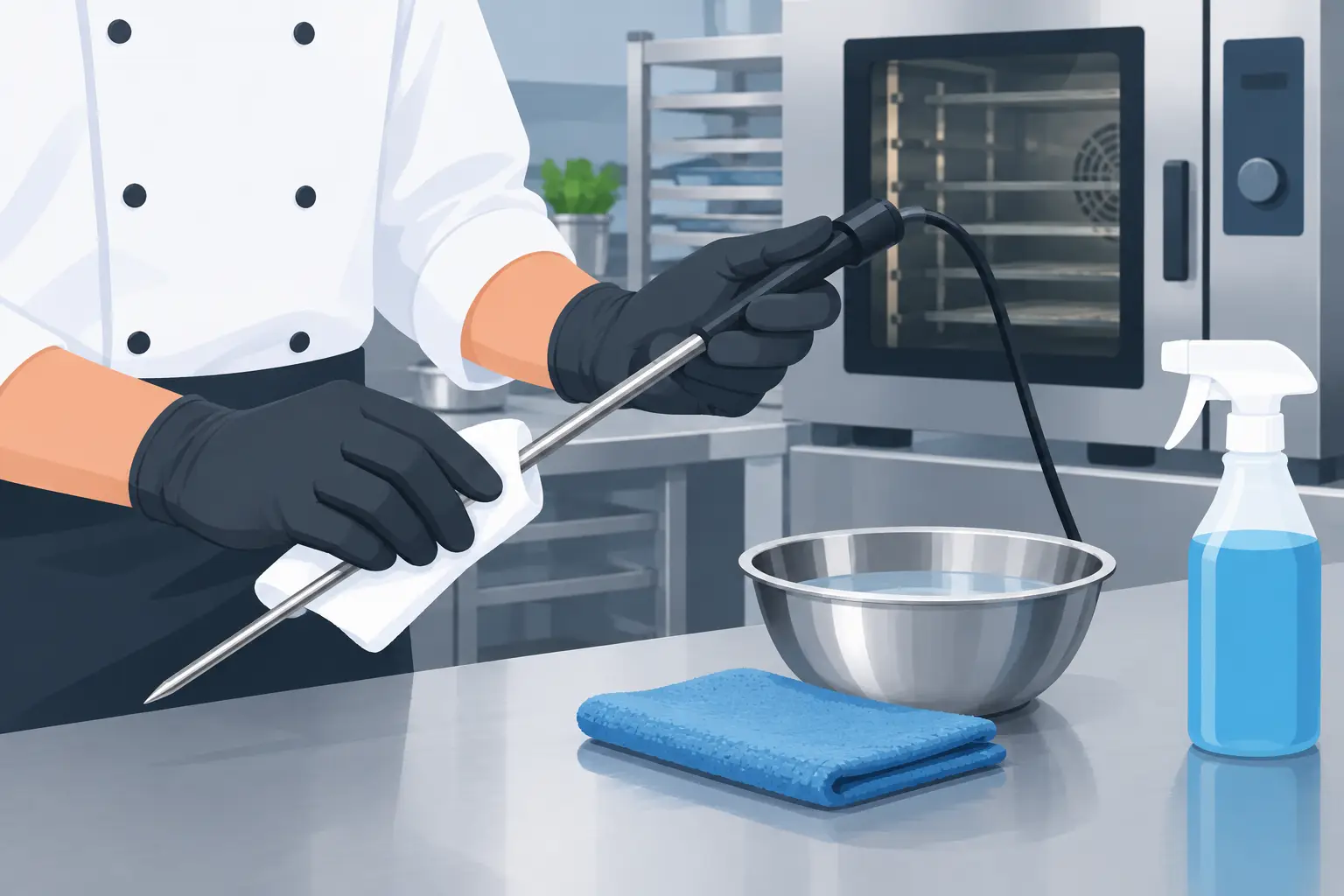
A core probe that is coated in baked-on protein, carbon or cleaning residue is not a small hygiene issue. It can slow down prep, contaminate food between batches and, if the sensing end is damaged or inaccurate, undermine the temperature control your kitchen relies on. Knowing how to clean oven probes properly helps protect both cooking consistency and the working life of a high-value combi oven.
In a busy commercial kitchen, probes are often wiped quickly between loads and forgotten until they look visibly dirty. That is too late. A short, correct cleaning routine after use is far cheaper than replacing a damaged probe or dealing with inconsistent core temperature readings during service.
The oven probe is designed to measure the temperature at the centre of the product. In a Rational combi oven and other professional cooking systems, it can control the cooking process automatically, helping operators produce repeatable results without constant checking. It only performs that role properly when the probe tip is clean, intact and able to make good contact with the food.
Residue on the metal tip can create hygiene risks, particularly when moving from raw poultry, meat or fish to another product. Heavy deposits can also make insertion harder and encourage staff to force or bend the probe. The cable, strain relief and connector are just as important: damage in these areas can lead to intermittent readings, error messages or complete probe failure.
Cleaning must therefore remove food soil without allowing moisture into the connector or using chemicals that attack the probe surface, insulation or seals. The correct method depends on whether the oven has a fixed, integrated probe or a detachable handheld unit. Always follow the instructions for the specific oven model where they differ.
Start only when the oven is safe to work around. If the probe has been used in a hot load, allow the probe and cooking cabinet to cool sufficiently before handling it. Do not pull the probe out by its cable. Hold the handle, withdraw it steadily, and place it where the sharp tip cannot injure staff or snag on other equipment.
Use a clean disposable cloth or soft non-abrasive sponge dampened with warm water to wipe the probe shaft and tip immediately after use. Fresh residue is far easier to remove than cooked-on deposits. Work from the cable end towards the tip, keeping dirt away from the handle and any connection point.
For a probe used in raw proteins, clean it before it touches another product, work surface or storage hook. This is a practical control against cross-contamination, not simply a presentation standard.
Apply a small amount of food-safe mild detergent to a damp cloth, then wipe the stainless steel portion thoroughly. A soft nylon brush can be used carefully around stubborn deposits on the shaft, but avoid aggressive scrubbing at the tip and never use a wire brush, scourer or knife to remove baked-on food.
Do not submerge a fixed oven probe, its cable or the connector in water. For detachable probes, only immerse them if the manufacturer specifically confirms that the complete unit is suitable for this. Many probes look sealed but are not designed for prolonged soaking, high-pressure washing or dishwasher cycles.
Remove detergent with a separate clean cloth dampened with potable water. Detergent left on a probe can transfer unwanted residue to food and may affect materials over time.
Where your food safety procedures require sanitising, use an approved food-contact sanitiser at the dilution and contact time stated by its manufacturer. Apply it to the cloth rather than spraying directly at the probe handle, cable or socket. This gives staff control and reduces the chance of liquid entering an electrical connection. Never mix chemicals or use oven cleaner on the probe.
Dry the probe with a clean lint-free disposable towel, paying close attention to the handle, cable entry point and connector. A probe should be dry before it is returned to its holder or plugged into an external connection.
Do not leave it resting in a wet sink, on a damp cloth or inside a closed cabinet immediately after cleaning. Trapped moisture is a common cause of corrosion and electrical faults. Store the probe in its designated holder, with the cable routed without tight bends or kinks.
Strong degreasers, caustic oven chemicals, chlorine-based products used at the wrong strength, abrasive pads and metal scrapers all present a risk. They may dull the probe, damage cable insulation or degrade seals around the sensing element.
Dishwasher cleaning is another common mistake. Heat, chemical concentration and water pressure can damage parts that are not intended for it. Unless the oven manufacturer explicitly states that a detachable probe is dishwasher-safe, wash it by hand.
It is also worth separating normal probe cleaning from the oven’s automated wash programme. A Rational cleaning cycle is intended for the cooking cabinet and its internal components in accordance with the machine’s operating instructions. It does not give staff licence to soak, spray or leave the core probe exposed to unsuitable chemicals.
The best routine is simple: wipe and wash the probe after each use, then inspect it during the daily close-down. The daily check should take less than a minute. Look for food deposits around the tip, cracked insulation, cuts in the cable, loose handles, bent shafts and signs of corrosion.
A more detailed weekly inspection should include the probe holder and cable route inside the cabinet. Check that the cable has not been trapped in the door, pulled tight over shelves or damaged by rack movement. In high-output kitchens, this check may be needed more often, especially where the oven is running repeated cook-and-hold programmes.
Use a documented cleaning and inspection record if probes are part of your critical cooking controls. It provides useful evidence for internal food safety management and makes emerging faults easier to identify. If several staff report inconsistent readings, the issue may be the probe, its connection or calibration rather than operator technique.
A clean probe is not automatically an accurate probe. If the oven reports a probe error, readings jump unexpectedly, the temperature seems implausible or the probe has visible physical damage, remove it from use and arrange an assessment. Continuing to use a suspect probe can lead to undercooked food, unnecessary overcooking and avoidable waste.
Do not attempt to repair a damaged cable with tape or modify the probe tip. Commercial oven probes are precision components, and makeshift repairs create a hygiene and reliability risk. A compatible replacement, correctly fitted and tested, is the better operational decision.
For integrated probes, fault-finding may require a trained engineer to test the probe and oven connection. This matters on premium combi ovens, where the probe works alongside programmed cooking functions and other sensors. Island Catering Equipment Co. supports commercial kitchens with specialist equipment knowledge, servicing and replacement parts for professional cooking equipment.
A clean, dry and undamaged probe gives your team one less variable to manage during a busy shift. Make it part of the handover routine, not an occasional deep-cleaning task, and the oven can keep delivering the consistent results it was bought to produce.





No account yet?
Create an Account