
If your Rational is starting to smoke more than usual, struggling to hold an even finish, or leaving grease baked onto the cabinet, cleaning is no longer a housekeeping job. It is an equipment performance issue. Knowing how to clean Rational oven units properly helps protect cooking consistency, reduce avoidable faults and keep service moving in a busy commercial kitchen.
A Rational combi oven is built to handle heavy output, but it still depends on regular, correct cleaning. Miss a few cycles and grease, carbon and food residue start affecting airflow, sensors, drainage and door sealing. Clean it properly and you protect the parts that matter most – heating performance, steam generation, hygiene standards and long-term reliability.
The right cleaning method depends on the model you are using and how heavily it has been worked. Many Rational ovens have automatic cleaning programmes, and in a professional kitchen that should be your first option whenever the machine allows it. It is quicker, more consistent and easier on components than aggressive manual scrubbing.
Before you start, make sure the oven is not loaded, racks and accessories are removed if the programme requires it, and the chamber is safe to handle. If the oven has just finished a service, let it cool to an appropriate temperature. Cleaning chemicals used in Rational systems are designed for the machine, so avoid substituting them with general-purpose degreasers unless you are carrying out specific manual cleaning on approved surfaces.
On self-cleaning Rational models, the display will usually guide you through the process. Select the correct wash level based on how dirty the oven is. A light clean may be enough after lower-volume use, while a heavily soiled cabinet after roasting, regeneration or mixed service often needs a stronger cycle.
This matters because under-cleaning leaves residue behind, but overusing intensive cycles when they are not needed increases chemical use and downtime. In high-output sites, the most efficient approach is usually a daily clean with the correct programme rather than letting soil build up and trying to recover the chamber later.
Insert the cleaning tablets or cartridges exactly as instructed for your model. Shut the door and allow the programme to finish fully. Do not interrupt the cycle unless there is a genuine operational issue. Once complete, check the cabinet, fan area, door glass and drain zone for any remaining deposits.
If there is still visible build-up, that is usually a sign the wrong wash strength was chosen or the oven has been left too long between cleans.
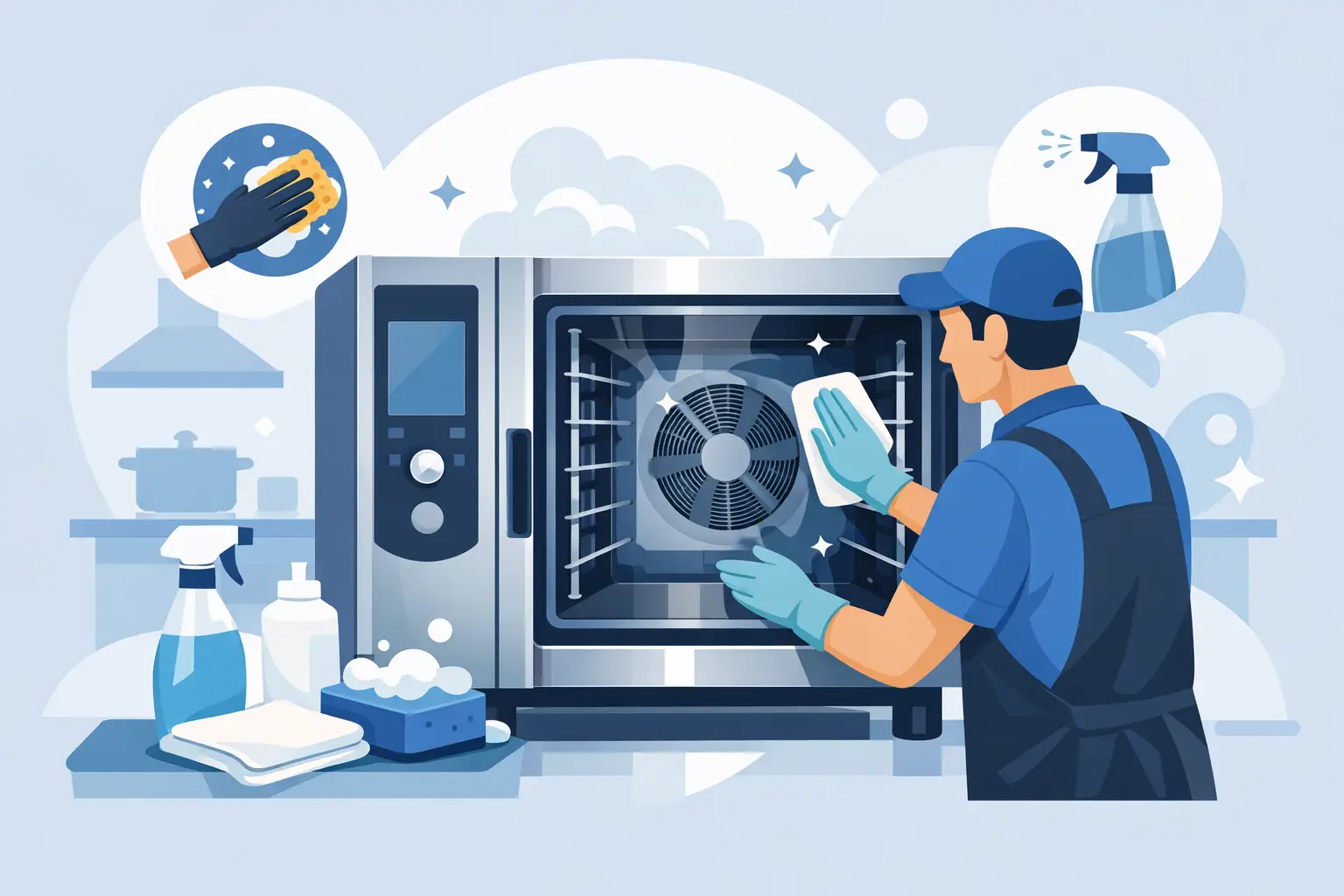
Even with automatic cleaning, some ovens still need manual attention in problem areas. Door seals, inner glass, rack runners, trolley components and drain edges can collect residue that an automatic cycle does not always remove fully.
Use a soft cloth, non-abrasive pad or approved brush. Avoid metal scrapers, wire wool and harsh abrasives. They can damage stainless steel surfaces, scratch the glass and shorten the life of seals and coatings. In commercial kitchens, damage caused by poor cleaning technique is more common than many operators realise.
If you are manually cleaning baked-on grease, apply the appropriate cleaning product, allow it time to work, then wipe away residue without forcing it. Rushing this stage usually means harder scrubbing, and harder scrubbing is what leads to surface damage.
A Rational may look clean at first glance while still carrying residue in areas that affect performance. The fan guard, air channels and drain zone are common examples. If grease accumulates around airflow paths, you can start seeing uneven cooking, longer recovery times and extra smoke during service.
The door gasket is another one. A dirty or damaged seal affects chamber efficiency and can lead to heat and steam loss. Wipe it carefully and inspect it while you clean. If it is splitting, hardening or no longer sealing evenly, cleaning alone will not solve the problem.
Inner door glass needs proper attention too. Build-up here is not just cosmetic. It can harden over time, become harder to remove and make it more difficult for staff to monitor cooking without opening the door. That means more heat loss and less control on a busy pass.
Shelves, grids, containers and mobile oven racks should also be cleaned separately. Putting a spotless cabinet back into service with dirty accessories defeats the point.
For most commercial sites, a daily cleaning cycle is the standard. If the oven is used heavily for roasting proteins, baking greasy products or running mixed programmes throughout the day, daily cleaning is essential rather than optional. In some high-volume operations, a quick interim clean of the most exposed areas may also make sense between service periods.
Lighter-use sites may be tempted to stretch cleaning intervals, but that can be a false economy. Grease and residue do not build up evenly, and once deposits harden, cleaning takes longer and becomes less effective. The result is more labour, more chemical use and a higher risk of service issues.
The best schedule depends on menu type, output and model, but the principle is simple. Clean little and often, and the oven remains easier to maintain.
The biggest mistake is relying on manual degreasing when the machine has an integrated cleaning system. A proper automatic wash is designed around the oven’s components, while improvised cleaning methods often miss critical areas or expose parts to chemicals they were not designed to handle.
Another common issue is using the wrong chemical. Domestic oven cleaners, bleach-heavy products and aggressive descalers should not be used unless the manufacturer specifically approves them for that application. They can damage surfaces, seals and internal components, and they create unnecessary risk in a commercial environment.
Operators also get into trouble by washing too late. Once carbon and grease are baked on repeatedly, even a strong cleaning cycle may struggle to restore the chamber fully. That does not always mean the oven is faulty. Often, it means the cleaning routine has slipped.
Finally, never treat the control panel, probes or sensitive areas as if they are standard stainless surfaces. Clean them carefully, with the right cloth and minimal moisture where appropriate.
This is where many kitchens blur the line. Cleaning keeps the oven hygienic and helps maintain performance. It does not replace servicing. If a Rational is draining slowly, showing error messages, heating unevenly or failing to complete wash cycles properly, there may be a technical issue behind it.
Water quality, limescale, worn seals, blocked drains and failed components can all affect cleaning results. If the oven remains dirty after the correct cycle or starts performing poorly despite regular cleaning, it is worth having it checked rather than pushing staff to scrub harder.
For professional kitchens, downtime is the real cost. A missed service call can turn a manageable fault into a lost trading period.
In most sites, the best routine is straightforward. At the end of service, remove trays, shelves and loose food debris. Check the chamber condition while it is still fresh in mind from the day’s production. Run the appropriate automatic cleaning programme, then inspect the oven once finished and wipe any remaining residue from seals, glass and touch points.
That routine takes discipline, but it prevents the bigger jobs. It also gives chefs and kitchen managers a regular chance to spot early signs of wear, whether that is a failing gasket, poor drainage or unusual staining.
For used ovens in particular, consistent cleaning is part of protecting value. A well-maintained Rational will generally stay more reliable, easier to service and more presentable over time. That matters whether you plan to run it for years or eventually replace it.
If the oven is consistently failing to clean itself properly, if residue keeps returning unusually quickly, or if staff are working around persistent faults, it is time to look beyond day-to-day cleaning. Professional support makes sense when the issue may be mechanical, chemical or water related rather than just operational.
For operators running Rational equipment across demanding services, that support can save far more than it costs. A specialist supplier with servicing experience, such as Island Catering Equipment, can usually identify whether the problem is cleaning practice, component wear or a wider maintenance issue.
A Rational rewards good habits. Keep the cleaning routine consistent, use the correct programme and chemicals, and deal with minor issues before they become expensive ones. In a commercial kitchen, that is not over-maintenance. It is how you keep the oven earning its place every day.



No account yet?
Create an Account