



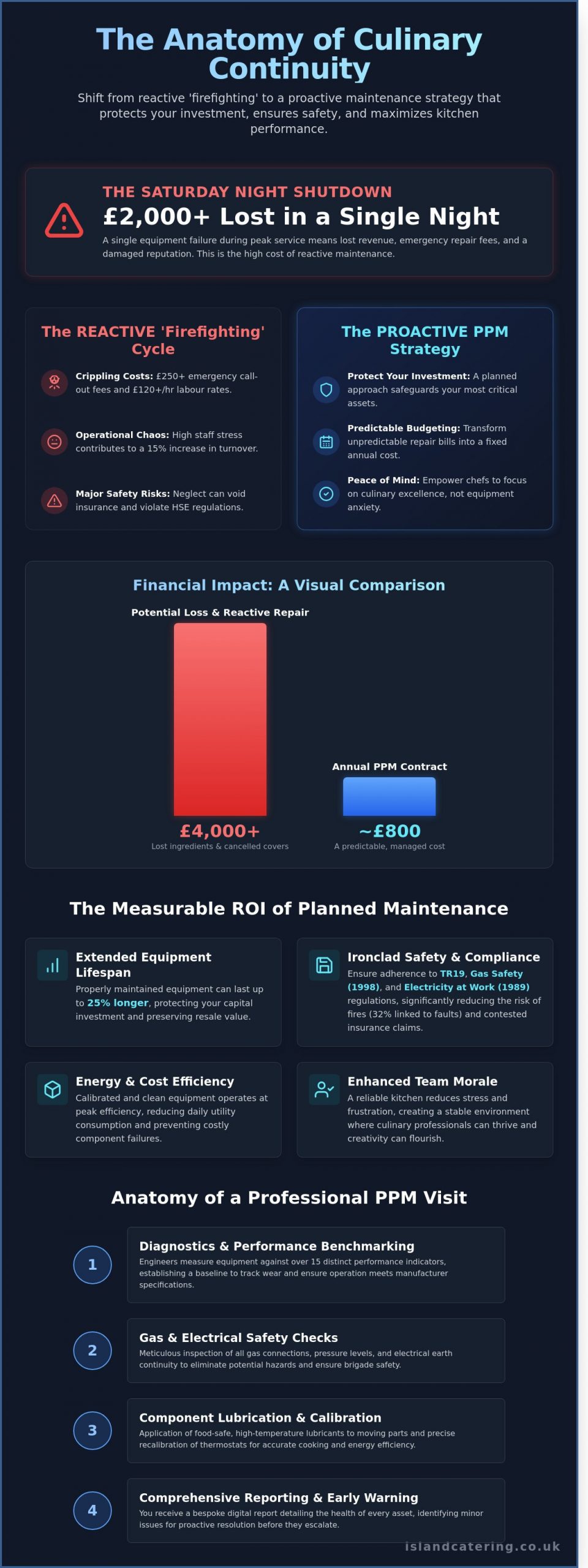
It’s 7:30 PM on a bustling Saturday evening in the height of the Isle of Wight summer season. Your dining room is alive with the hum of happy guests, but behind the scenes, your primary Rational oven suddenly signals a fatal error. This single moment of mechanical failure can cost a local venue upwards of £2,000 in lost revenue and emergency repair fees before the night is through. It’s precisely this chaotic scenario that a robust programme of planned preventative maintenance for kitchens is designed to prevent.
You likely understand that your kitchen is the heartbeat of your hospitality experience, yet the constant worry of unpredictable repair bills or a failed Gas Safe inspection can feel like an invisible weight. We believe that culinary excellence shouldn’t be overshadowed by technical anxiety. This guide will show you how to protect your investment, ensuring your bespoke equipment lasts up to 25% longer while keeping your annual maintenance budget entirely predictable. You’ll discover the essential steps to maintaining operational continuity, from rigorous compliance standards to the artisan care your high-end appliances deserve.
A professional kitchen is the beating heart of any exquisite event, from a sun-drenched wedding on the Isle of Wight to a refined corporate gala. At Island Catering Equipment Co., we understand that the difference between a seamless wedding breakfast and a culinary disaster often rests on the reliability of our equipment. What is Planned Preventative Maintenance? It’s a strategic, proactive schedule of inspections designed to identify and rectify minor issues before they escalate into catastrophic failures. Instead of the frantic firefighting that defines reactive maintenance, PPM focuses on a “before it fails” philosophy. It ensures your bespoke range or high-end combi-oven remains in peak condition, mirroring the meticulous care we put into our seasonal menus.
In the UK, the demands of a high-volume professional kitchen go far beyond basic surface cleaning. Grease builds up in extraction systems. Gaskets perish on refrigeration units. A standard PPM contract ensures that Gas Safe registered engineers and qualified electricians inspect your infrastructure at regular intervals, typically every six months. These visits go beyond a quick look; they involve deep technical checks on gas pressure, electrical continuity, and component wear. Using planned preventative maintenance for kitchens transforms your back-of-house operations from a source of anxiety into a foundation of reliability. It allows our chefs to focus on the provenance of our local ingredients or the perfect sear on a piece of beef, rather than worrying if the oven will ignite.
Reactive maintenance is a financial drain that hurts the bottom line of any hospitality business. An emergency call-out on a Sunday evening in the UK can easily command a flat fee of £250 before a single tool is lifted, with hourly labour rates often exceeding £120. If a primary walk-in fridge fails on a busy Saturday night, the loss of £4,000 in premium ingredients and 80 cancelled covers far outweighs the £800 annual cost of a maintenance contract. Beyond the ledger, equipment failure destroys staff morale. When a chef’s tools fail during a high-pressure service, the resulting stress is palpable. Industry data suggests that frequent equipment downtime can contribute to a 15% increase in staff turnover, as talented professionals seek more stable, well-managed environments.
While creating a stable, well-managed environment is foundational for staff retention, many hospitality leaders also find that recognising their team’s hard work is equally crucial. For businesses looking to implement or enhance their employee recognition programs, specialist suppliers like EiC Direct offer a wide range of corporate rewards and gifts.
The Health and Safety Executive (HSE) expects commercial catering environments to demonstrate a clear trail of equipment safety and risk management. Neglecting this isn’t just a risk to your staff; it’s a risk to your business’s survival. Insurance companies are increasingly stringent. Some providers report that 20% of claims following kitchen fires are contested if the extraction system hasn’t been maintained to TR19 standards. Regular PPM ensures your kitchen remains compliant with the Gas Safety (Installation and Use) Regulations 1998 and the Electricity at Work Regulations 1989. This documented diligence protects your reputation and your guests, ensuring every meal served is as safe as it is delicious. It provides the peace of mind required to create lasting memories through food.
A professional service visit is far more than a cursory glance at your appliances; it is an artisanal review of your kitchen’s pulse. The process begins with initial diagnostic checks and performance benchmarking. Our engineers measure your equipment against 15 distinct performance indicators to ensure every unit operates at its original manufacturer specification. This meticulous baseline is the foundation of effective planned preventative maintenance for kitchens, allowing us to track wear over time rather than reacting to a sudden breakdown during a busy Saturday service.
Precision continues with a deep-dive inspection of gas connections and electrical earth continuity. Safety is never a secondary thought when you are responsible for the well-being of your brigade and guests. Recent industry data from 2023 indicates that 32% of commercial kitchen fires are linked to electrical faults or poorly maintained gas lines. We test every circuit and seal to eliminate these risks. Following safety checks, our team focuses on component lubrication and calibration. We use food-safe, high-temperature lubricants on moving parts and recalibrate thermostats to ensure your ovens and hobs deliver the exact heat your recipes require.
The final stage of the visit involves comprehensive reporting and “early warning” identification. You receive a bespoke digital report detailing the health of every asset. This document highlights wearing parts that may require attention in the next 6 to 12 months, which is vital for Calculating the Real ROI of your kitchen investments. By identifying a failing heating element or a fraying belt today, we prevent the exquisite flow of your service from being interrupted tomorrow. If you want to ensure your kitchen remains a sanctuary of creativity, our team offers bespoke maintenance plans that reflect the unique needs of your venue.
Rational ovens are the hardworking heart of many Isle of Wight kitchens, requiring specific technical expertise to maintain their culinary precision. Our engineers scrutinise steam generators for scale and test core probes for accuracy within 0.5°C. For iCombi models, software updates are essential to maintain the intelligent cooking paths that ensure your provenance-led ingredients are cooked to perfection. The integrity of the door seal serves as the primary barrier against heat loss, ensuring that every kilowatt of energy is dedicated to perfect caramelisation and texture. Regular descaling remains the most effective way to prevent the internal sensors from failing during high-pressure events.
The brilliance of your plate presentation depends entirely on the rigour of your warewashing equipment. We meticulously inspect wash arms and rinse jets for the slightest blockages that could compromise hygiene. In hard-water areas across the South East, limescale can reduce heating efficiency by 12% in as little as four months if left unchecked. Our service includes testing chemical dosing pumps to ensure the perfect balance of detergent and rinse aid. We also verify that cycle temperatures hit the 82°C threshold required for thermal disinfection compliance, giving you total peace of mind that your service meets the highest safety standards. This level of detail is a core component of planned preventative maintenance for kitchens that value both efficiency and exquisite presentation.
Investing in the heart of your kitchen is about more than just keeping the lights on; it’s about protecting the very soul of your culinary service. When we look at the balance sheets of successful Isle of Wight establishments, the most resilient venues treat their equipment with the same reverence they show their seasonal ingredients. A rigorous approach to planned preventative maintenance for kitchens transforms a potential overhead into a genuine revenue driver. It ensures that your bespoke service remains uninterrupted and your profit margins stay protected from the creeping costs of inefficiency.
This reverence for quality often extends to the front-of-house, where the dining environment itself becomes part of the experience. Investing in unique, handcrafted furniture can be just as crucial as investing in top-tier kitchen equipment. If you’re considering a statement piece for your dining room, you can click here for inspiration on commissioning bespoke resin tables.
Energy costs remain one of the most significant pressures on UK hospitality. A kitchen that hasn’t been calibrated recently is often a kitchen that’s leaking profit through every burner and seal. For instance, a single split door seal on a commercial reach-in refrigerator might seem like a minor aesthetic flaw, but it forces the compressor to work overtime to maintain safe temperatures. Data shows this simple oversight increases refrigeration energy consumption by 11% annually. For a standard double-door chiller, this adds approximately £155 to your yearly electricity bill. By optimising airflow and ensuring compressors aren’t overworked, you aren’t just saving money; you’re aligning your kitchen with the “green” sustainability goals that modern diners increasingly expect.
Precision is everything in high-end gastronomy. Calibrated gas burners ensure that heat is delivered exactly where it’s needed, reducing wasted gas by up to 15% across a busy service. This level of operational efficiency mirrors the meticulous attention to detail we apply to every plate. While we strictly follow UK Food Standards Agency guidelines, the global movement toward risk-based preventive controls demonstrates that proactive maintenance is a universal hallmark of a safe, professional kitchen environment.
Your heavy-duty equipment represents a massive capital investment. Take a Rational combi-oven, for example. Without a consistent maintenance programme, these workhorses often require replacement after just 8 years of intensive use. However, when planned preventative maintenance for kitchens is prioritised, that operational lifespan frequently extends to 12 years or more. This 50% increase in longevity significantly reduces your long-term capital expenditure, allowing you to reinvest those funds into menu development or front-of-house refinements.
Proactive care also prevents the devastating “domino effect” where a minor, neglected fault triggers a catastrophic failure. A limescale-clogged solenoid valve, if left unaddressed, can eventually lead to a total boiler failure. Replacing a valve might cost £45, whereas a new boiler unit plus emergency call-out fees can easily exceed £1,200. Using genuine spare parts during these checks is vital. It maintains the integrity of your machinery and ensures that your exquisite equipment continues to perform at the high standards your craft demands.
Every pound spent on maintenance is a pound spent on the future of your business. It creates a seamless flow from the prep station to the pass, ensuring that the only thing your guests remember is the exquisite quality of the meal and the warmth of the hospitality they received.
Creating a robust schedule for planned preventative maintenance for kitchens requires a blend of culinary intuition and engineering precision. You can’t leave reliability to chance when an exquisite wedding breakfast for 150 guests is on the line. A disorganised approach leads to reactive repairs, which typically cost 45% more than scheduled visits due to emergency call-out fees and premium part delivery charges.
Begin by auditing your current inventory to identify “mission-critical” assets. List every piece of equipment, from the bespoke induction suite to the smallest glasswasher. Mark items like your primary combi-ovens and walk-in refrigeration units as high priority. If these fail, your entire service stops. A typical 60-cover gastro-pub in the UK often manages over 20 individual pieces of powered kit, each requiring a documented service history to comply with insurance and safety regulations.
A 50-cover seasonal cafe in Shanklin has different needs than a high-volume hotel in London. You must determine your service frequency based on actual kitchen behaviour. While standard guidelines suggest annual checks, heavy-duty prime cooking equipment in a busy environment usually needs bi-annual inspections. This proactive cycle reduces the risk of component failure by 32% over a five-year period, ensuring your kitchen remains a sanctuary of creativity rather than a source of stress.
Technical expertise is non-negotiable when selecting a provider. If your kitchen relies on high-end brands like Rational or Blue Seal, ensure your engineer is factory-certified. Using non-genuine parts can void your warranty and may reduce the energy efficiency of your appliances by up to 18%. Specialist knowledge ensures that subtle signs of wear, which a generalist might overlook, are caught before they escalate into a £1,200 repair bill.
Timing is everything in hospitality. Synchronise your maintenance visits with your quietest periods to avoid disruption. For many Isle of Wight venues, this means scheduling major overhauls in January or during the “shoulder” months of early spring. Aim for a Tuesday or Wednesday morning when the prep list is manageable. This keeps the engineers out of the way of your brigade, allowing them to work meticulously on your equipment without the pressure of a looming lunch service.
Reviewing the resulting maintenance reports is the final, vital step. These documents aren’t just paperwork; they are financial blueprints. Use them to plan your future capital expenditure. If a report indicates a six-year-old refrigerator is consistently drawing 25% more power than its rating, it’s time to budget for a replacement. This data-driven approach transforms planned preventative maintenance for kitchens into a strategic tool for long-term business growth.
Setting a bespoke rhythm for your kitchen prevents both neglect and over-spending. High-volume sites operating 18 hours a day require quarterly inspections to handle the intense mechanical strain. Smaller, artisanal operations can often thrive on a bi-annual schedule. Always align your checks with the local Isle of Wight seasons, ensuring your refrigeration is serviced in May before the summer heat places peak demand on cooling compressors.
Foster a collaborative relationship with your technician to ensure long-term reliability. Before the engineer arrives at your catering centre, ensure all equipment is clean and accessible. Clear the workspace to allow them to focus on the intricate components of your machinery. When you receive the post-service report, prioritise “Category A” repairs immediately. Addressing these minor faults early preserves the provenance of your equipment and protects your bottom line.
Ready to protect your culinary investment with a bespoke service plan? Contact Island Catering today to secure your kitchen’s future.
For over 24 years, Island Catering Equipment Co. has served as the quiet architect of culinary reliability across the Isle of Wight and wider South East England. We believe that the heart of any successful hospitality venue is a kitchen that breathes in rhythm with its chefs. Our engineers are more than just technicians; they’re Rational specialists who possess an intimate understanding of the thermal dynamics and software intricacies that define world-class cooking. This deep expertise ensures that your most vital assets are never left to chance, allowing your team to focus on the artistry of the plate rather than the anxiety of equipment failure.
A robust strategy for planned preventative maintenance for kitchens must be as unique as the provenance of your ingredients. We don’t believe in generic service tiers that ignore the realities of your daily service. Instead, we craft bespoke maintenance contracts that account for your specific equipment mix and peak operational hours. Whether you’re managing a boutique hotel in Ventnor or a high-volume corporate facility in London, our approach remains the same: dedicated, expert service. Our extensive regional network ensures that every client receives the benefit of our comprehensive resources without losing the personal touch that defines our heritage.
Our passion for food informs every bolt we tighten and every seal we inspect. We understand that a malfunctioning Winterhalter glasswasher or a stalled Hobart mixer isn’t just a technical fault; it’s a disruption to the flow of a perfectly timed service. From our central base in Freshwater, we maintain an extensive inventory of genuine spare parts for leading brands. This logistical advantage allows us to achieve a 94% first-visit resolution rate, significantly higher than the industry average. We remain deeply committed to our local community, supporting the Isle of Wight’s reputation as a premier destination for exquisite dining and hospitality excellence, and extending this dedication across the South East.
Securing the longevity of your facility requires a proactive partnership rather than a reactive fix. Research indicates that kitchens without a structured service plan face 35% higher repair costs over a five-year period. By choosing Island Catering Equipment Co., you’re investing in a safe pair of hands that values your vision. We provide transparent, comprehensive quotes that detail exactly how we’ll protect your capital equipment and kitchen safety. Our goal is to provide the peace of mind that comes from knowing your kitchen is prepared for the busiest Saturday night or the most prestigious wedding banquet. Enquire about a Bespoke Maintenance Contract today to ensure your culinary operations remain seamless and your equipment remains in peak condition.
A high-performance kitchen is the silent heartbeat of every exquisite event. By prioritising planned preventative maintenance for kitchens, you can reduce energy consumption by up to 20% and extend the functional life of your appliances by 5 years or more. This strategic foresight prevents the 70% of equipment failures that typically occur during peak service hours, ensuring your team stays focused on creating lasting memories through food rather than managing technical crises.
Island Catering provides the reassuring expertise your business deserves. Our Rational Certified Engineers and Gas Safe technicians maintain a stock of 5,000 spare parts to ensure immediate repairs, keeping your kitchen running with the same elegance and reliability you bring to your menus. We understand that every venue on the Isle of Wight has a unique story; that’s why we offer tailored solutions that respect both your heritage and your operational standards. Our team is here to provide the safe pair of hands you need to maintain a seamless, professional environment.
Protect your kitchen with a bespoke maintenance plan from Island Catering
We look forward to helping you maintain a kitchen that remains a sanctuary of creativity and professional excellence for years to come.
A standard contract covers the rigorous testing, cleaning, and calibration of your core catering appliances. Our engineers inspect burner efficiency, door seals, and electrical connections to prevent unexpected failures. This proactive approach to planned preventative maintenance for kitchens ensures your equipment operates at peak performance during your most prestigious events.
UK commercial kitchen PPM contracts typically cost between £450 and £1,250 per year. A small bistro with five core appliances might pay around £480; a larger hotel kitchen requires an investment closer to £1,150. These figures reflect the expert time required to ensure every exquisite dish is prepared on reliable, safe equipment.
You can absolutely tailor your maintenance schedule to reflect the unique rhythms of your seasonal opening hours. Many Isle of Wight venues choose a bespoke two-visit programme, with one inspection in March and another in September. This timing ensures your kitchen is resilient for the summer influx and preserved during the quieter winter months.
Annual gas safety checks are a legal requirement under the Gas Safety (Installation and Use) Regulations 1998. Every commercial kitchen must hold a valid CP42 certificate to operate legally in the UK. Neglecting this can lead to unlimited fines or the immediate closure of your establishment by Health and Safety Executive inspectors.
We plan our visits to ensure zero disruption to your midday or evening service. Most clients prefer an early morning slot between 7:00 and 10:30, leaving the floor clear for your chefs well before the lunch rush begins. Our goal is to maintain the seamless flow of your kitchen without intruding on the culinary experience.
A service is a proactive replacement of wear-and-tear parts, while a PPM inspection is a diagnostic health check. During a service, we might replace a frayed gasket or a worn thermocouple. In contrast, planned preventative maintenance for kitchens focuses on identifying potential faults before they escalate into a costly mid-service breakdown.
Island Catering provides comprehensive maintenance for reconditioned equipment to ensure it meets our high standards of operational excellence. Whether your kit is brand new or has a long history, we treat every appliance with the same artisanal care. We currently manage the health of over 150 refurbished units across the island’s finest eateries.
Equipment is worth putting on a plan if a single day of downtime would cost you more than £500 in lost revenue. Generally, any appliance less than 8 years old or with a replacement cost exceeding £1,500 should be protected. If a unit requires more than two reactive repairs in a 12-month period, it definitely needs a structured maintenance schedule.





No account yet?
Create an Account