


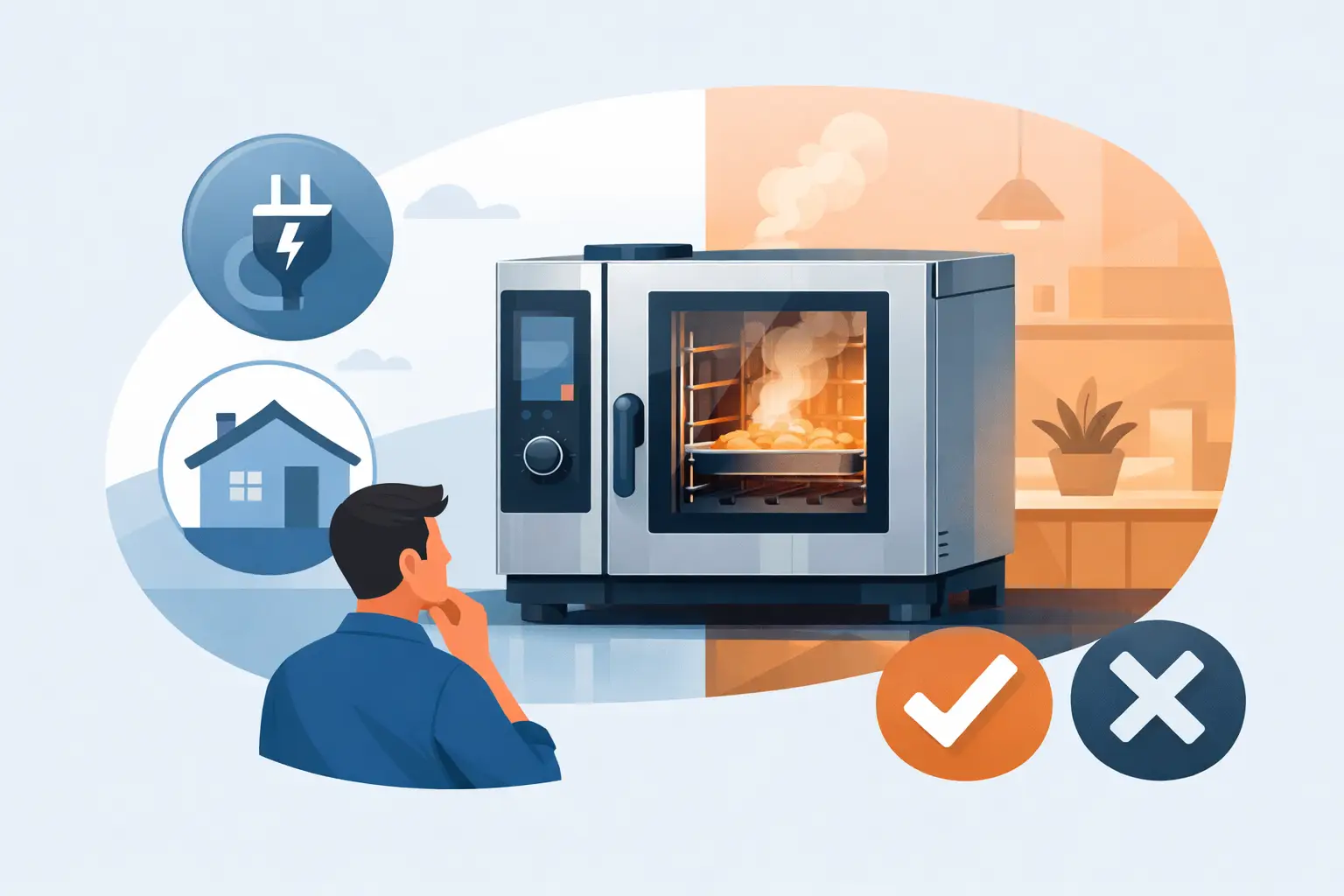
If your kitchen only has single-phase power available, a 1 ph Rational oven can be the difference between moving ahead with a combi upgrade or shelving the idea altogether. Power supply is often treated as a technical detail, but in commercial kitchens it affects what you can install, how quickly you can be operational, and how much additional electrical work you may need before service starts.
For many operators, the question is not whether a Rational oven is good enough. That part is settled. The real issue is whether a single-phase model matches the site, the menu and the expected output. That depends on more than the badge on the front.
A 1 ph Rational oven uses a single-phase electrical supply rather than a three-phase connection. In practical terms, that matters most when you are fitting equipment into sites with limited electrical infrastructure, smaller commercial units, older buildings or kitchens where upgrading the incoming supply would add cost and delay.
Single-phase models can make excellent sense in cafés, pubs, smaller restaurants, bakeries, schools, care settings and satellite kitchens. They offer access to Rational cooking performance without automatically requiring major works to the electrics. That can shorten lead times and keep installation budgets under control.
The catch is simple. Power availability influences oven size, heat-up characteristics and, in some cases, how hard the machine can be pushed across a full trading day. A 1 ph Rational oven is not the right answer for every kitchen, especially where volume is high and service periods are intense.
The strongest case for a single-phase Rational usually comes from sites that need reliability and consistency but do not need the largest possible output. If you are cooking mixed loads, regenerating plated meals, roasting, steaming vegetables, baking pastries or handling steady all-day service rather than extreme peak production, single-phase can be a very workable option.
This is particularly true when floor space is tight. Many operators are trying to replace several pieces of kit with one combi oven that can cover roasting, steaming, regeneration and baking in a smaller footprint. In those cases, the power supply matters just as much as capacity.
A pub kitchen doing a controlled menu, a care home serving at set times, or a café producing a broad but moderate volume can all benefit from a properly specified 1 ph Rational oven. The oven still needs to be matched to demand, but the electrical limitation does not automatically rule out strong performance.
There is no value pretending every site should choose single-phase. If your kitchen is producing heavy volumes across multiple services, if fast recovery is essential, or if the oven will be one of the main production engines in a demanding operation, three-phase often gives you more headroom.
That headroom matters in busy hotels, high-output restaurants, contract catering environments and production kitchens where the oven is under constant pressure. The issue is not that a 1 ph Rational oven cannot perform. It is that the margin for sustained heavy use may be narrower, depending on model and configuration.
If your team is opening the door constantly, loading dense products, running full racks and expecting rapid turnaround all day, it is worth checking whether the convenience of single-phase power outweighs the operational compromises. Sometimes it does. Sometimes paying for the right electrical upgrade saves money later in labour, service speed and cooking capacity.
One of the most common buying mistakes is starting with the power supply and stopping there. You also need to look at tray count, production style and the kinds of food the oven will handle each day.
A smaller site may assume any compact 1 ph Rational oven will do the job, then discover the oven is being loaded beyond its realistic working pattern. On paper, the capacity may look acceptable. In practice, if service requires too many cooking cycles, staff lose time and consistency starts to slip.
A better approach is to work backwards from output. Consider the number of covers, the menu mix, whether food is cooked to order or in batches, and how often the oven will be in use. A kitchen serving 80 covers in one wave behaves very differently from a kitchen serving 80 covers over four hours.
For many commercial buyers, this is where the conversation becomes practical. A new oven gives you the latest controls, current specification and full confidence on lifecycle from day one. That is often the right choice for operators opening a new site, standardising equipment across several locations or planning around long-term asset investment.
A refurbished 1 ph Rational oven can make just as much commercial sense where capital spend needs tighter control. The key point is refurbishment quality. There is a major difference between a used oven that has simply been cleaned and resold, and one that has been properly restored, tested and checked by trained engineers.
For buyers who want Rational performance without paying new-equipment prices, a high-standard refurbished unit can be a very sensible route. What matters is the credibility behind the process – component checks, cleaning systems, operational testing, cosmetic preparation and clear support after the sale.
That is where specialist suppliers stand apart from general equipment dealers. Island Catering Equipment Co., for example, operates in this area with the technical depth and refurbishment standards commercial kitchens expect when they are buying high-value combi ovens for daily service.
Before committing to a 1 ph Rational oven, confirm more than the plug type. The site should be assessed properly so the oven can be installed and used without unnecessary disruption.
Electrical capacity needs checking against the oven specification and the rest of the kitchen load. Water supply and water treatment also matter, because poor water quality can shorten component life and affect performance. Drainage, ventilation and physical access into the kitchen should all be reviewed before delivery is booked.
These are not minor points. A good oven specified badly creates avoidable cost. A correct pre-installation check helps prevent delays, engineer callouts and the frustration of finding out too late that the site is not ready.
A 1 ph Rational oven is often considered for installation reasons first, but the longer-term value comes from how efficiently it supports service. Rational ovens are designed to improve consistency, reduce manual intervention and help kitchens handle multiple cooking modes in one unit.
That can lower pressure on staff and reduce the need for separate equipment doing separate jobs. In a labour-conscious market, that matters. The oven should make service easier, not just fit the power supply available.
Still, efficiency is not identical across every site. If a single-phase oven is being pushed too hard, any gain from easier installation can be eroded by slower production flow. This is why honest specification matters more than a quick sale. The right oven is the one that performs properly on your busiest day, not just the one that technically turns on.
Commercial ovens are not buy-and-forget assets. Whether you choose new or refurbished, support after purchase should carry real weight in the decision.
Parts availability, engineer support, servicing and fault diagnosis all matter once the oven is in live operation. Downtime costs more than the initial saving from buying through the wrong source. Buyers who focus only on headline price often end up exposed when the first issue appears and there is no meaningful backup.
This is particularly relevant with specialist equipment such as Rational. A supplier with technical knowledge, stock depth and service capability offers more than a box delivered to site. They reduce risk over the working life of the machine.
If your site has single-phase power and you want proven combi performance without major electrical alteration, a 1 ph Rational oven is well worth serious consideration. It is often an efficient, commercially sensible answer for smaller and mid-volume kitchens that still need reliability, flexibility and consistent results.
If your operation is high-output, fast-paced and heavily dependent on oven capacity across peak periods, check the numbers carefully before deciding. Sometimes single-phase is ideal. Sometimes it is a compromise that becomes expensive in day-to-day use.
The right decision starts with your site, your service pattern and your realistic output requirement. Get that part right, and the oven will earn its place every day it is on.





No account yet?
Create an Account