


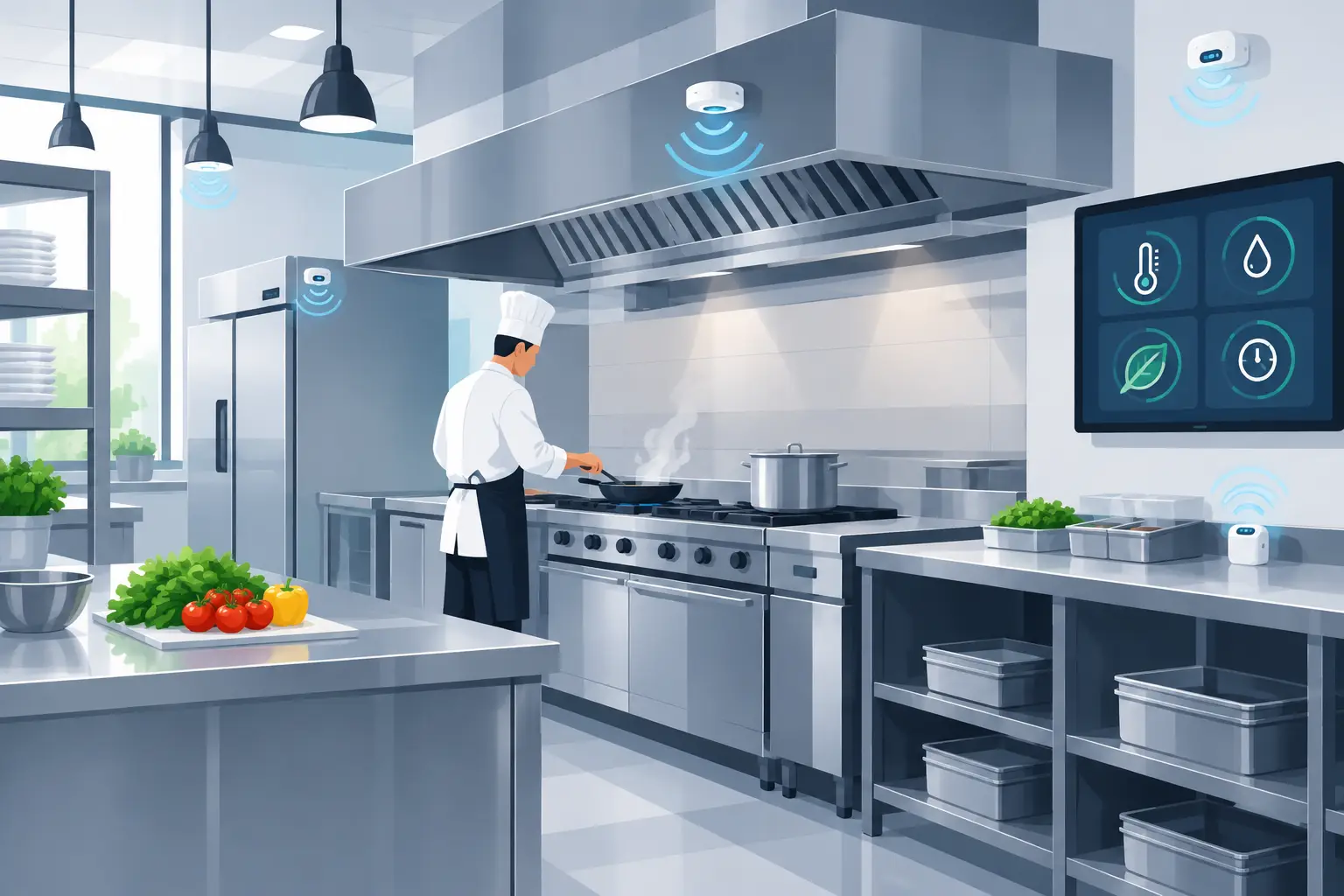
A walk-in fridge drifting a few degrees overnight can turn the following morning into a stock write-off, a menu problem and an avoidable food safety concern. Smart kitchen sensors give operators earlier warning of the conditions that cause these losses, whether that is a refrigeration temperature rise, a failed door seal, excessive humidity or an appliance drawing more power than it should.
For busy professional kitchens, the value is not in adding another screen to check. It is in giving chefs, kitchen managers and maintenance teams reliable information early enough to act. Used properly, sensor data can protect stock, reduce utility costs and help prevent the unplanned equipment failures that disrupt service.
The strongest applications are usually the least glamorous. Refrigeration monitoring is a clear example. A sensor inside a cold room, freezer or refrigerated counter can record temperatures continuously and issue an alert when readings move outside a chosen range. That is far more useful than finding a problem during a manual check, particularly in sites with extended opening hours, multiple storage areas or limited management cover.
The sensor should not replace disciplined food safety procedures. Staff still need to check product condition, follow the site HACCP plan and react correctly when an alarm is raised. However, automatic records can reduce gaps in manual logs and provide a clearer history when investigating a temperature incident. For restaurants, care homes, schools and contract catering operations, that traceability is often as valuable as the immediate alert.
Door sensors also have a practical place in cold storage. A door left open after a delivery, or a seal that no longer closes properly, forces refrigeration to work harder and raises the risk of temperature variation. Combining door-open data with temperature readings helps distinguish a brief operational event from a developing mechanical problem.
Humidity monitoring matters where ingredients are sensitive to moisture or where the environment affects product quality. Bakeries may use it around ingredient stores and proofing areas. Dry stores holding dry goods, packaging or specialist ingredients can also benefit where damp creates spoilage or damages stock. The right readings depend on the product and process, so there is little value in fitting sensors without defining acceptable limits first.
Energy monitoring is another worthwhile use, especially where high-load equipment operates for long periods. A plug-level monitor or circuit-level meter can reveal equipment left running outside service hours, unexpected overnight consumption or a change in the normal energy profile. A refrigeration compressor cycling too frequently, for example, may indicate poor airflow, a dirty condenser, a failing component or a door issue.
Water leak sensors are inexpensive compared with the damage a small leak can cause. Positioning them near dishwashers, ice machines, filtration systems, combi ovens and under-sink pipework can give an early warning before water reaches flooring, electrics or neighbouring areas. They are not a substitute for proper installation and routine inspection, but they can limit the scale of a failure.
Kitchen equipment rarely fails without giving some warning. It may take longer to recover temperature, use more energy, cycle more often or run outside its normal operating pattern. Sensors make those changes easier to identify, provided the data is reviewed and linked to a clear maintenance response.
For an operator with several Rational combi ovens, for instance, the most useful information may be a pattern of power consumption, kitchen ambient temperature or water-related conditions around the installation. It does not diagnose every fault, and it does not replace a trained engineer. What it can do is flag an abnormal pattern worth investigating before it becomes a service-stopping issue.
This distinction matters. A sensor can report a temperature, a status change or an electrical load. It cannot confirm the condition of a heating element, assess a gas appliance for safety or replace a scheduled service. Treating sensor alerts as a prompt for informed checks, rather than an automatic diagnosis, keeps expectations realistic and maintenance decisions sound.
The same applies to ventilation. Heat and air-quality sensors can show when the kitchen environment is becoming uncomfortable or when conditions vary sharply between shifts. But airflow, extraction performance and compliance requirements need assessment by competent specialists. The data is useful evidence, not a shortcut around proper servicing.
Start with the operational risk, not the technology. A small café with one undercounter fridge has different priorities from a hotel with several walk-ins, a central production kitchen and 24-hour storage. The first may need a straightforward temperature alert. The second may require mapped zones, remote access, escalation rules and reporting across several locations.
Before buying, establish what must be monitored, who receives an alert and what they are expected to do. An alarm sent to a kitchen manager who is off duty and unable to attend is not much protection. For critical refrigeration, sensible escalation might move from the chef on shift to the duty manager, then to an approved maintenance contact if the condition persists.
Connectivity deserves close attention. Wi-Fi sensors are convenient, but commercial kitchens can be difficult environments for signal strength. Stainless steel, cold rooms, plant areas and building layout can all affect coverage. Battery-powered wireless units simplify installation but need a planned battery replacement programme. Hard-wired or gateway-based systems may suit larger sites where reliability and central management matter more.
Look for systems that provide time-stamped readings, adjustable thresholds and accessible reporting. Alerts should be specific enough to drive action. A message that says a freezer has exceeded its temperature limit for 20 minutes is more useful than a generic notification that demands a login before revealing the issue.
It is also worth checking how data is stored, who owns it and how long it remains available. If the system is used to support food safety documentation, short data retention periods or difficult report exports can become a problem at the wrong time. Subscription charges, replacement sensor costs and ongoing support should be considered alongside the initial hardware price.
Poor sensor placement produces poor information. In refrigeration, a sensor should measure a representative air temperature without sitting directly in the path of an evaporator blast, against a warm wall or beside a frequently loaded doorway. A probe measuring product temperature may be more meaningful in some applications, but it must be installed and handled in a way that suits food safety procedures.
Set alarm limits around the equipment, food type and site process rather than choosing a generic default. Equally, allow for brief operational changes such as loading deliveries or opening doors during service. If thresholds are too tight, staff receive repeated nuisance alerts and soon stop taking them seriously. If they are too broad, the alert arrives after the useful intervention window has passed.
Commissioning should include a simple test. Trigger an alert, confirm it reaches the correct people, check that the message is understood and record the action to take. Repeat this after staff changes, Wi-Fi upgrades or alterations to the kitchen layout. A sensor system is only dependable when the alert path is dependable.
The most effective operators review trends rather than reacting only to alarms. A weekly look at refrigeration temperatures, door-open periods and electricity use can reveal small issues before they affect stock or service. It can also identify operational habits that waste energy, such as equipment being switched on too early or left running long after close-down.
There are trade-offs. A fully connected monitoring system has a higher upfront and ongoing cost than manual checks, and it needs ownership from the team. For a single low-risk appliance, the investment may not stack up. For critical cold storage, expensive stock, multiple sites or equipment that must remain operational through the night, the cost of one avoided failure can justify the system quickly.
Smart kitchen sensors work best when they are part of a wider equipment plan: correctly specified appliances, professional installation, regular cleaning, scheduled servicing and fast access to competent engineers when something changes. Start with the asset that would cause the greatest disruption if it failed, set a clear response process, and let the data help your team act before a minor issue becomes an expensive one.




No account yet?
Create an Account