


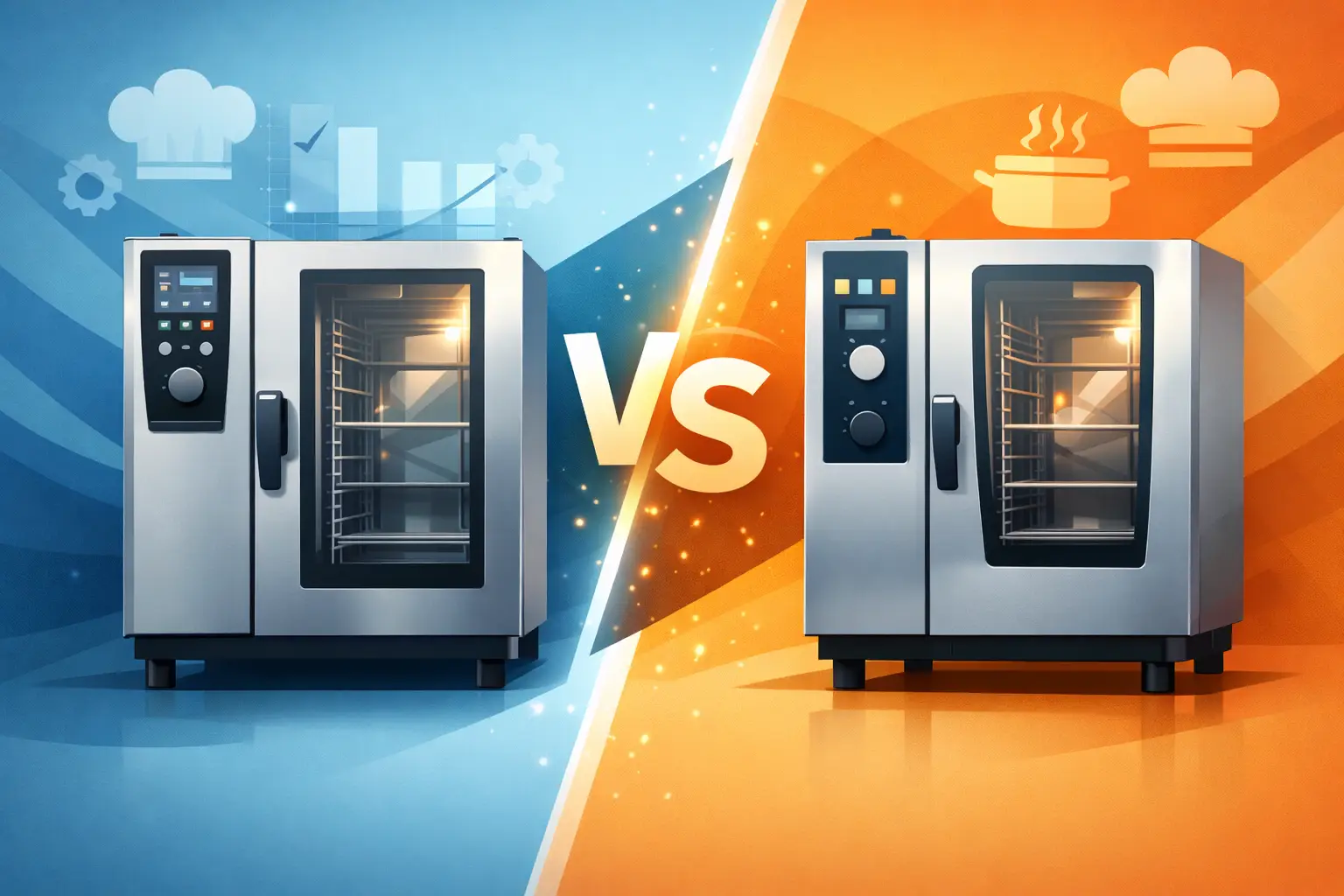
If you are weighing up Rational iCombi vs SelfCookingCenter, you are almost certainly making a buying decision that affects service speed, menu consistency and capital spend for years, not months. For most commercial kitchens, this is less about branding and more about what the newer platform actually changes in day-to-day operation.
The short version is straightforward. The Rational SelfCookingCenter built its reputation as one of the most reliable and capable combi ovens on the market. The Rational iCombi Pro is its successor, with faster processing, more responsive cooking intelligence, improved usability and stronger integration with modern kitchen workflows. That does not automatically make every iCombi the right buy, and it does not make every SelfCookingCenter outdated. The right choice depends on budget, output, menu complexity and how much value you place on newer control features.
The SelfCookingCenter was already a highly advanced combi oven. It gave operators automatic cooking programmes, strong climate control, cleaning automation and dependable performance across mixed loads. For many sites, it solved the core problems that matter most – consistency, labour reduction and reduced operator error.
The iCombi Pro takes that foundation and pushes it further. Rational redesigned the interface, upgraded the internal processing and improved how the oven reacts during the cooking cycle. In practical terms, that means better real-time adjustment for load size, product condition and cabinet climate. The oven is quicker to interpret what is happening and more precise in correcting it.
For a busy kitchen, that matters when service is under pressure. If you are loading uneven batch sizes through the day, switching between proteins, bakery and regeneration, or relying on less experienced staff, the iCombi generally gives you more control with less intervention.
That said, the SelfCookingCenter still remains a serious commercial machine. In many kitchens, especially those running a stable and repeatable menu, it can still deliver excellent results without the higher acquisition cost of a newer model.
On pure cooking capability, both ovens are strong. Both are designed to roast, steam, bake, grill, regenerate and handle mixed mode cooking in one cabinet. Both can replace multiple pieces of equipment and reduce the space pressure in a commercial kitchen.
Where the iCombi pulls ahead is in responsiveness and refinement. Its cooking intelligence is more advanced, and operators tend to find the controls quicker to work with during a shift. Programming is more intuitive, and the system is better at adapting when actual conditions differ from the ideal set-up.
This is particularly useful in sites where product is not always loaded perfectly. In pubs, hotels, care settings and school catering, kitchen teams often need equipment that can compensate for variation rather than punish it. The iCombi is very good at doing that.
The SelfCookingCenter still performs extremely well on standard production. If your kitchen has established routines, trained staff and consistent batch work, the performance gap may not justify paying top-end new-machine prices. That is where a high-quality refurbished SelfCookingCenter can make strong commercial sense.
One of the biggest hidden costs in catering is operator inconsistency. Equipment that looks impressive on paper but confuses staff during service can slow the kitchen down very quickly.
The iCombi interface is generally easier to navigate. The touchscreen layout feels more current, and access to cooking paths, programme adjustments and cleaning options is more straightforward. For sites with frequent staff turnover or multi-user teams, this reduces training time.
The SelfCookingCenter is still user-friendly by commercial oven standards, but it reflects an earlier generation of interface design. Experienced chefs and kitchen managers usually adapt to it without issue. Less confident users may take longer to get the best from it.
Cleaning matters for two reasons – hygiene and uptime. Both systems offer automatic cleaning, which is a major operational benefit compared with manual-heavy combi ovens.
The iCombi improves the process with more refined cleaning management and a smoother user experience. For kitchens that run hard all week, small gains here add up. Easier cleaning prompts and better workflow reduce the chance of missed maintenance or incorrect cleaning selection.
The SelfCookingCenter remains very capable, but condition matters far more on older units. A well-maintained machine can continue to work reliably for years. A neglected one can become expensive quickly, especially if it has inconsistent service history, worn components or limescale-related issues.
That is why the source of the oven matters almost as much as the model. New or used, commercial buyers should look at testing standards, refurbishment quality and aftersales support before comparing headline prices.
For long-term ownership, support is not an afterthought. It is part of the buying decision. Rational ovens are advanced machines, and when faults occur, buyers need access to the right parts and qualified engineers.
The advantage of choosing a widely used Rational platform is that servicing infrastructure is strong. Both iCombi and SelfCookingCenter models are well known in the market. However, older SelfCookingCenter units may eventually involve more age-related maintenance, simply because components have had more working hours.
That does not mean they are poor investments. It means buyers should be realistic. If you are purchasing used equipment to control capital spend, it pays to buy from a specialist supplier that can back the oven with technical knowledge, refurbishment standards and ongoing service support. That is often the difference between value and false economy.
The biggest practical distinction in Rational iCombi vs SelfCookingCenter is usually price.
A new iCombi Pro will command a higher upfront cost, but it gives you the latest generation platform, stronger usability and the best route if you want maximum lifespan from a new asset. For high-output operations, central production kitchens and sites where downtime is exceptionally costly, that premium is often justified.
A SelfCookingCenter, particularly a professionally refurbished one, can offer excellent value. For many operators, it provides the core Rational benefits at a much lower entry point. If your priority is proven cooking performance without stretching the budget to a current-generation machine, it remains a very sensible option.
This is especially relevant for expanding groups, independent restaurants, schools and care providers balancing performance against spend. A refurbished Rational can free up budget for extraction, refrigeration or other essential equipment without sacrificing the quality level expected from a premium combi oven.
If you are opening a new site, running a demanding menu or standardising across several locations, the iCombi Pro is usually the stronger long-term choice. It gives you the newest control platform and helps future-proof the kitchen.
If you need dependable Rational performance at a sharper price, the SelfCookingCenter still deserves serious consideration. In a well-run operation with sensible maintenance, it can continue to deliver strong output and consistent results.
The decision becomes even clearer when you look at operating style. Kitchens with constant menu changes, mixed-skill teams and fast service windows benefit most from the iCombi’s improved intelligence and interface. Kitchens with stable production, experienced staff and tighter capital limits may see better return from a refurbished SelfCookingCenter.
There is no single right answer for every site. There is only the right answer for your service model, staffing and budget.
If your current SelfCookingCenter is reliable, well maintained and still meeting production needs, an immediate upgrade may not be necessary. Many operators replace too early when the existing machine still has commercial value.
If, however, you are seeing increased repair frequency, struggling with ageing controls, or needing better support for a broader menu mix, moving to iCombi makes more sense. The gains are not just technical. They affect labour efficiency, ease of training and confidence during busy periods.
For buyers comparing stock today, the real question is not which name is better known. It is whether you need the newest platform or the best-value route into premium Rational cooking. Suppliers with both new and refurbished options, such as Island Catering Equipment Co., can usually give the clearest view because the comparison is based on operational fit, not just list price.
A combi oven should earn its place every day. Buy the model that matches how your kitchen actually works, and the numbers usually make sense on their own.





No account yet?
Create an Account