


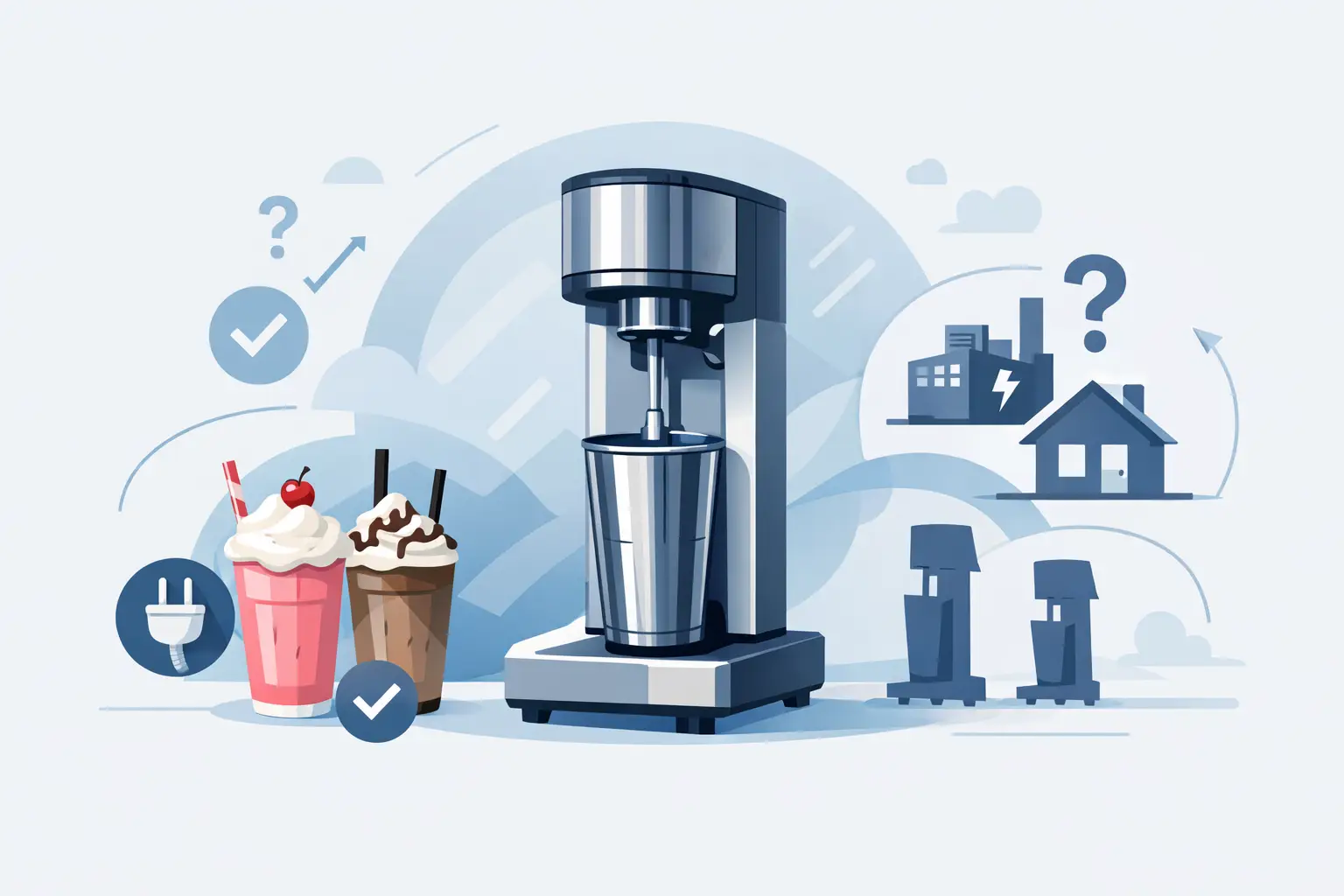
If your site needs fast drinks service without electrical upgrades, a 1 phase milkshake machine is usually the practical answer. It gives you commercial blending power on a standard single-phase supply, which matters in cafés, dessert bars, takeaways, hotel kitchens and leisure venues where space, speed and installation costs all need to stay under control.
For many operators, the appeal is straightforward. A single-phase machine will generally run from the electrical supply already available on site, so you avoid the extra cost and delay of moving to a three-phase setup. In a live trading environment, that can make the difference between fitting out quickly and losing valuable service days.
That does not mean every model performs the same. Motor power, cup capacity, spindle speed, build quality and duty cycle all affect how well the machine copes under pressure. A front-of-house unit in a modest café has very different demands from a high-volume dessert operation producing shakes continuously through peak periods.
The right buying decision comes down to output, not just price. A cheaper unit may look attractive at the outset, but if it struggles with thicker recipes, overheats during busy spells or takes too long to clean, it will cost you in labour and lost sales.
Start with expected demand. If you are producing a handful of milkshakes per hour, a standard single-spindle model may be enough. If your team is serving lunch, desserts and drinks at the same time, speed becomes more important than headline cost. In those cases, a more powerful motor or twin-spindle format can improve throughput and reduce queues.
It is worth thinking about your menu as well. Thin classic shakes are far easier on a machine than thick drinks with ice cream, syrups, fruit pieces or biscuit inclusions. If your recipes are heavier, choose a machine with enough torque to maintain consistency without straining.
Commercial equipment needs to cope with repeated daily use, regular cleaning and occasional rough handling. Stainless steel construction, stable bases and durable spindle assemblies all matter. Plastic-heavy machines can be acceptable in light-use environments, but for most professional sites, stronger materials are the better long-term option.
You should also look at the drink cup supplied with the unit. Stainless steel cups are standard for good reason. They are durable, easy to sanitise and better suited to commercial use than lightweight alternatives.
Milkshake machines are often bought for compact service areas, but footprint should not be judged on width alone. Consider working clearance around the machine, cup handling space and whether the unit sits in a front-counter position where noise and appearance matter. A slightly larger machine that is easier to use can be more efficient than a compact one that slows staff down.
Cleaning time affects labour costs and hygiene control. Machines with simple spindle designs, accessible surfaces and removable cups are easier to keep in good order during service and at close-down. If your team has to work around awkward crevices or hard-to-reach switches, standards tend to slip when the site gets busy.
That is particularly important in environments handling dairy all day. Any piece of drink equipment needs routine cleaning that is quick enough to be done properly, every time.
A 1 phase milkshake machine is the sensible choice for the majority of small to medium commercial sites, but there are limits. If you are running very high volumes all day, every day, a heavier-duty machine with different power requirements may be worth considering. That depends on product mix, service style and how much downtime you can tolerate.
Single-phase equipment wins on accessibility and installation simplicity. It is easier to place, easier to replace and usually better suited to mixed-use kitchens or counters where the electrical infrastructure is already fixed. Three-phase options can offer more headroom in demanding operations, but for many buyers the extra installation cost is hard to justify.
In other words, bigger is not automatically better. The correct specification is the one that handles your busiest hour reliably without forcing unnecessary spending elsewhere.
In cafés and coffee shops, a single-phase unit is often the easiest way to add profitable cold drinks without major changes to the counter. In takeaways and dessert shops, it supports fast production where menu breadth matters. In hotels, schools and leisure sites, it can be useful for controlled-volume drinks service without introducing overly complex equipment.
Pubs and restaurants also benefit when milkshakes are an add-on rather than the core offer. In those settings, operators usually want dependable output, easy staff training and cleaning that fits around the rest of service. A machine that is simple to run often delivers better results than a more complex model with features nobody uses.
One of the most common mistakes is buying on motor rating alone. Power matters, but it does not tell the full story. Overall design, spindle quality, stability and suitability for your recipes are just as important.
Another mistake is underestimating peak demand. A machine may look adequate on paper, yet struggle once several orders arrive at once. If your menu relies on quick turnaround, any delay at the drinks station becomes visible to customers immediately.
There is also the issue of cleaning and maintenance. Operators often focus on purchase price and forget the cost of ownership. If replacement parts are awkward to source or the machine is built with components that wear quickly, the initial saving disappears.
Commercial buyers are rarely looking for the cheapest machine. They are looking for equipment that keeps trading. Downtime on a milkshake machine may not stop the whole kitchen, but it can still affect revenue, customer satisfaction and staff efficiency.
That is why aftersales support matters. Access to parts, practical product advice and technical backup all reduce risk. A machine is only a good buy if it remains dependable after months of use, not just on delivery day.
For that reason, it pays to buy from a specialist catering equipment supplier that understands commercial duty, not just boxed product sales. Island Catering Equipment Co. works with professional kitchens that need equipment chosen on performance, value and long-term reliability, rather than guesswork.
If your site is light-use and the shake offer is secondary, a compact single-spindle machine is normally enough. If drinks are a meaningful revenue line, step up to a stronger model with faster recovery and a construction standard suited to repeated service. If you are producing thick shakes continuously, prioritise motor durability and build quality over entry-level pricing.
Staffing also plays a part. In sites with frequent team turnover, simpler controls and straightforward cleaning routines can be more valuable than extra features. In experienced teams, you may place more value on speed and output.
The best equipment choice is usually the one that fits your actual trading pattern. There is little point paying for capacity you will never use, but there is just as little value in buying too small and replacing it early.
Before committing, confirm the electrical requirement, dimensions, cup capacity, expected duty level and cleaning routine. Check whether the machine is intended for occasional or sustained use, and be realistic about your busiest trading periods. If you serve thick products, make sure the specification reflects that.
A milkshake machine is a relatively small purchase compared with major cooking equipment, but it still needs to earn its place. When the unit is correctly matched to the site, a 1 phase model gives you a reliable, easy-to-install solution that supports fast service and consistent product quality without unnecessary complication.
The sensible buy is not the machine with the longest spec sheet. It is the one that keeps pace with your service, fits your supply, and carries on working when the queue starts to build.





No account yet?
Create an Account