


A slow milkshake station costs more than a lot of operators expect. Queues build, staff start improvising, consistency drops and the machine that looked fine on paper becomes a daily frustration. If you are buying a milkshake maker commercial model for a restaurant, dessert bar, café, hotel or leisure site, the right choice comes down to output, durability and how well it fits your service pattern.
This is not a piece of kit to buy on appearance alone. In a commercial setting, a milkshake machine needs to handle repeated use, produce a reliable finish and stand up to long shifts without turning into a maintenance problem. The best unit for a small coffee shop may be completely wrong for a high-footfall takeaway or family venue serving drinks all day.
At trade level, the job is straightforward. The machine must blend quickly, hold a consistent texture and cope with regular use without overheating or becoming unstable on the counter. That sounds basic, but there is a big difference between a machine built for occasional drinks and one designed for continuous commercial demand.
Motor strength matters because it affects both speed and finish. A weak unit may struggle with thicker mixes, ice cream-heavy recipes or added ingredients such as biscuits, syrups and fruit pieces. That usually means longer prep times and inconsistent results between staff members. A stronger machine gives you more control and less waste.
Build quality matters just as much. Stainless steel construction, solid switches and a stable base are not nice extras in a professional kitchen. They are what keep the machine serviceable over time. If staff are using it all day, every day, the difference between light-duty and proper commercial specification becomes obvious very quickly.
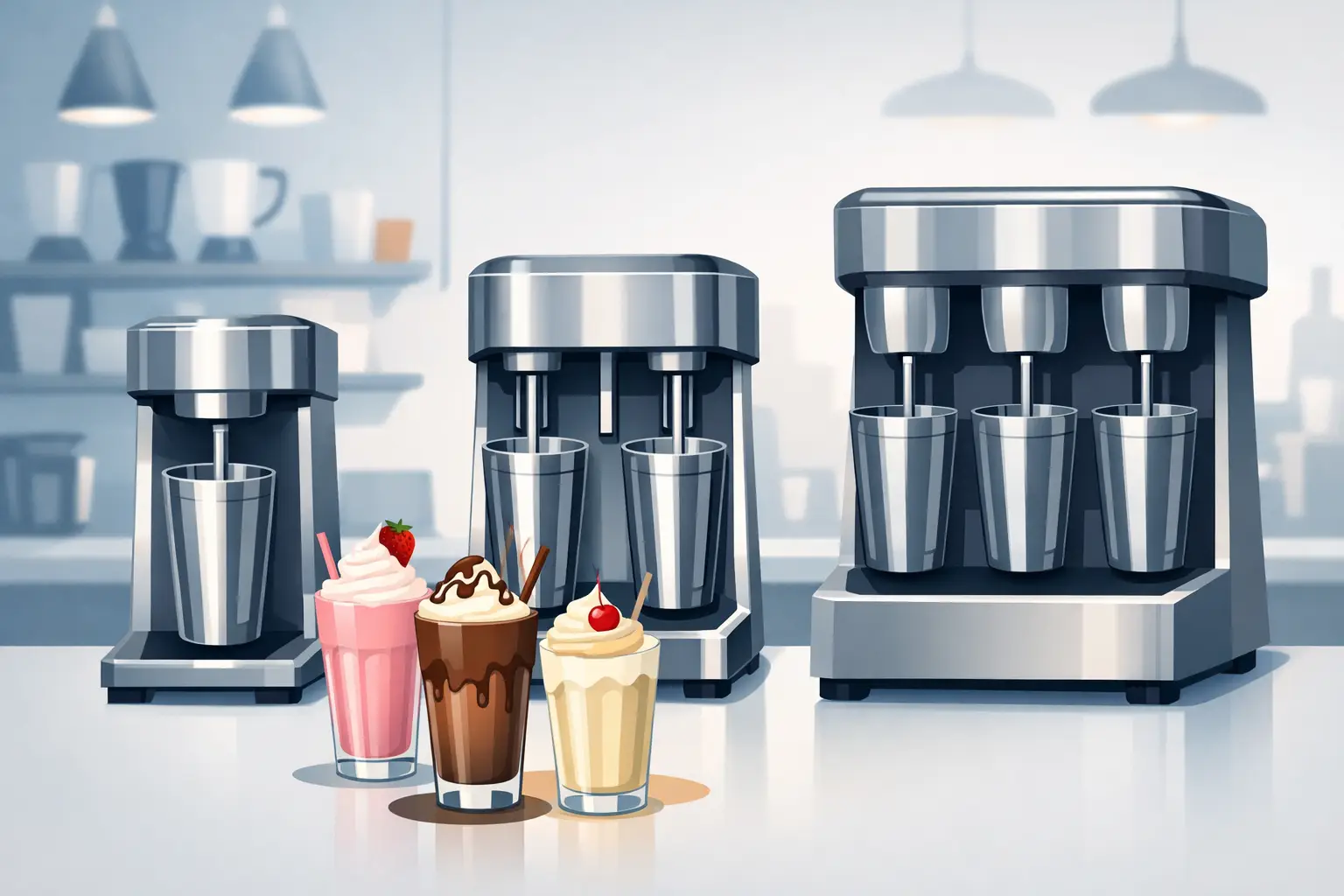
The right milkshake maker commercial machine depends heavily on volume. A site serving a handful of shakes during quiet daytime trade can work efficiently with a simple single-spindle unit. It takes up less space, costs less upfront and is easier to fit into a tight counter setup.
Once volume rises, that same machine can become a bottleneck. If your menu includes thick shakes, flavoured frappes or dessert drinks, and they are ordered in bursts, a twin-spindle or higher-capacity option may make more sense. This is especially relevant in cinemas, seaside venues, quick service restaurants and dessert-led operators where demand often arrives in waves rather than evenly through the day.
There is also a staffing angle. In kitchens and front-of-house teams with frequent turnover, simpler equipment often performs better over the long term because there is less room for error. A machine with straightforward controls and predictable output reduces training time and helps maintain consistency across shifts.
Power rating is one of the first specifications buyers look at, and for good reason. Higher wattage generally points to better blending performance, particularly with thicker products. That said, more power is only useful if the motor is built to cope with commercial use. On lower-quality machines, headline figures can look fine but the real-world performance under pressure is poor.
Cup capacity is another practical point. Think about the portion size you sell most often, not just the biggest cup on the menu. If the mixing cup is too small, staff will need to work in awkward batches. If it is oversized for your output, you are using more counter space than necessary. Matching the vessel to your standard serve improves speed and reduces mess.
Variable speeds can be useful, but only if your menu justifies them. If you offer a basic range of classic milkshakes, you may not need multiple settings. If you serve premium shakes with different ingredients and textures, speed control gives better finishing results. It depends on whether your operation prioritises simplicity or menu flexibility.
Noise should not be ignored either. In an open café, bar or dessert counter, a loud machine quickly becomes part of the customer experience, and not in a good way. In a back-of-house prep area it matters less, but on customer-facing sites quieter operation can be a genuine advantage.
For many operators, this is the decision that matters most. A single-spindle machine is usually the sensible choice for moderate demand, lower entry cost and smaller footprints. It is easier to position, easier to clean and often enough for cafés, pubs and hotel lounges where milkshakes are part of the offer rather than the main event.
A twin-spindle machine is about throughput. It allows staff to handle consecutive orders more efficiently and helps during busy service periods. If shakes are a strong revenue line, or if your business sees concentrated rushes after school, at weekends or during events, the additional capacity is often worth the extra spend.
The trade-off is space and budget. Twin-spindle units need more room and cost more upfront, so they only make sense if your sales volume can justify them. Buying too much machine is just as unhelpful as buying too little.
Commercial buyers tend to focus on performance first, but cleaning is what determines whether the machine remains practical six months later. A milkshake maker that is awkward to dismantle or clean properly will slow staff down and raise hygiene risks.
Look for removable cups, accessible spindle areas and surfaces that wipe down easily. Smooth stainless steel is generally preferable because it is durable and easier to keep presentable in front-of-house settings. If your team has to clean the machine several times a day, simple design becomes a serious operational benefit.
Maintenance is equally important. Any machine with moving parts will need attention over time. What matters is whether replacement components are available and whether the unit comes from a supplier that understands commercial equipment rather than simply shifting boxes. Downtime on a core drinks machine affects service speed, customer satisfaction and spend per head.
That is why support should be part of the buying decision, not an afterthought. Professional kitchens are better served by dealing with specialist suppliers who understand equipment lifecycles, servicing requirements and the reality of busy operations.
Not every site needs the top-end option, but the cheapest machine is rarely the best value. If the machine is used occasionally, a lower-cost commercial model may be perfectly adequate. If it sits at the centre of a fast-moving drinks operation, it is usually better to buy stronger specification from the outset.
Premium units tend to offer better motor reliability, stronger construction and longer working life. They also tend to maintain consistency better under pressure. That means less strain on staff and fewer quality complaints during peak periods.
For buyers managing capital spend carefully, it helps to think beyond purchase price. A machine that is cheaper to buy but slower in service, harder to clean or more likely to fail can cost more in labour and replacement over time. Commercial equipment should be judged on total working value, not just invoice price.
A milkshake machine rarely works in isolation. It relies on refrigeration holding product at the right temperature, adequate counter space, sensible workflow and power supply in the correct location. If the surrounding setup is poor, even a good machine will feel inefficient.
For that reason, buyers should think about the full station. Is there space for syrups, cups, toppings and cleaning materials? Can staff move easily without crossing service lines? Is the machine being used in front-of-house where appearance matters, or in a prep area where output is the only concern?
These details influence which unit is right. A compact machine may be the better decision if space is tight. A heavier-duty model may be justified if the station is designed for high-volume dessert or beverage production. Good equipment buying is rarely about one specification in isolation.
When commercial operators buy equipment, the safest decision is usually the one backed by technical knowledge and aftersales support. That is particularly true if you are fitting out a new site, replacing failed equipment quickly or balancing performance against budget across multiple pieces of kit.
A specialist supplier such as Island Catering Equipment Co. understands that commercial buyers are not shopping for gadgets. They are buying reliability, availability and support. That matters whether you are replacing a single drinks machine or planning a wider kitchen setup with refrigeration, prep tables, warewashing and cooking equipment all needing to work together.
The right milkshake maker commercial unit should feel straightforward in service. It should start quickly, blend consistently, clean down without fuss and keep pace with demand. If it cannot do that in your environment, it is the wrong machine, regardless of price or branding.
The best buying decision is usually the one that matches your busiest hour, not your quietest day.





No account yet?
Create an Account