


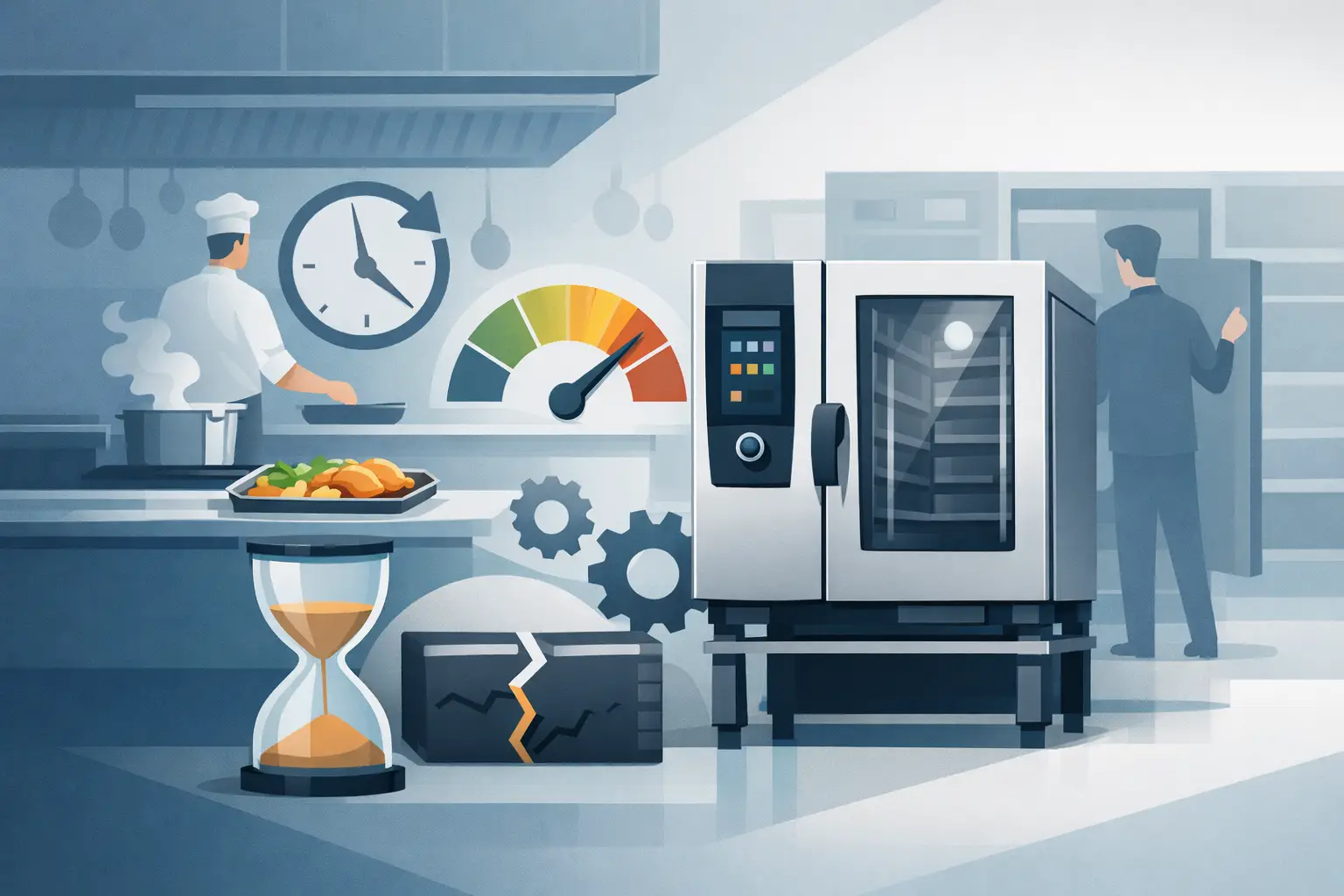
A Rational combi oven that is cooking breakfast, lunch and evening service every day will not age in the same way as one used for occasional banqueting. That is why the honest answer to how long do Rational ovens last is not a single number. In a well-managed professional kitchen, a Rational oven can commonly provide 10 to 15 years of productive service, and many remain operational beyond that point with the right maintenance, repairs and replacement parts.
The bigger question for an operator is whether the oven is still delivering reliable output, accurate results and commercially sensible running costs. A well-maintained older unit can be a sound asset. An oven with repeated faults, poor cleaning discipline and unavailable support can quickly become a source of costly downtime, whatever its age.
Rational ovens are built for demanding commercial use. Their cooking systems, steam generation, fans, controls and automatic cleaning functions are designed to support high-volume kitchens rather than light domestic cooking. However, the workload placed on the machine has a direct effect on its usable life.
For many restaurants, hotels, pubs, schools and care kitchens, 10 to 15 years is a sensible planning range for a properly serviced unit. A unit used heavily across multiple daily services may need major components sooner than an oven in a lower-output site. Conversely, an oven that is cleaned correctly, descaled where required and inspected regularly can continue to earn its place in the kitchen long after its initial warranty has ended.
Age alone should not determine whether an oven is replaced. A seven-year-old oven with neglected cleaning and water treatment can be in worse condition than a 12-year-old machine that has been professionally maintained. The condition of key components, the frequency of callouts, cooking consistency and the cost of anticipated repairs are more useful measures.
A Rational running from early morning until late evening is exposed to more heat cycles, steam, grease and physical wear than one used for a single service. High-volume production is exactly what these ovens are made for, but it increases the importance of planned maintenance.
The kitchen environment matters too. Poor extraction, excessive airborne grease, cramped installation space and inadequate ventilation can all add stress to electrical components and cooling systems. Doors repeatedly slammed, racks overloaded or probes handled carelessly may seem minor, but these habits shorten component life over time.
Water is one of the biggest long-term factors in combi oven reliability. Hard water can create limescale in steam-related components, reducing efficiency and increasing the risk of faults. Even an oven with an automatic cleaning programme requires suitable water treatment and regular checks.
If your site has hard water, do not treat filtration as an optional extra. Using the correct water treatment system, changing cartridges at the required intervals and checking water conditions protects expensive internal parts. It also helps maintain steam performance and consistent cooking results.
Rational’s automated cleaning systems make end-of-day care easier, but they do not remove the need for correct operation. Using approved cleaning products, running the appropriate programme and removing food debris from the cabinet, drain and door area all make a real difference.
Skipping cleans to save time is false economy. Grease and residue can affect sensors, seals, drains, fans and cooking performance. Harsh unapproved chemicals can be equally damaging. A clean oven is easier to inspect, safer to operate and less likely to suffer avoidable faults during a busy service.
A commercial oven should not only see an engineer once it has stopped working. Planned servicing identifies wear before it becomes a breakdown, particularly on high-use equipment. During a service visit, an engineer can check door seals, fans, drainage, probes, heating and steam functions, electrical connections, calibration and the general condition of the unit.
Replacing a worn seal or addressing a drainage issue early is normally far less disruptive than waiting for a failure during peak trading. For sites where the combi oven carries most of the kitchen’s production, planned maintenance is operational protection rather than an overhead.
No commercial oven is maintenance-free. Over its life, certain parts are more likely to need replacement due to normal use. This does not mean the entire oven has reached the end of its life. It is often part of keeping a valuable asset in service.
Door gaskets are a common wear item. A damaged or flattened gasket allows heat and steam to escape, which can affect cooking results, increase energy use and place extra strain on the oven. Door hinges and latches also deserve attention, especially in kitchens where the door is opened constantly throughout service.
Fans, motors, heating elements, steam generation parts, solenoid valves, drains and temperature probes can all require repair or replacement as an oven ages. Control boards and display components may also become an issue, although the value of repair depends on the model, fault diagnosis and parts availability.
The key is professional diagnosis. Replacing parts without identifying the cause of the fault can lead to unnecessary expense. A Rational-trained engineer can assess whether the repair is straightforward, whether another component has contributed to the issue and whether the oven remains an economical proposition.
A repair is usually worthwhile when the oven is structurally sound, its cooking performance remains good and the fault is limited to a serviceable component. For example, replacing a door seal, probe, valve or fan motor can be significantly more cost-effective than buying a new combi oven.
Replacement becomes more attractive when breakdowns are frequent, multiple high-value components are nearing the end of their life or the oven no longer suits the operation’s capacity requirements. Energy consumption, cleaning costs, programme capability and changing menu demands should also be considered. A kitchen that has grown from 80 to 250 covers may need a larger or additional unit, even if the existing oven can still be repaired.
For budget-conscious operators, a professionally refurbished Rational can provide a strong middle ground. The best refurbished units are inspected, repaired where necessary, thoroughly cleaned and rigorously tested before dispatch. This gives kitchens access to premium combi technology without the full capital cost of a new model.
The most effective approach is consistent rather than complicated. Kitchen teams should be trained to use the oven correctly, complete the right cleaning programme and report changes in performance early. Managers should keep service records and plan maintenance around quieter periods where possible.
Four practical habits have the greatest impact:
It is also worth reviewing how the oven is being used. An overloaded cabinet, incorrect rack spacing or unsuitable cookware can reduce airflow and compromise results. Proper loading not only improves food quality but reduces unnecessary strain on the unit.
A new Rational oven offers the latest controls, efficiency features and manufacturer-backed warranty support. It is often the right choice for a new opening, a high-output production kitchen or an operator that needs a specific current-generation model.
A used or refurbished oven can be the more commercially sensible option where capital expenditure is tight. The critical distinction is between a machine that has simply changed hands and one that has been properly refurbished. Buyers should ask about the oven’s condition, testing process, replaced parts, cleaning standard, warranty and ongoing service support.
Island Catering Equipment Co. supplies new and professionally refurbished Rational ovens, with specialist support available for servicing, repairs and spare parts. That combination matters because an oven’s value is not only decided on delivery day. It is decided by how reliably it performs through the years that follow.
A Rational oven should be treated as a long-term production asset. Give it clean water, correct cleaning, trained operators and planned engineering support, and it can deliver dependable service for well over a decade while protecting the pace and consistency of your kitchen.





No account yet?
Create an Account