


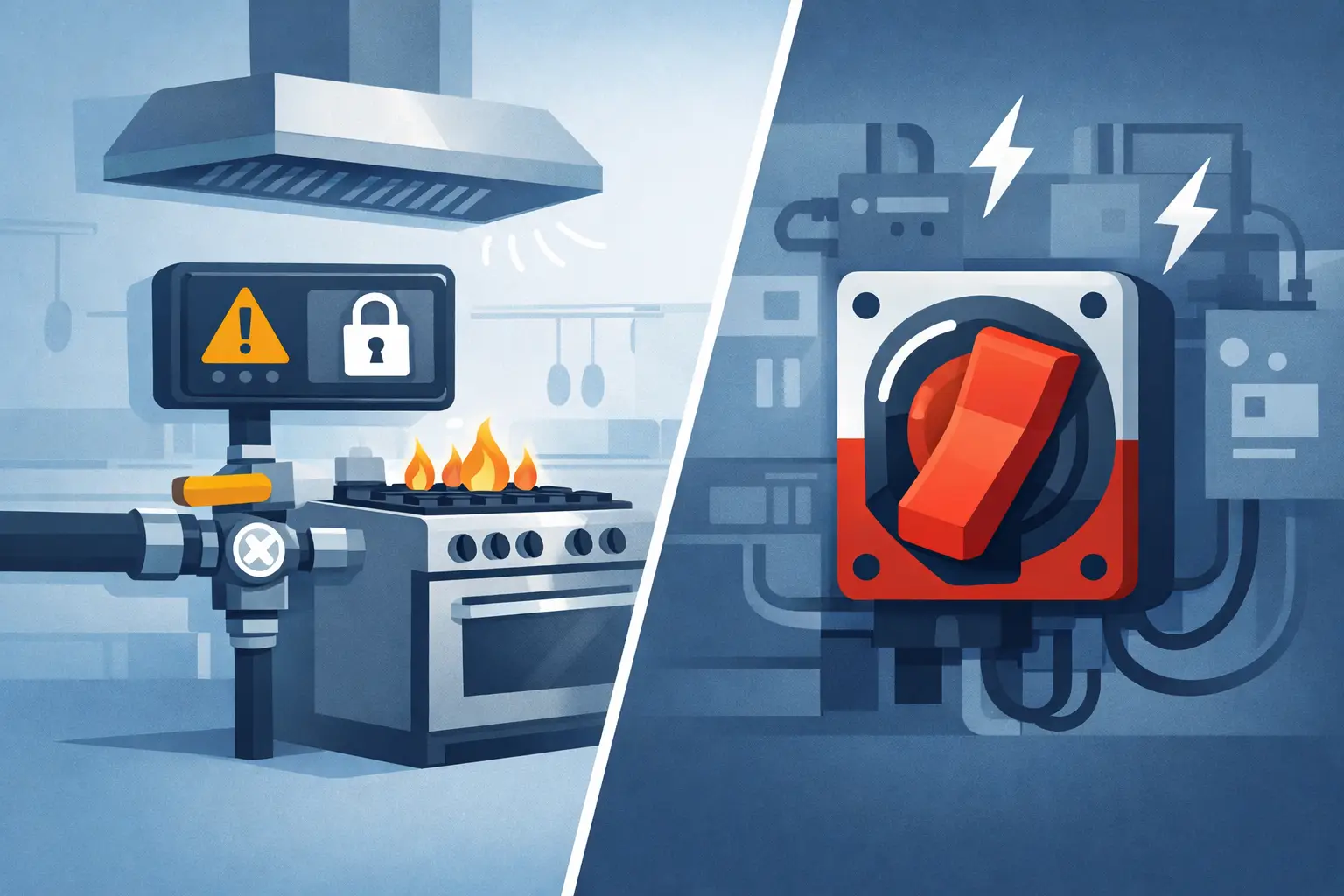
A busy pass cannot wait for a ventilation fault to become a safety incident. When comparing a gas interlock versus isolation switch, the key point is simple: they do different jobs. One is designed to prevent gas appliances operating without proven extraction. The other provides a means of shutting off a supply for an emergency, maintenance or safe isolation.
For commercial kitchens running gas combi ovens, fryers, chargrills, ranges or grills, confusing the two can leave a gap in the safety strategy. The right arrangement depends on the appliances, ventilation canopy, building controls and the risk assessment – but most serious installations need more than a single switch on the wall.
A gas interlock system controls whether gas can reach the cooking line. It will normally keep the gas supply closed until the extraction system is running and a proving device confirms adequate airflow. If extraction stops, the interlock closes the gas solenoid valve, removing the fuel supply to the connected appliances.
An isolation switch, by contrast, is a manual control point. In kitchen discussions, this term can refer to an electrical isolator for an appliance, a gas isolation valve, or an emergency shut-off control. Each has a valid purpose, but none automatically confirms that the ventilation system is working correctly.
That distinction matters most where gas appliances produce heat, combustion products, grease-laden vapour and steam under a canopy. Extraction is not simply a comfort feature. It is part of how the kitchen manages heat and maintains a safer working environment during service.
A typical gas interlock system combines a control panel, gas solenoid valve and an airflow proving switch or sensor. Staff turn on the extraction system, and once the required airflow has been confirmed, the panel permits gas to flow to the appliance line. If there is no proven airflow, the gas remains off.
Many systems also incorporate an emergency stop button. Pressing it closes the gas solenoid valve immediately. Depending on the specification, the system may connect with fire suppression equipment, building management controls, carbon monoxide monitoring or gas detection. Those additions should be specified around the kitchen’s actual risks rather than added as a generic package.
The practical benefit is clear. A member of staff cannot simply light a chargrill or start a gas fryer while the canopy fan is off or has failed. The system makes the safe sequence the normal operating sequence.
An electrical isolation switch disconnects electrical power so an appliance can be serviced safely. For example, it may isolate a combi oven, dishwasher or refrigeration unit before an engineer starts work. It does not turn off the gas supply unless it has been designed as part of a wider control system.
A manual gas isolation valve stops gas flow to a particular appliance, group of appliances or an entire kitchen section. It is essential for emergency response and maintenance. A clearly marked emergency gas shut-off valve should be accessible to trained staff, but it still relies on someone recognising the problem and operating it.
Neither type of isolation provides the automatic ventilation proofing that a gas interlock delivers. Equally, a gas interlock should not be treated as a substitute for correctly located appliance isolation points. Both controls have their place.
A properly specified kitchen separates daily safety control from maintenance isolation. The interlock manages normal operation by ensuring extraction is proven before gas use. Local isolation lets a competent engineer work on an individual appliance without shutting down every service position. An emergency shut-off gives trained staff a fast manual response if they smell gas, see a fault, or are instructed to isolate the supply.
Consider a kitchen with a gas six-burner range, fryer bank and chargrill beneath one canopy. If the extract fan fails during prep, an interlock can close the gas supply automatically. If the fryer later needs a replacement gas valve, a local isolation valve allows that repair to be completed without unnecessarily taking the whole kitchen out of action. These are complementary layers of control, not competing alternatives.
For operators, the difference also affects downtime. A poorly planned installation may force a full shutdown for minor repairs, while an overcomplicated system can create nuisance trips that frustrate staff and encourage unsafe workarounds. Good design protects people without making a busy kitchen difficult to run.
Whether a gas interlock is required depends on the type and location of appliances, the ventilation design, the applicable standards, the project specification and the findings of the risk assessment. It is commonly expected where gas cooking equipment operates under mechanical extraction, particularly on new installations, major refurbishments and sites with high heat or grease loads.
Do not assume that an existing kitchen is acceptable simply because it has operated for years without an interlock. Equipment changes can alter the risk profile. Replacing an electric appliance with a gas model, adding a chargrill, extending a cooking line, changing the canopy or upgrading fan controls may all require the gas and ventilation arrangement to be reviewed.
The same caution applies to a refurbished appliance. A professionally refurbished gas oven can offer excellent value, but its installation still needs to suit the building, extraction capacity, gas supply and control system. The condition of the oven and the suitability of the kitchen infrastructure are separate questions.
A competent, Gas Safe registered engineer should assess the gas installation. Ventilation design and commissioning should also be handled by appropriately qualified specialists. Operators should check the requirements of their insurer, landlord, local authority and any relevant project standards before work begins.
The best time to decide between a gas interlock and isolation switch is before equipment is delivered. Retrofitting controls after the cooking line is installed can involve avoidable disruption to gas pipework, electrical supplies, canopy controls and wall finishes.
Start with the appliance schedule. Identify every gas appliance, its gas type, total load and whether it sits beneath a canopy. Then review the extraction system: its duty, control method, make-up air provision and how airflow will be proven. A fan run signal is not always the same as proof that adequate airflow is present, which is why a correctly selected proving device matters.
Next, decide how the kitchen will be operated. The emergency stop should be visible and accessible without placing staff in harm’s way. Local gas isolation valves should be labelled and reachable for authorised maintenance. Electrical isolators should be located where engineers can safely lock off equipment without obstruction from hot appliances or fixed furniture.
For sites with multiple canopies or separate cooking areas, zoning can be worthwhile. A small breakfast kitchen should not necessarily lose all gas supply because a separate production canopy is shut down. However, each zone adds controls, commissioning requirements and points that must be maintained. The operational benefit needs to justify the added complexity.
One common mistake is treating the canopy fan switch as an interlock. A fan may appear to be running while airflow is inadequate because of a failed belt, blocked filters, damper issue or control fault. A proper interlock is designed to respond to the required proving condition, not just an on-off command.
Another is assuming an emergency stop button provides the same protection as a gas interlock. It is valuable, but manual. It only works after a person has identified the issue, reached the control and pressed it. Automatic gas shut-off during loss of proven extraction is a different function.
A third is overlooking commissioning and maintenance. A gas interlock is only dependable when the solenoid valve, control panel, wiring, airflow sensor and emergency stop are checked as part of a planned maintenance programme. Kitchen managers should ensure staff know the normal start-up sequence, what an alarm means and who to call if the system will not prove.
Avoid bypassing an interlock because service is about to start. If the system will not enable gas, treat that as a fault requiring investigation. Bypasses can turn a manageable maintenance issue into a serious safety and compliance failure.
For most professional kitchens, the decision is not gas interlock or isolation switch. It is about fitting the right interlock for automatic control, together with correctly positioned electrical and gas isolation points for emergencies and maintenance.
Before purchasing or replacing gas cooking equipment, have the ventilation, gas capacity and control arrangements reviewed as one system. That early check gives the kitchen the best chance of passing commissioning cleanly, protecting staff and keeping the cooking line available when service starts.





No account yet?
Create an Account