


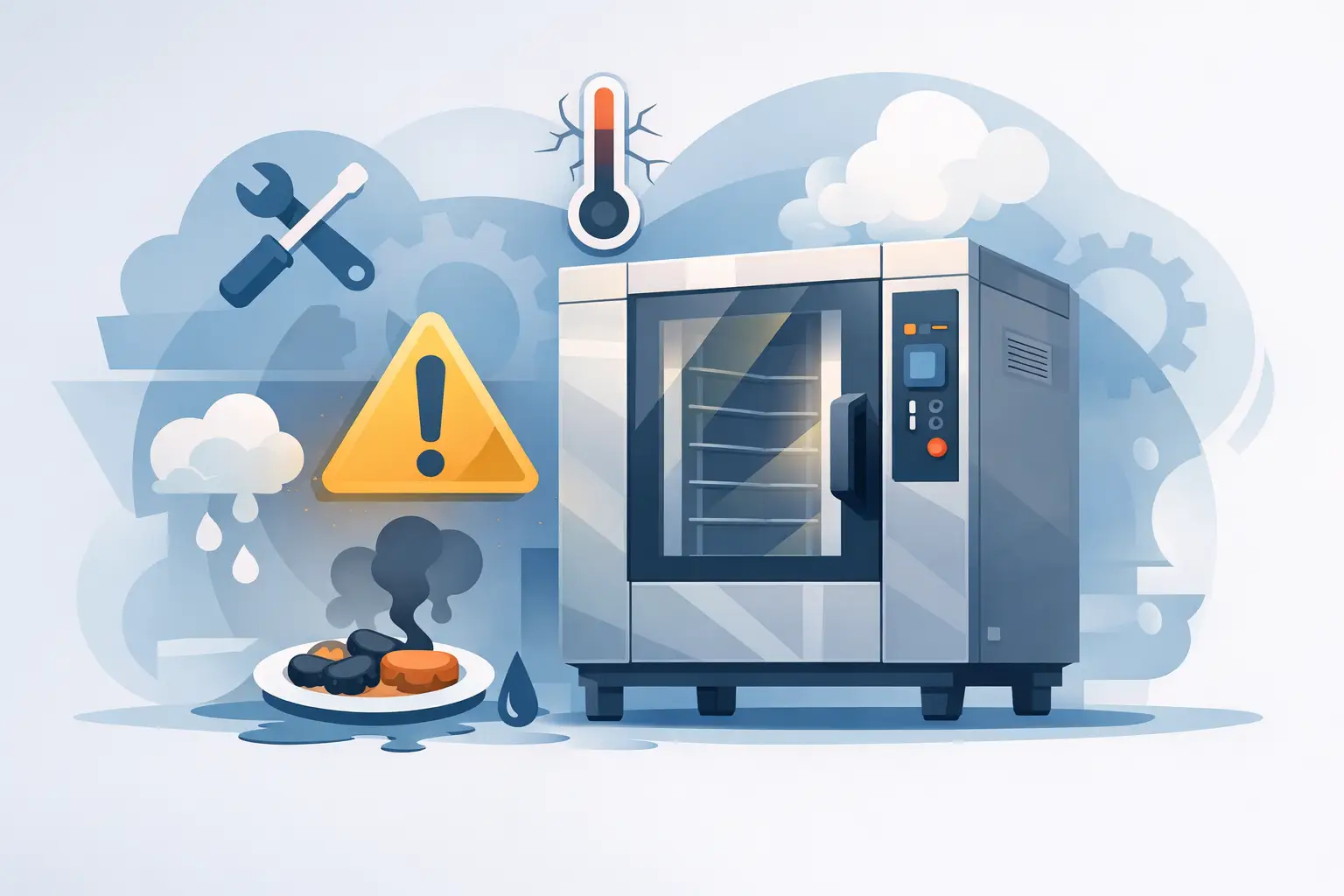
A combi oven can be the hardest-working piece of equipment in a professional kitchen. When it starts failing during a busy lunch service, produces uneven results, or requires repeated engineer visits, the question is no longer simply how to repair it. Knowing when to replace combi oven equipment helps protect service, food quality and operating margins before a manageable fault becomes costly downtime.
For many kitchens, replacement is not triggered by age alone. A well-maintained Rational combi oven can provide many years of dependable service. The decision should be based on performance, repair history, capacity requirements and the cost of keeping the existing machine operational against the benefits of a newer or professionally refurbished unit.
A single failed component does not usually justify replacing a commercial combi oven. Elements, door seals, probes, fans, drainage components and control parts can often be replaced economically, particularly where the oven has been serviced correctly and remains suitable for the kitchen’s output.
The position changes when faults become frequent, expensive or unpredictable. If the oven is repeatedly taken out of service, the true cost is not limited to the engineer invoice. Consider lost covers, staff disruption, reduced menu choice, wasted food and the need to use less efficient backup equipment. In a high-volume operation, one unreliable combi oven can quickly affect the whole kitchen.
A useful commercial test is to compare the likely cost of repairs and maintenance over the next 12 months with the cost of replacement. If major repairs are needed, several components are reaching the end of their service life, and the oven is still causing downtime, investing further may not be the sensible option. This is especially true where a replacement will reduce energy consumption, increase production capacity or add cooking programmes that save staff time.
Occasional repairs are part of owning any commercial appliance. Repeated callouts for different faults are a warning that the oven is becoming unreliable. Recurring error codes, failed heating cycles, intermittent controls, water leaks or fan problems should be investigated promptly rather than managed from one service to the next.
An oven that cannot be relied upon at peak periods places pressure on chefs and creates inconsistency across the menu. If the team has started avoiding certain functions because they do not trust the machine, replacement should be under active consideration.
A combi oven earns its place by delivering repeatable results across roasting, steaming, baking, regeneration and mixed loads. Uneven browning, poor humidity control, inaccurate core temperatures or extended cooking times can undermine that advantage.
Some performance issues can be corrected through servicing, cleaning or recalibration. However, persistent inconsistency may point to worn components, sensor issues, steam-generation faults or control-board problems. Where food quality is slipping and repairs do not restore reliable performance, a replacement oven is often the safer commercial decision.
It is sensible to repair a quality combi oven when the fault is isolated and the rest of the machine is in good condition. It is less sensible to keep approving costly repairs on an oven with a long list of outstanding issues.
Look beyond the price of the immediate repair. Ask whether the door gasket, racks, fan motor, heating system, water treatment arrangements, seals and controls are all in suitable condition. A large repair followed by further failures a few months later can cost more than planned replacement, while leaving the kitchen exposed to another breakdown.
Older ovens can remain productive, but they may not operate as efficiently as more recent models. Poor seals, reduced insulation performance, inefficient steam production and lengthy heat-up times all increase utility use. Limescale can make the problem worse by affecting heating and water flow.
Energy costs alone will not always justify an immediate replacement. Yet when they sit alongside repairs, declining output and an ageing control system, they form a stronger case. A newer Rational oven may provide more precise cooking control, efficient cleaning programmes and lower consumption per cover produced.
Sometimes the oven is functioning correctly, but the kitchen has outgrown it. A restaurant expanding covers, a care facility changing its food production model, or a caterer taking on larger events may need more rack capacity, faster regeneration or a second unit for resilience.
Equally, a kitchen that has simplified its menu may be operating an oven that is larger than necessary. Replacing an unsuitable machine with the correct size and specification can improve workflow and reduce unnecessary operating costs. The best time to replace is often before the old oven fails, when the purchase can be planned around the menu, available services and installation requirements.
Before condemning an oven, arrange a proper assessment by a qualified commercial catering engineer. Poor results are not always a sign that the oven itself has reached the end of its life. Water quality, inadequate filtration, neglected cleaning, incorrect chemicals, drainage issues, ventilation problems and inconsistent staff use can all cause faults or shorten component life.
A service inspection should establish the condition of key components, identify any immediate safety concerns and give a realistic view of future repair requirements. It also provides the information needed to compare options properly. Replacing a repairable oven too early wastes capital; running a failing oven until it stops during service can be far more expensive.
Maintenance history matters. An oven that has received regular servicing, correct cleaning and water treatment is generally a better candidate for repair than one that has been run without preventative maintenance. Conversely, heavy limescale, corrosion and a pattern of unresolved faults may indicate that further investment has limited value.
A new combi oven is often the right choice for operators who need the latest controls, a full manufacturer warranty, a specific capacity or a machine configured for intensive daily use. It can be a strategic investment where output, menu flexibility and energy performance are central to the business.
A professionally refurbished Rational oven can offer a stronger value route where capital expenditure is tightly managed. The important distinction is between a properly restored unit and an oven that has simply been cleaned and resold. Refurbishment should include inspection, replacement of worn parts where required, functional testing and preparation by technicians who understand the equipment.
Island Catering Equipment Co. supplies new and used Rational combi ovens, with refurbished units prepared and tested by Rational-trained technicians. This gives buyers the option to match budget with operational needs without compromising on the core performance expected from a professional combi oven.
The right choice depends on expected usage, available budget and how critical the machine is to daily service. For a kitchen running multiple services every day, a new unit may offer the greatest reassurance. For an independent restaurant, pub, school or smaller catering operation, a high-standard refurbished oven can release budget for other essential equipment while still delivering dependable production.
An emergency purchase rarely produces the best outcome. It can limit the equipment available, force rushed decisions on size or specification, and create installation delays if electrical, gas, water, waste or ventilation requirements have not been checked.
Plan ahead when an oven begins to show the warning signs. Confirm the required capacity, tray size, power supply, water treatment, access route and whether removal of the old unit is needed. Review what the kitchen actually cooks and how the team uses the oven. Features that look attractive on paper are less valuable than the functions that reduce labour, improve consistency and keep food moving at service.
A combi oven should support the kitchen rather than become a daily operational risk. If repair costs are mounting, performance is inconsistent or capacity no longer meets demand, replacing the unit before a critical failure gives you control over the decision – and protects the service your customers depend on.





No account yet?
Create an Account