


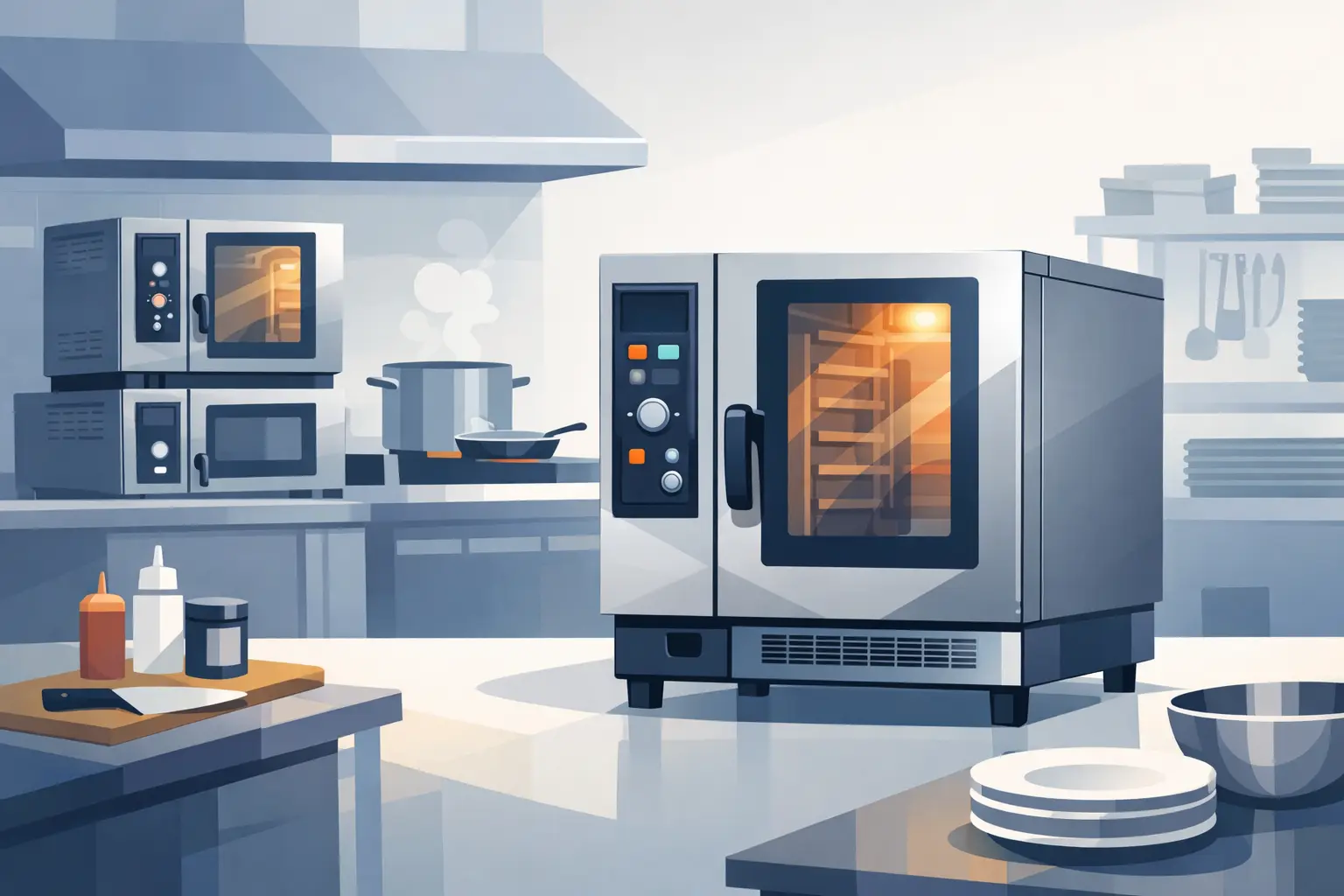
A Rational combi oven can be one of the hardest-working assets in a professional kitchen. When capital budgets are tight, used Rational ovens offer a practical route to high-output cooking, controlled results and labour-saving functionality without the cost of buying new. The key is not simply finding the lowest price. It is buying an oven with a known standard of refurbishment, the correct capacity and proper technical support behind it.
For restaurants, hotels, pubs, schools, care homes and contract caterers, this decision affects far more than the equipment budget. It influences service speed, food consistency, energy use and how quickly the kitchen can recover when demand changes.
Rational ovens have earned their place in demanding commercial kitchens because they combine several cooking methods in one footprint. Roasting, steaming, baking, regeneration and combination cooking can be managed in a single unit, reducing the need for separate appliances and improving control across the menu.
A well-maintained used model can deliver much of that operational benefit at a substantially lower initial outlay. This is particularly valuable for an independent operator opening a new site, a caterer increasing production capacity, or an established kitchen replacing a failed oven without delaying a refurbishment programme.
The saving is not only about purchase price. A combi oven that handles bulk cooking, overnight processes, regeneration and mixed loads can reduce handling between appliances. Fewer manual interventions can also help kitchens maintain consistency when staffing levels are under pressure.
That said, a used oven is not automatically good value. Age, service history, water quality, electrical or gas requirements and the quality of refurbishment all matter. A cheap unit that needs repeated callouts, has worn components or does not suit the menu will cost more than it saves.
The term ‘refurbished’ is used widely in the catering equipment trade, but the standard can vary considerably. Buyers should look beyond a cleaned exterior and ask how the oven has been assessed, repaired and tested before sale.
A professionally refurbished Rational oven should be inspected by technicians who understand the brand and its common wear points. The cooking chamber, door seal, hinges, fan system, heating elements or burners, control panel, drainage and cleaning functions all need attention. Components that are worn, damaged or unreliable should be replaced, not left in place because the oven happens to power on.
Testing is equally important. The oven should be run through its functions to confirm it reaches and holds temperature, generates steam correctly, drains as intended and operates through relevant cooking and cleaning cycles. On gas models, safe operation and correct gas setup are essential. For any unit, buyers should confirm whether it has been checked for the utility configuration required at their premises.
At Island Catering Equipment Co., used Rational ovens are restored and tested by Rational-trained technicians before dispatch. That technical process provides more reassurance than buying an unverified machine through a general marketplace, where its history and condition may be unclear.
The right oven size depends on the volume and pattern of food production. A compact six-grid unit may suit a café, small pub kitchen or satellite operation where space is limited and batches are modest. A 10-grid oven is often a strong all-round choice for busy restaurants and medium-volume catering. Larger 20-grid floorstanding models are designed for serious throughput in institutions, production kitchens, large hotels and event catering.
Do not select a smaller unit simply because it is cheaper or easier to position. If it must run back-to-back throughout prep and service, it can become a bottleneck. Equally, buying a large floorstanding oven for low-volume service can tie up budget, utility capacity and valuable kitchen space.
Consider the menu as well as the number of covers. A kitchen producing plated banqueting meals, roasted meats, steamed vegetables and regenerated dishes may benefit greatly from a larger capacity unit. A venue focused on a short à la carte menu may prioritise flexibility, speed and a smaller footprint instead.
Grid capacity alone does not tell the full story. Confirm the tray size, shelf spacing and loading arrangement required for your food production. Gastronorm compatibility, bakery trays and roll-in trolley options can make a significant difference to daily workflow.
For example, a care kitchen may need efficient bulk regeneration on standard gastronorm trays, while a bakery operation may need the right rack configuration for consistent baking. The oven should fit the way your team already works, or the way you intend the new kitchen to operate.
Rational has produced several generations of combi oven, with differing control systems, programming features and cleaning technology. Older models can still be highly capable, but operators should be realistic about the functions they need and the level of familiarity their staff have with the controls.
A more recent unit may offer advanced cooking programmes, guided operation and improved cleaning systems that help standardise output across shifts. An older model may be the sensible commercial choice if it is in excellent condition, supported with available parts and suited to a kitchen with experienced chefs.
There is no single right answer. The best value is the oven that delivers the required output reliably without paying for features that will never be used. Before purchase, establish whether the team needs programmable cooking, automatic cleaning, core temperature control, overnight cooking or a straightforward manual setup.
A used combi oven must be compatible with the installation site. This is where otherwise sensible purchases can become expensive. Check available width, depth and height, including access through doors and corridors. A large unit may fit on the drawing but not pass through the building without additional handling or removal of door furniture.
Utilities require the same care. Confirm whether the oven is electric or gas, the power supply available, water pressure, drainage route, extraction arrangements and clearances around the appliance. Water treatment is especially important. Poor water quality can cause limescale and contribute to avoidable component failure, affecting both performance and service costs.
It is wise to establish delivery and installation requirements before committing. A professional kitchen cannot afford to have a major item delivered only to find that the site is not ready, the electrical supply is unsuitable or the drainage connection is incomplete.
When comparing used Rational ovens, calculate the whole operating proposition. The initial price should sit alongside delivery, installation, any required water filtration, servicing, cleaning chemicals, warranty cover and the likely availability of spare parts.
A supplier with specialist engineering support can be a stronger long-term option than a lower-priced seller with no aftersales capability. Commercial kitchens need rapid, informed help when an oven is down. Delays can force menu changes, increase labour pressure and compromise service at precisely the wrong time.
Ask clear questions before buying: what work has been carried out, what has been tested, what warranty is provided, and what support is available after installation? The answers reveal whether you are purchasing a properly prepared commercial asset or simply taking on someone else’s risk.
Even the best refurbished oven needs routine care. Staff should follow the recommended cleaning process, inspect the door seal, keep the cooking chamber clean and report unusual noises, error messages or inconsistent results promptly. Skipping cleaning cycles to save time is a false economy, particularly on an appliance designed to operate under intense daily use.
Planned servicing is equally worthwhile. A specialist engineer can identify developing faults before they cause a breakdown during service. This is particularly relevant for sites that depend on one combi oven for most of their production, where downtime has an immediate commercial impact.
A used Rational oven should be treated as a business-critical piece of equipment, not a bargain purchase to be forgotten once it is installed. Choose the right capacity, verify the refurbishment standard and prepare the site properly, and it can provide dependable cooking performance for years while keeping capital expenditure under control.





No account yet?
Create an Account