


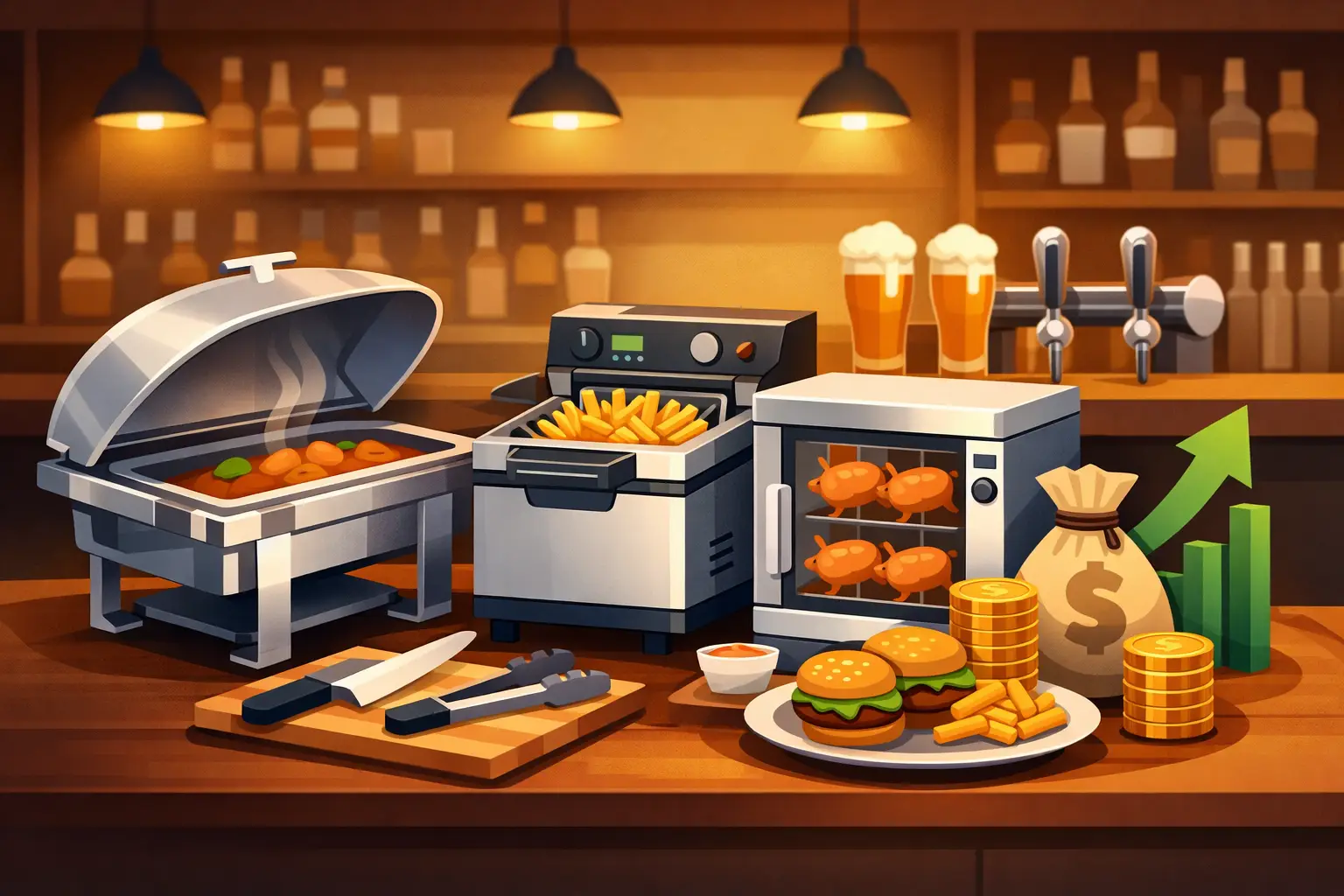
Friday service exposes every weak point in a pub kitchen. A fryer that cannot recover quickly, an underpowered grill, poor refrigeration layout or a slow dishwasher can turn a full bar into long food waits, wasted stock and frustrated staff. The best catering equipment for pubs is not simply the biggest or cheapest kit available. It is the equipment that supports the menu, fits the kitchen, handles peak covers and remains economical to run and maintain.
For most operators, the right buying decision starts with the food offer. A wet-led pub adding a compact lunch menu has very different requirements from a food-led destination pub serving 250 covers over a weekend. Build the kitchen around the work that must be done consistently during the busiest hour, rather than the quietest weekday shift.
Before comparing models, look closely at what is actually sold. Count the dishes that need frying, grilling, roasting, baking, regenerating or holding. Then identify where service slows down. A pub producing burgers, fish and chips and loaded fries needs strong frying and chargrilling capacity. A carvery-led operation needs reliable roasting, hot holding and regeneration. A varied all-day menu may benefit most from a combi oven that can take on several cooking tasks in a small footprint.
It is also worth separating equipment that drives revenue from equipment that protects service. An oven, fryer or pizza oven may create the menu offer, but refrigeration, extraction and warewashing keep that offer viable. Saving money on the latter can prove expensive when food cannot be stored safely, staff lose time searching for ingredients or glasses run out during a busy evening.
Avoid specifying capacity solely from the number of seats. Covers per hour, menu complexity, delivery trade and the split between lunch and evening service matter more. A 70-seat pub with a fast turnaround and a strong Sunday lunch may require more production capacity than a 120-seat venue with a relaxed, drinks-led trade.
For pubs with a broad menu, a commercial combi oven is usually one of the most productive pieces of equipment in the kitchen. It can roast meats, bake, steam vegetables, regenerate prepared dishes, cook breakfast items and hold better moisture control than a conventional oven. That versatility reduces the number of separate appliances required and gives chefs repeatable results across shifts.
A Rational combi oven is particularly well suited to kitchens that need consistency with a changing team. Programmable cooking, controlled humidity and automatic cleaning can reduce reliance on individual chef judgement while helping protect product quality. This matters in pubs where recruitment is difficult, menus are standardised across sites or kitchen teams include less experienced staff.
Size should be chosen carefully. A compact unit can be the right answer for a small pub kitchen or a site introducing food for the first time. Larger floor-standing models suit higher-volume operations, banquet work and venues using overnight cooking or bulk regeneration. More capacity is useful only if there is sufficient extraction, power or gas supply, preparation space and trained staff to use it properly.
A professionally refurbished Rational oven can make commercial sense where capital expenditure is tight. The value depends on refurbishment quality, testing, available support and the expected operational life of the machine. Buying used equipment without a clear technical standard or service route may lower the purchase price but increase downtime risk. Island Catering Equipment Co. supplies refurbished units restored and tested by Rational-trained technicians, giving operators an option between entry cost and premium new-equipment specification.
The hot line should reflect the menu’s highest-volume cooking methods. For many pubs, a fry station remains essential. Twin-tank commercial fryers allow fish, chips and other fried products to be managed separately, improve output during peaks and provide a measure of resilience if one side is unavailable. The trade-off is oil management, filtration, ventilation demand and cleaning time. A fryer that is too small saves space initially but will lose money when recovery time holds up tickets.
A chargrill or griddle is the natural partner for burger, steak and brunch-led menus. Gas equipment offers immediate visual control, while electric models can be appropriate where gas is unavailable or the site has specific ventilation constraints. Check the heat output, cooking surface area and grease handling, not just the external dimensions. A compact appliance can quickly become a bottleneck if several menu items rely on it at once.
Pizza can be a profitable addition where the offer is focused and the kitchen has a clear workflow. A dedicated pizza oven suits venues with genuine pizza volume, whereas a combi oven may be enough for occasional flatbreads or lower-volume dishes. Do not buy specialist pizza equipment simply because pizza appears on the menu. Purchase it when demand justifies the footprint, energy use and prep requirements.
Hot holding equipment also deserves attention, especially for carveries, events, breakfast service and high-volume sides. Heated cupboards, bains-marie units and pass-through holding solutions can protect consistency, but they should not compensate for poor production planning. Holding food for too long affects quality and can create avoidable waste.
Refrigeration is often treated as a background purchase until a cabinet fails in the middle of a summer weekend. In reality, it is central to stock control, food safety and kitchen speed. Choose upright cabinets, counter fridges and freezer storage according to product flow, not just total litre capacity.
A prep counter with refrigerated storage beneath can reduce movement on a busy line, while an upright refrigerator is better for bulk ingredients and delivery storage. Separate raw and ready-to-eat food where the operation requires it, and leave enough room for air circulation, door opening and cleaning. Installing a large cabinet into a tight corner may look efficient on a plan but creates poor access and harder maintenance.
Look at temperature performance in a demanding kitchen environment. Refrigeration positioned beside fryers, grills or direct sunlight works harder and may struggle if ventilation is restricted. Energy efficiency is relevant, but reliability, usable layout and service access should carry equal weight. Lost stock from a failed fridge costs more than the difference between two purchase prices.
A pub cannot maintain drinks service without dependable glasswashing. The correct glasswasher needs to match peak glass volume, glass size and the time available between rushes. Consider cycle time, basket dimensions, drainage, water treatment and chemical dosing. Hard-water areas especially require the right treatment to avoid poor presentation, scale build-up and unnecessary repair costs.
Where food service is substantial, an undercounter dishwasher may be sufficient for a smaller site, but a pass-through machine can transform throughput in a busy kitchen. Faster wash-up is not merely a labour saving. It keeps crockery circulating, reduces clutter in the pot wash area and helps the team reset quickly for the next service.
Extraction must be designed for the cooking equipment beneath it. Adding a fryer or chargrill without adequate canopy, fan capacity and ductwork is a false economy that can lead to heat, odours, grease build-up and compliance problems. Ventilation should be considered before finalising the hot line, particularly in older pub buildings where routes for ducting and make-up air can be limited.
Stainless steel tables, shelving, sinks and refrigerated prep stations rarely attract the same attention as a new oven, yet they determine whether the kitchen can work cleanly and efficiently. Staff need enough clear bench space to portion, plate and prepare without crossing into wash-up or raw-food areas. Good layout reduces unnecessary steps and makes cleaning simpler at the end of service.
Resilience should be part of the specification. If one appliance fails, can the team still produce the core menu? A single multipurpose combi oven can be highly efficient, but a high-volume pub may need contingency through alternative cooking equipment, a second smaller oven or a menu that can be reduced sensibly. The same applies to refrigeration and warewashing: downtime is usually most costly at the exact moment the kitchen is busiest.
When comparing quotations, include installation requirements, utilities, commissioning, staff familiarisation, cleaning products, water treatment, planned maintenance and access for future repairs. The cheapest equipment price is not always the lowest cost of ownership. Equipment that is correctly installed, serviced and supported tends to give a more predictable return.
The right pub kitchen is built for the service you want to run six months from now, not just the menu printed this week. Specify equipment around proven demand, leave room for disciplined workflow and buy from a supplier able to support the machine after delivery. That approach gives the kitchen a better chance of keeping pace when every table orders at once.





No account yet?
Create an Account