


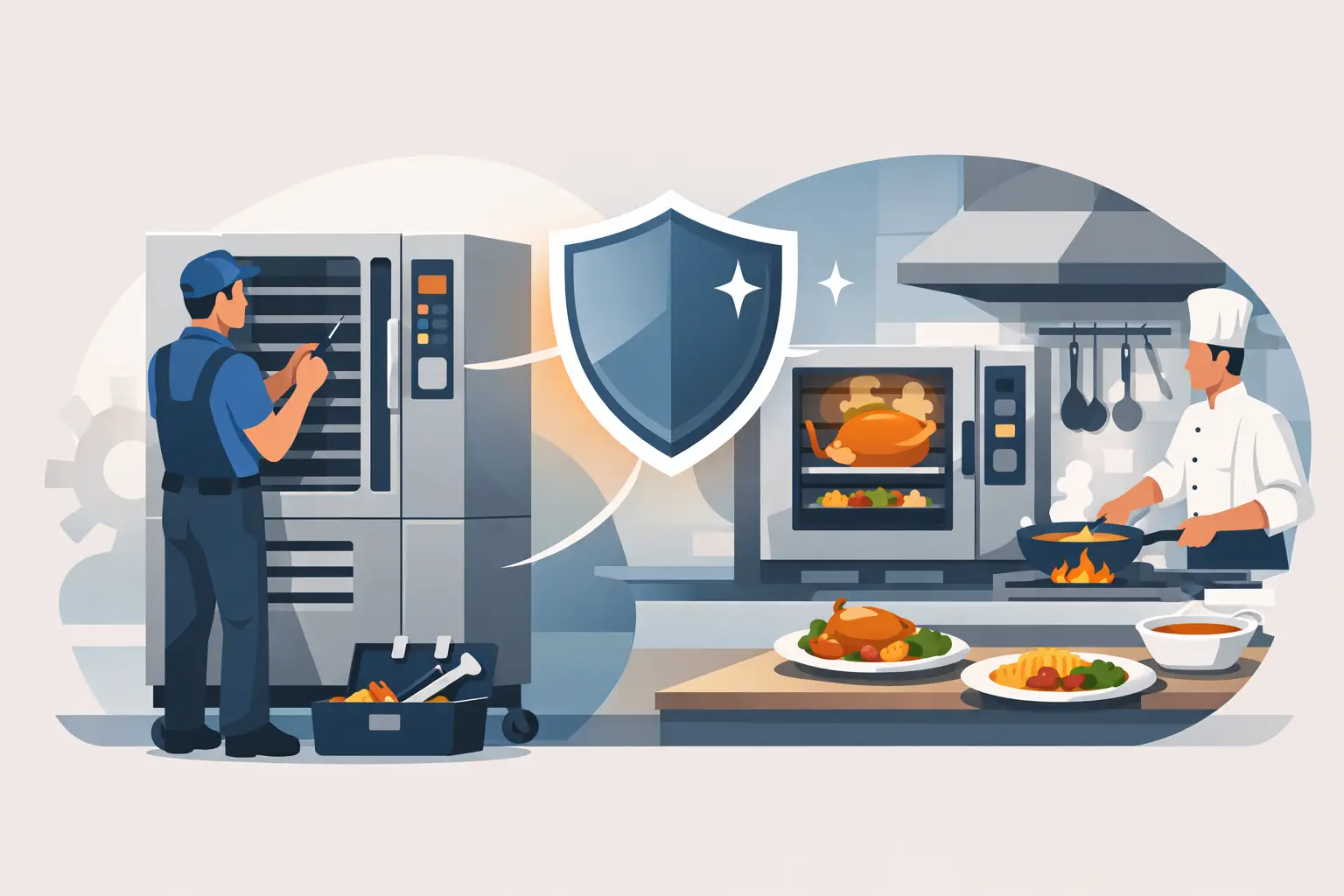
A combi oven that starts producing uneven results at the height of lunch service is rarely a small problem. Lost capacity quickly becomes slower tickets, wasted food, pressure on staff and, in the worst cases, an unexpected closure. Planned combi oven servicing is the practical way to reduce that risk and protect one of the most valuable pieces of equipment in a professional kitchen.
For operators relying on Rational equipment day after day, servicing is not simply a response to a fault code. It is a planned inspection of the systems that control heat, steam, airflow, water use and safety. Done properly, it helps maintain cooking consistency, identifies wearing components before they fail and gives the kitchen a clearer picture of its equipment condition.
A combi oven performs several demanding jobs at once. It generates heat, controls humidity, moves air around the cabinet, drains waste water and, depending on the model, manages automated cleaning cycles. In a high-output restaurant, hotel, school or care kitchen, these systems may be working for many hours every day.
That workload creates gradual wear rather than always producing an obvious failure. Door gaskets harden, fans and motors become less efficient, drainage can restrict, probes can lose accuracy and seals can deteriorate. The oven may still switch on and cook food, but performance can begin to drift. A tray may colour less evenly, a programme may take longer, or the unit may use more water and energy than it should.
The commercial cost is often hidden at first. An oven that is slightly less efficient may encourage staff to run longer cooking cycles or compensate with manual adjustments. That reduces the consistency and labour-saving benefits that justify buying a combi oven in the first place. Regular attention gives operators a better chance of correcting small issues before they become an emergency engineer callout.
For gas-powered units, servicing also carries a clear safety responsibility. Gas appliances require appropriate inspection, testing and certification by a suitably qualified engineer. Electrical units need equally careful checks of electrical components, heating systems and controls. The exact requirements depend on the oven, its installation and how it is used, but leaving these checks until a breakdown is a poor operating strategy.
The scope of a service should reflect the make, model, fuel type, age and use of the oven. A lightly used unit in a small café has different demands from a Rational iCombi operating across breakfast, lunch and dinner in a hotel. However, a proper visit should be more than a quick visual check and a reset of the display.
An engineer should inspect the door, hinges, latch and gasket for wear, alignment and a proper seal. Heat and steam escaping around a damaged gasket affects efficiency and can create poor cabinet conditions. The fan system, motor operation, rack movement and internal components should also be assessed for noise, damage or signs of fatigue.
Cooking performance relies on accurate temperature control and effective airflow. Checks may include heating operation, cabinet temperature behaviour, core probe condition and calibration where required. If a probe is inaccurate, it can undermine food quality and food safety procedures even when the oven otherwise appears to be working normally.
Water quality has a direct effect on combi oven reliability. Limescale and mineral deposits can affect steam generation, heating efficiency and valves, particularly in hard-water areas. A service should examine the water inlet, filtration arrangements, steam-generating components where fitted, hoses and connections for restrictions or leaks.
Drainage deserves the same attention. Fat, food debris and cleaning residues can obstruct drain lines over time. Slow or unreliable drainage may interrupt cleaning programmes, leave water in the cabinet or trigger operational faults. Keeping the drain path clear protects both the oven and the working environment around it.
Rational ovens with automatic cleaning functions depend on correctly operating dosing, wash and rinse systems. The engineer can check whether the cleaning process is completing as intended and whether components show signs of blockage, leakage or wear. Automatic cleaning is highly effective, but it does not remove the need for daily inspection and correct use by the kitchen team.
Electrical checks should cover connections, cable condition, controls and components relevant to the unit. On gas models, combustion, gas supply, burner operation and safety devices require specialist attention. Any service report should clearly record the work completed, defects found, parts recommended and any actions needed to keep the oven safe and productive.
For most commercial kitchens, an annual service is the sensible baseline. It supports planned maintenance, helps keep equipment in reliable condition and allows issues to be addressed outside the pressure of a breakdown. High-use kitchens may benefit from more frequent inspections, especially where the oven is central to production or operates for long hours every day.
Usage is only one factor. Water hardness, ventilation, cleaning standards, age of the unit and the type of food being produced all influence service needs. A bakery running frequent steam cycles, for example, places different demands on an oven than a pub using it mainly for regeneration and mixed batch cooking.
Older refurbished equipment should not automatically be treated as a greater risk if it has been professionally restored and maintained. The key question is its condition, service history and workload. A high-standard refurbished Rational oven, tested by trained technicians and supported with the right maintenance, can be an excellent commercial asset. Equally, a newer unit can develop preventable faults if cleaning, water treatment and routine checks are neglected.
Servicing works best when it is supported by disciplined daily operation. Kitchen teams should complete the manufacturer-recommended cleaning programme, remove food debris, inspect the door gasket and check that the drain area is clear. They should also pay attention to changes in performance rather than waiting for a complete failure.
Common warning signs include longer heat-up times, unusual fan noise, steam escaping from the door, inconsistent browning, water remaining in the cabinet, repeated cleaning errors or fault messages that return after a reset. These are not always signs of major damage, but they are reasons to arrange a professional assessment before service is disrupted.
Staff should not attempt to bypass safety devices, force a door closed or use unsuitable chemicals in the cabinet. Short-term workarounds often turn a repairable issue into a more expensive one. Keep a simple record of faults, cleaning concerns and dates when problems occur. That information helps an engineer diagnose intermittent issues more efficiently.
Combi ovens are specialist machines, so general appliance knowledge is not always enough. The engineer should understand the specific brand and model, be equipped to diagnose its controls and systems, and have access to suitable parts. This is particularly relevant for Rational ovens, where correct setup, software awareness, cleaning-system knowledge and component selection can affect the quality of the repair.
Price matters, but the cheapest callout is not always the best value. Ask what the service includes, whether safety checks are covered where relevant, how defects will be reported and whether replacement parts are supplied and fitted to the correct specification. A clear report helps operators budget for repairs and decide whether to repair, refurbish or replace an ageing oven.
Island Catering Equipment Co. supports commercial kitchens with specialist servicing, engineer callouts, gas safety work and access to parts for Rational and other leading professional equipment brands. For a kitchen that depends on its combi oven, a specialist response can mean less diagnostic time and a more reliable repair.
The best time to book a service is before the oven becomes the busiest kitchen’s single point of failure. Arrange it around quieter trading periods, planned closures or menu changes where possible, and ensure staff know what daily checks remain their responsibility.
A well-maintained combi oven gives chefs dependable results and managers greater control over costs. Treat the service visit as part of production planning, and your equipment is far more likely to be ready when the next full order rail arrives.





No account yet?
Create an Account