


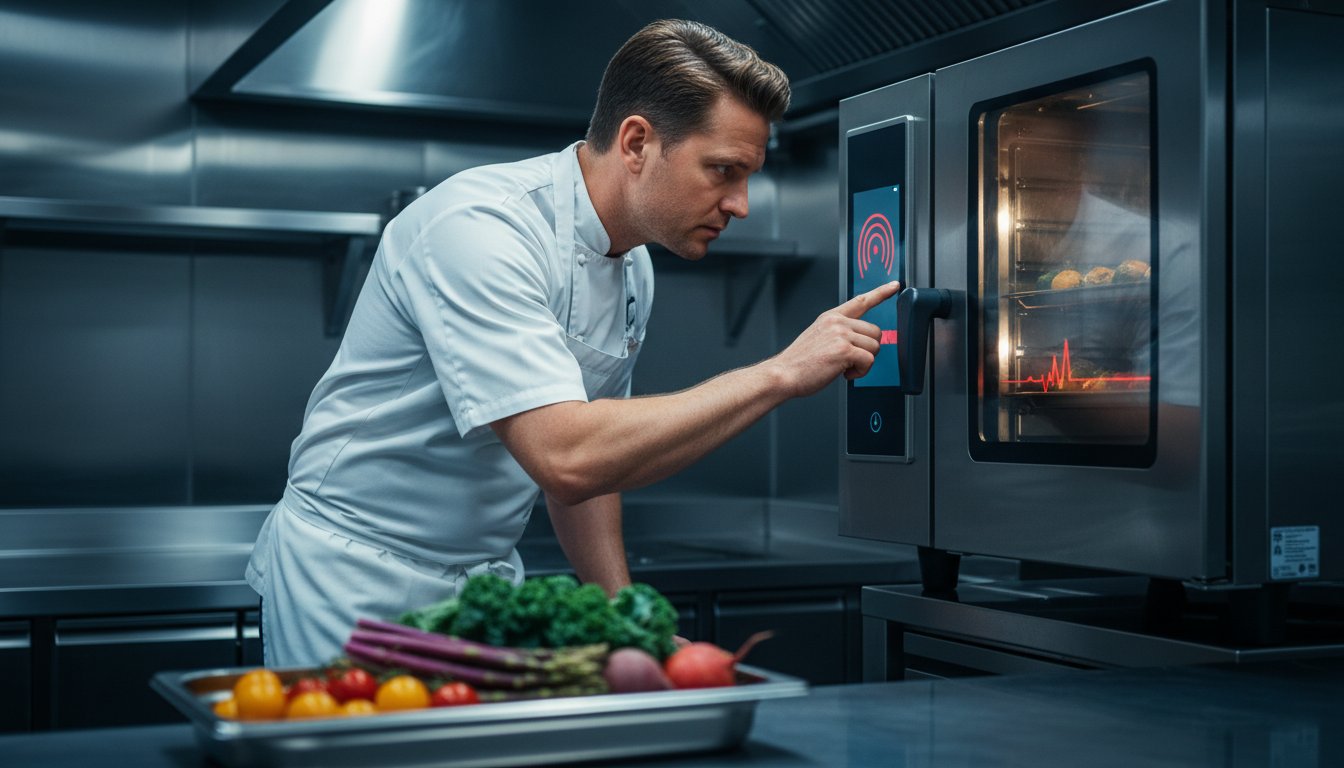
It’s 7:15 PM on a frantic Saturday evening, and you’re plating for 120 guests at a bespoke wedding breakfast. Suddenly, your combi oven emits a sharp beep and displays a cryptic error code, leaving your carefully sourced seasonal produce half-cooked and your service at a standstill. This single mechanical hiccup can instantly trigger a £450 emergency call-out fee and put thousands of pounds of fresh stock at risk. We know that the heartbeat of any professional kitchen is its equipment, and a sudden failure feels like a personal affront to your culinary passion.
You don’t have to feel helpless when your technology fails to match your standards of excellence. This guide to combi oven troubleshooting provides you with the professional expertise needed to master rapid diagnostics and resolve common commercial faults yourself. We’ll show you how to clear minor glitches immediately and explain precisely when you must call a Gas Safe engineer. By the end of this article, you’ll have a clear strategy to reduce long-term maintenance costs and ensure your kitchen remains a sanctuary of creativity rather than a source of stress.
In the heart of an exquisite professional kitchen, the combi oven acts as the conductor of a culinary orchestra. It’s a sophisticated piece of technology that blends steam and convection to create the perfect roast or the most delicate pastry. To understand the complexity of these machines, one should first grasp What is a Combi Oven and how it revolutionised modern cooking through precision control. Effective combi oven troubleshooting is the systematic process of identifying operational glitches before they derail your service. It’s about distinguishing between a simple blocked drain and a complex circuit failure. For owners of the Rational iCombi Pro, a proactive approach to these diagnostics ensures your bespoke menus are delivered with the excellence your guests expect. It extends the life of your machine and protects your artisanal craft.
When a primary cooking centre fails during a peak Saturday service on the Isle of Wight, the impact is immediate. A 50-cover restaurant can lose £650 in revenue for every hour the oven remains cold. You also face the frustration of £180 in wasted seasonal ingredients that cannot be salvaged. Beyond the financial ledger, your reputation is at stake. A single delayed wedding breakfast or a cancelled corporate lunch leads to negative reviews that linger for months. Rapid combi oven troubleshooting mitigates these risks. It allows you to maintain the seamless flow of a professional event without sacrificing quality or composure. For local establishments, securing reliable commercial kitchen repair Isle of Wight services ensures that equipment failures don’t derail your culinary reputation.
The standards are particularly high in the luxury sector, where concierge services like GAAM Ibiza curate bespoke experiences and expect flawless execution from their culinary partners.
Achieving culinary excellence relies on three fundamental elements working in total harmony. Water quality is the most vital pillar. Limescale buildup is responsible for 70% of steam generator faults in the UK. Poor filtration affects sensor accuracy and ruins the delicate balance of moisture. Power is equally critical. A minor 5% fluctuation in gas pressure or electrical voltage can prevent the unit from reaching the precise temperatures required for high-end gastronomy. Finally, airflow remains the secret to even browning. A healthy fan system ensures that every tray of local provenance vegetables achieves an exquisite, uniform texture. Keeping these pillars stable is the key to a reliable kitchen experience.
A busy kitchen relies on the rhythmic precision of its equipment. When a combi oven begins to falter, the signs are often subtle before they become catastrophic. Recognising these early indicators is the first step in effective combi oven troubleshooting, ensuring your service remains seamless and your flavours remain exquisite. If your oven takes 15 minutes to reach 200°C when it usually takes 8, you’re likely witnessing the slow decline of a heating element or a gas burner struggling with inefficient combustion.
Scale buildup remains the most frequent culprit for intermittent sensor errors. When calcium and magnesium deposits coat the water level probes, the oven’s internal computer receives “ghost” readings. This often results in the unit dry-firing or failing to generate steam entirely. For those managing high-volume sites, even a 2mm layer of scale can reduce heat transfer efficiency by 15%, leading to increased utility bills and inconsistent results. If you notice your steam looks “cloudy” or carries a faint metallic scent, your filtration system has likely reached its capacity.
Start by checking the mains water supply and the inlet valves. Debris in the valve screen can starve the boiler, causing the unit to shut down to prevent overheating. Limescale is particularly aggressive in hard water areas like the South East of England, where it interferes with the delicate water level sensors. To maintain the integrity of your equipment, always source high-quality catering equipment spare parts UK for your filtration and boiler components. Using inferior parts often leads to premature failure and voided warranties.
Uneven browning is rarely a fault of the chef; it’s usually a mechanical failure. Check the door gaskets for brittle sections or tears. A 1mm gap in the seal allows enough heat to escape to drop the internal temperature by 5°C, forcing the elements to overwork. You should also observe the bi-directional fan. If it fails to reverse its rotation every few minutes, heat pockets will form, leaving one side of your tray scorched while the other remains pale.
In cases where the display shows the correct temperature but the food remains undercooked, a recalibration of the core temperature probe is necessary. When dealing with complex electrical components or gas assemblies, refer to OSHA kitchen safety guidelines to ensure your staff remain protected from thermal and electrical hazards. If these manual checks don’t resolve the issue, you might find it beneficial to consult our technical team for a professional diagnostic visit to restore your kitchen’s flow.
Your Rational iCombi Pro is an artisanal masterpiece, but even the most exquisite machinery requires clear communication to maintain its peak performance. When a code appears on your digital display, it isn’t merely a technical hiccup; it’s the oven’s way of protecting your culinary investment. Effective combi oven troubleshooting begins with understanding the logic behind these manufacturer-specific alerts. Rational uses a “Service” prefix followed by a number to categorise issues, ranging from minor sensor calibration needs to critical component failures. Accessing the diagnostic menu on an iCombi Pro is straightforward: tap the settings icon, select the “Service” sub-menu, and enter your technician’s code to view the event log. This history provides a bespoke map of your unit’s health, ensuring that local Isle of Wight businesses can keep their kitchens running with the precision of a well-timed banquet.
Differentiating between “Information” alerts and “Critical” shutdowns is essential for operational efficiency. An information alert might suggest a cleaning cycle is due, whereas a critical fault will cut power to the heating elements to prevent permanent damage. A study of commercial kitchen longevity suggests that 92% of catastrophic failures stem from ignoring these initial prompts. Expertly maintaining restaurant equipment through proactive response to alerts ensures your provenance-focused menus are never interrupted by avoidable downtime.
A “Service” message frequently highlights a maintenance requirement rather than a broken part. Modern iCombi models feature a “Care” system that monitors scale levels in the steam generator. If the oven prompts for a “Care” tab, it’s a routine request to preserve the exquisite textures of your steamed dishes. However, if a red fault code persists after a restart, it’s time to call a certified engineer. Professional combi oven troubleshooting requires a safe pair of hands when dealing with internal motorised components or high-voltage circuits. Rapid response ensures your kitchen remains a centre of culinary excellence without compromising safety.

In the high-pressure environment of a professional kitchen, every minute of downtime impacts your service and the guest experience. Before you call for an emergency engineer, follow this methodical checklist to resolve the most common issues. These steps often rectify the minor glitches that mimic major mechanical failures.
Consistency is the hallmark of a great chef, and this extends to equipment care. Running the manufacturer’s recommended end-of-day cleaning programme is vital for sensor health. Grease buildup is the primary cause of sensor failure in 85% of service calls. You must also visually inspect the drain every evening; even a small piece of stray garnish can cause water to back up and damage the electronics. Finally, ensure the air filter is clear. A clogged filter causes the motherboard to overheat, leading to expensive, avoidable repairs.
Never underestimate the importance of a pristine gasket. Research indicates that a mere 1mm gap in a door seal can increase energy consumption by 15%, adding hundreds of pounds to your annual utility bills. You can test your seal integrity by using the paper strip test. Close the door on a thin strip of paper; if the paper slides out without resistance, your seal has failed. This loss of heat is particularly noticeable when comparing gas vs electric commercial ovens, as both systems struggle to maintain the delicate humidity balance required for artisanal baking when seals are compromised.
If your combi oven troubleshooting reveals a deeper mechanical issue, our expert team is here to help you maintain a seamless service. Contact Island Catering Equipment Co. today to learn more about our bespoke equipment maintenance and kitchen design services.
While basic daily maintenance keeps your kitchen humming, there’s a definitive line where DIY combi oven troubleshooting becomes a liability. In the United Kingdom, the Gas Safety (Installation and Use) Regulations 1998 dictate that any work involving the gas supply or combustion components must be performed by a Gas Safe registered engineer. Attempting to bypass these regulations isn’t just a safety risk; it’s a legal one. When your equipment displays internal errors or ignition failures, it’s time to step back and let the experts protect your culinary sanctuary.
For owners of the Rational iCombi Pro, the stakes are particularly high. These units are masterpieces of gastronomic engineering, and their warranties are strictly contingent on professional servicing. An unauthorised repair can instantly void a warranty worth thousands of pounds, leaving you to shoulder the full cost of future component failures. Island Catering provides national support, ensuring your high-end machinery receives the bespoke care it deserves, whether you’re operating a single boutique bistro or a large-scale event space.
The principle of using certified professionals extends beyond the kitchen itself. The entire building’s plumbing and heating systems, including staff and customer facilities, require the same level of expertise to meet commercial standards. For a detailed look at what a comprehensive installation project entails, even for something as seemingly straightforward as a washroom, the guide at parallelplumbingandheating.co.uk offers valuable insights into professional standards and planning.
The allure of a quick fix from a local handyman can be tempting during a busy service, but the consequences are often dire. Unauthorised repairs frequently lead to catastrophic safety hazards like gas leaks, electrical fires, or high-pressure steam burns. Data suggests that up to 25% of commercial kitchen fires originate from poorly maintained or incorrectly repaired equipment. Beyond safety, generic spare parts often lack the precise tolerances of genuine Rational components. A £30 “universal” part might seem like a bargain, but if it causes a £1,200 circuit board to short-circuit, the true cost of that saving becomes painfully clear.
A PPM contract is the most effective way to ensure your kitchen never goes cold during a high-pressure wedding or corporate gala. By scheduling regular inspections, engineers can identify a worn seal or a scaling sensor before it triggers a total system shutdown. This proactive approach reduces emergency call-out fees, which can often exceed £150 per hour plus VAT. For establishments seeking reliable support, working with a qualified catering engineer Freshwater ensures your equipment receives the specialised attention it requires to maintain peak performance. For those who invest in reconditioned commercial catering equipment, diligent maintenance is even more vital. Regular servicing ensures these seasoned machines continue to deliver exquisite results, protecting both your capital investment and your reputation for excellence.
Island Catering stands ready as your national partner, providing the technical expertise needed to keep your kitchen performing at the gold standard. Don’t let a minor fault disrupt your passion for food; contact our team for reliable repairs and comprehensive maintenance programmes today.
Your kitchen is the beating heart of your hospitality experience; it’s where seasonal ingredients are transformed into exquisite memories. Mastering combi oven troubleshooting ensures that a minor technical alert doesn’t disrupt the flow of a high-pressure service or compromise the provenance of your bespoke menu. By decoding Rational error codes early and maintaining a daily checklist, you protect the operational efficiency that defines your craft.
When technical nuances require a specialised touch, our team provides the reassurance of Gas Safe and electrical certified engineers. We maintain a stock of over 5,000 genuine spare parts to ensure rapid repairs, supported by a logistics network that delivers nationwide across the UK. Whether you’re based on the Isle of Wight or further afield, we act as a safe pair of hands for your investment. Don’t let equipment downtime silence your kitchen’s creative rhythm.
Book a Professional Combi Oven Service with Island Catering to ensure your equipment remains as refined and reliable as your signature dishes. We’re here to support your passion for culinary excellence every step of the way.
A lack of steam usually stems from heavy limescale accumulation or a blocked solenoid valve that prevents water from entering the system. In hard water areas like the Isle of Wight, 60% of steam failures are caused by calcium deposits clogging the boiler or injection nozzles. You should first check that your water supply is fully turned on and that the external filtration system hasn’t reached its 12 month expiration date.
The Service 24 error signifies a malfunction in the burner system or gas supply, which prevents the oven from heating safely. This specific code often points to a faulty ignition electrode or a gas valve failure that requires immediate attention. Because this involves gas components, you must contact a Gas Safe registered engineer to inspect the unit and reset the internal sensors to restore your kitchen’s workflow.
You shouldn’t use domestic cleaning chemicals because they lack the required concentration to dissolve commercial-grade carbonisation and can permanently damage £500 internal seals. These mild supermarket sprays often leave a residue that taints the delicate flavour provenance of your seasonal ingredients. To protect your investment, always use manufacturer-approved tablets or liquids designed for the high-temperature self-cleaning cycles of professional units.
We recommend a professional service every 6 months or after 2,000 hours of operation to ensure your equipment remains a reliable partner in your culinary craft. Regular maintenance reduces the likelihood of emergency breakdowns by 35% and keeps your energy consumption within efficient parameters. These scheduled visits allow our experts to calibrate thermostats and check internal gaskets before they lead to a service interruption during a high-pressure event.
Your oven trips the circuit breaker when an electrical earth fault occurs, which is frequently caused by a cracked heating element or moisture ingress into the control board. If the trip happens within 180 seconds of starting a steam cycle, the culprit is likely a grounded element. Effective combi oven troubleshooting involves isolating these electrical components to prevent further damage to the main power supply of your catering facility.
A loud whistling noise isn’t normal and typically indicates that air is escaping through a compromised door seal or that a motor bearing is nearing the end of its life. If the sound exceeds 70 decibels, it’s often a sign that the fan motor is struggling to maintain the exquisite airflow required for even baking. Addressing this early prevents a total motor failure, which can cost upwards of £800 to replace in modern 10-grid models.
You’ll know the door gasket needs replacing if you notice visible steam escaping during operation or if the rubber feels brittle to the touch. A failing seal can increase your daily energy costs by 15% because the heating elements must work harder to maintain the set temperature. Check for gaps larger than 2mm or any dark mould spots that suggest moisture is being trapped rather than vented through the proper channels.
The primary difference lies in the steam delivery method, as boiler-based units use a dedicated tank while boilerless models inject water directly onto the heating elements. When performing combi oven troubleshooting, boiler models often require descaling of the tank sensors to fix steam issues. In contrast, boilerless systems usually suffer from blocked spray nozzles that prevent the fine misting required for that perfect, artisanal crust on your sourdough.





No account yet?
Create an Account