


A service rush quickly exposes the difference in equipment. When one oven can roast, steam, regenerate and bake with consistent results, while another handles dry heat well but little else, the buying decision stops being theoretical. That is why the combi oven vs convection question matters so much in commercial kitchens.
For most professional operators, this is not about which oven is better in absolute terms. It is about output, menu flexibility, labour, space and whether the unit will earn its keep. A convection oven still has a place in many kitchens, but a combi oven gives a far wider range of cooking control. The right choice depends on what you serve, how much you serve, and how much control you need from one piece of equipment.
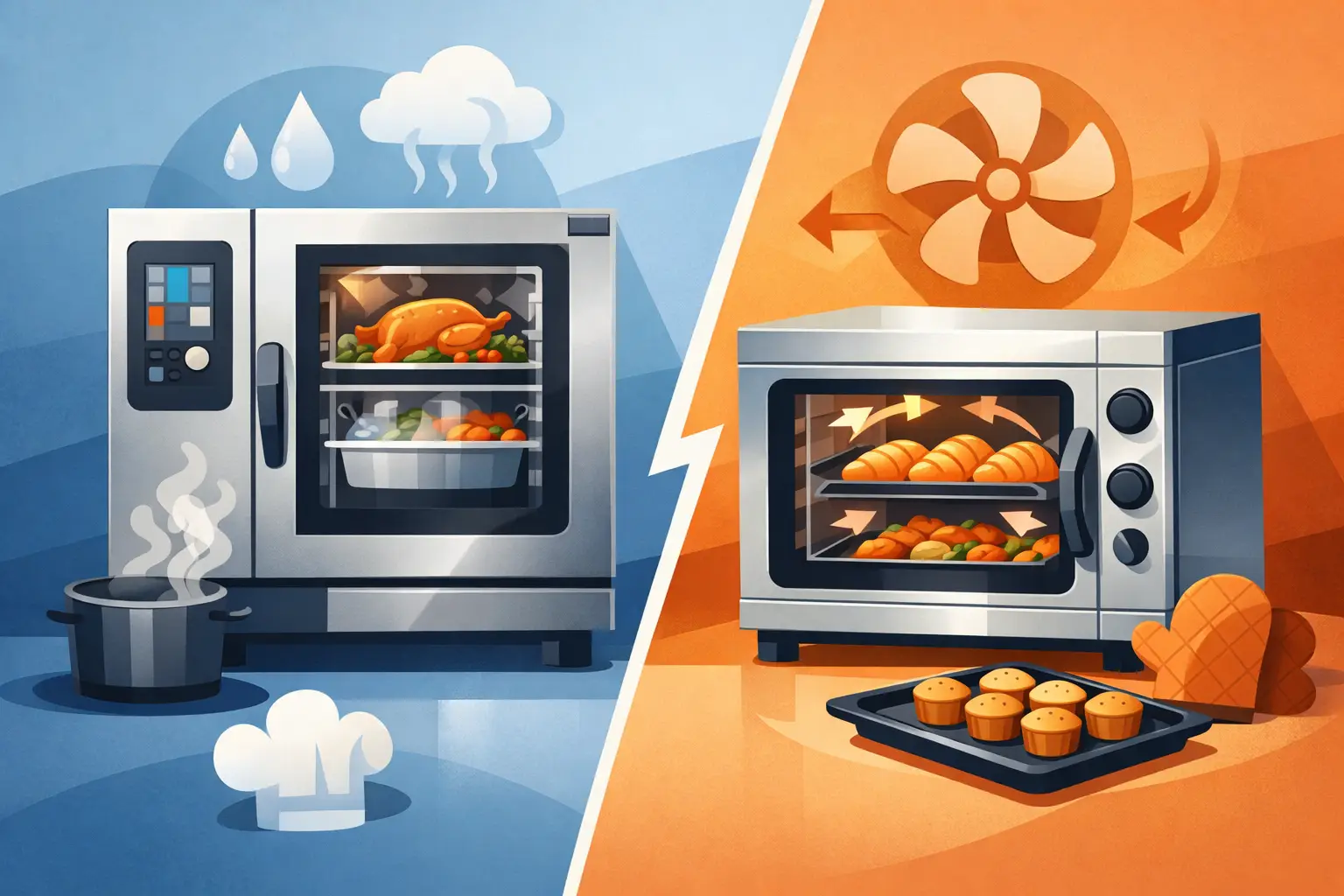
A convection oven uses dry heat and a fan system to circulate hot air around the cavity. That airflow improves heat distribution compared with a static oven, helping food cook more evenly and often faster. For baking, roasting and general oven work, it is a proven and dependable option.
A combi oven also uses fan-assisted heat, but adds steam and combination cooking. That means the operator can cook with dry heat, steam, or a controlled mix of both. In practical terms, it opens up far more applications from one unit. You can roast meat without excessive shrinkage, steam vegetables, regenerate plated meals, bake bread with proper humidity control and manage delicate products with more precision.
This is the real dividing line. A convection oven is a capable dry-heat oven. A combi oven is a multi-function cooking system designed for higher control and broader production.
There is no benefit in overstating the case. Not every site needs a combi oven, and not every budget stretches to one.
A convection oven remains a sensible option for operations with a narrow menu and straightforward production. If your site mainly bakes pastries, reheats simple items or roasts standard products without much variation, convection can be enough. Many smaller cafés, grab-and-go sites and low-complexity kitchens use convection ovens effectively because the cooking requirement is consistent and the equipment cost is lower.
They are also easier to understand for teams with limited training. Controls are usually simpler, the learning curve is shorter and for basic dry-heat cooking, they do exactly what is required.
That said, the limits become obvious as the menu expands. Once you need moisture retention, steaming, overnight cooking, regeneration or tighter consistency across different products, convection starts to feel restrictive.
The strongest case for a combi oven is not that it replaces one convection oven. It is that it can reduce reliance on several pieces of equipment while improving consistency.
In a busy commercial setting, steam control changes everything. Proteins can be cooked with less weight loss. Vegetables hold texture and colour better. Bakery products benefit from controlled humidity at key stages. Regeneration becomes far more reliable, which matters for banqueting, schools, care settings, hotels and any operation running prepared batches.
A combi oven also gives chefs and kitchen managers more repeatability. Programmes can be set for specific products, reducing dependence on individual judgement during service. That is valuable in sites with staff turnover, multiple shifts or centralised menu standards.
For high-output kitchens, this level of control often offsets the higher purchase price. Better yield, fewer cooking errors and less waste can make a material difference over time.
Performance is where the gap between the two becomes clear.
A convection oven can produce excellent results for many dry applications, but because it relies on hot circulating air alone, it can dry food out more readily. This is not always a problem. For some baked goods and roasted items, dry heat is exactly what you want. But with chicken, joints of meat, fish, vegetables and regenerated dishes, the absence of moisture control can reduce quality.
A combi oven gives the operator a way to manage the cooking environment rather than simply apply heat. That means better browning when required, but also better moisture retention. In service terms, that can mean juicier meat, more consistent baked products and a more forgiving cooking process when timings tighten.
The difference is even more pronounced in sites serving volume over long periods. Holding quality from batch to batch is hard in a standard oven environment. A combi oven helps standardise results across the day.
Commercial buyers are not just buying heat. They are buying capacity.
Convection ovens can offer solid throughput for standard tasks, especially where products are uniform and cooking processes are simple. But when a kitchen uses separate equipment for steaming, roasting and regeneration, production can slow down through handling, waiting time and limited space.
A combi oven can streamline those stages. One unit can handle multiple cooking modes, and in many kitchens that means fewer transfers between appliances and better use of staff time. It also helps when labour is tight. Preset programmes, automatic cooking adjustments on some models and cleaning systems reduce manual input.
That does not mean every combi oven saves labour automatically. Teams still need to understand loading patterns, cleaning discipline and programme setup. But once properly integrated, a good combi oven can support faster, more consistent production with less intervention.
Floor space and workflow matter just as much as cooking quality. A convection oven may be cheaper to buy, but if the kitchen also needs separate steaming equipment or extra appliances to support the menu, the overall footprint can become inefficient.
A combi oven often makes the strongest commercial sense where space is constrained. Restaurants, pubs, hotels, education sites and care kitchens regularly need one appliance to perform several roles. In those settings, the broader functionality of a combi oven can justify the investment quickly.
This is particularly relevant in refits and kitchen upgrades. Replacing older single-function equipment with one properly specified combi oven can simplify the line and improve workflow. The key is sizing the oven correctly for peak demand rather than buying on headline price alone.
This is usually where the decision becomes more nuanced. A convection oven generally wins on lower upfront cost. If budget is the overriding factor and the cooking application is basic, that may settle the matter.
But capital price on its own is only part of the picture. A combi oven may cost more initially, yet deliver better long-term value through reduced shrinkage, improved yields, lower food waste and fewer additional appliances. In sites with demanding menus or large volumes, those savings are not marginal.
There is also the used and refurbished market to consider. For operators who want combi capability without the cost of a brand-new unit, a professionally refurbished oven can be a practical route into higher-performance equipment. What matters is the quality of refurbishment, testing standards and access to aftersales support. A combi oven only represents good value if it is properly prepared and backed by specialist service.
For that reason, many buyers look beyond purchase price and focus on support, spare parts availability and engineer coverage. Downtime costs more than most kitchens expect.
A convection oven is often simpler in design, which can make day-to-day use straightforward. A combi oven is more advanced equipment, and with that comes the need for correct operation and servicing.
That should not put buyers off. It should simply shape the buying decision. If the kitchen benefits from the extra capability, then proper training and planned maintenance are part of the investment. Regular servicing protects performance, and correct cleaning is essential to keep a combi oven reliable.
This is where specialist suppliers matter. Buyers need more than a box delivered to site. They need technical advice, honest guidance on specification and support after installation. Island Catering Equipment Co. operates in that specialist space because professional kitchens need dependable equipment and dependable backup.
If your operation mainly needs dry-heat baking and roasting, with a simple menu and close cost control, a convection oven can still be the right purchase. It is a practical tool for straightforward production.
If your kitchen needs flexibility, regeneration, steaming, better yield and tighter consistency across a broader menu, a combi oven is usually the stronger investment. That is especially true in high-output sites where labour efficiency, product quality and repeatability directly affect margin.
The better question is not simply combi oven vs convection. It is what your kitchen needs the oven to do every day, under pressure, with the team and budget you actually have. Buy for service reality, not showroom theory, and the right choice becomes much clearer.
When equipment decisions are tied to output, reliability and support rather than headline price alone, kitchens tend to buy better and replace less often.





No account yet?
Create an Account