


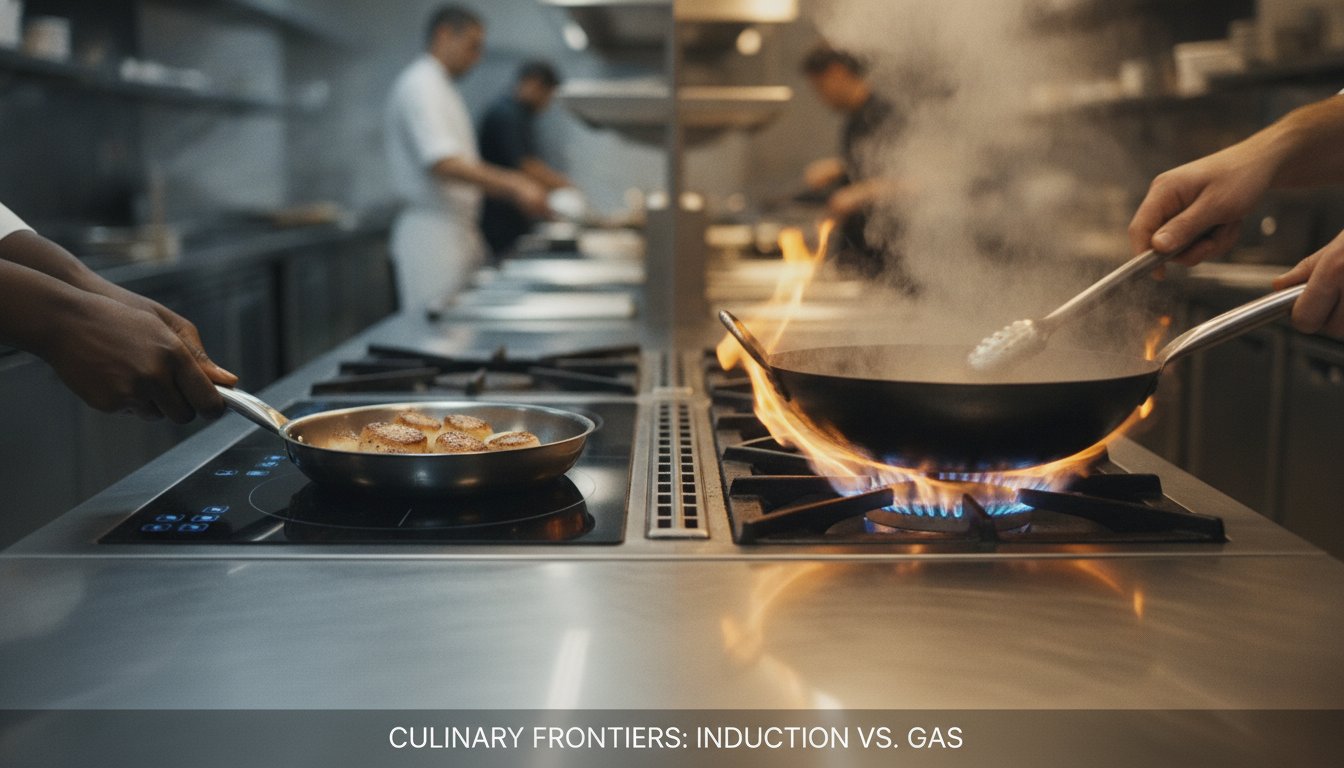
The visual roar of a blue gas flame, once the hallmark of a professional chef, may actually be the very thing slowing your service down and draining your profits in 2026. While many of us find comfort in the traditional, tactile nature of gas ranges, the reality of modern compliance and rising overheads is shifting the culinary landscape. Beyond the intense heat, you’re likely managing the complexities of a commercial kitchen gas interlock system, ensuring your ventilation meets the latest British Standards to keep your team safe and your doors open. It’s a lot to balance when your primary focus is the artistry of a perfectly seared scallop or a delicate reduction.
We understand that choosing between the artisanal soul of gas and the clinical precision of induction is a significant decision for any UK restaurateur. You want a kitchen that feels as vibrant as it performs, without the sweltering temperatures and staggering energy bills that often plague a busy service. This guide promises to uncover the real-world differences in performance, maintenance, and long-term costs between these two powerhouses. We’ll explore everything from boiling speeds to the impact on your team’s comfort, helping you decide which setup will define your kitchen’s success for the years ahead.
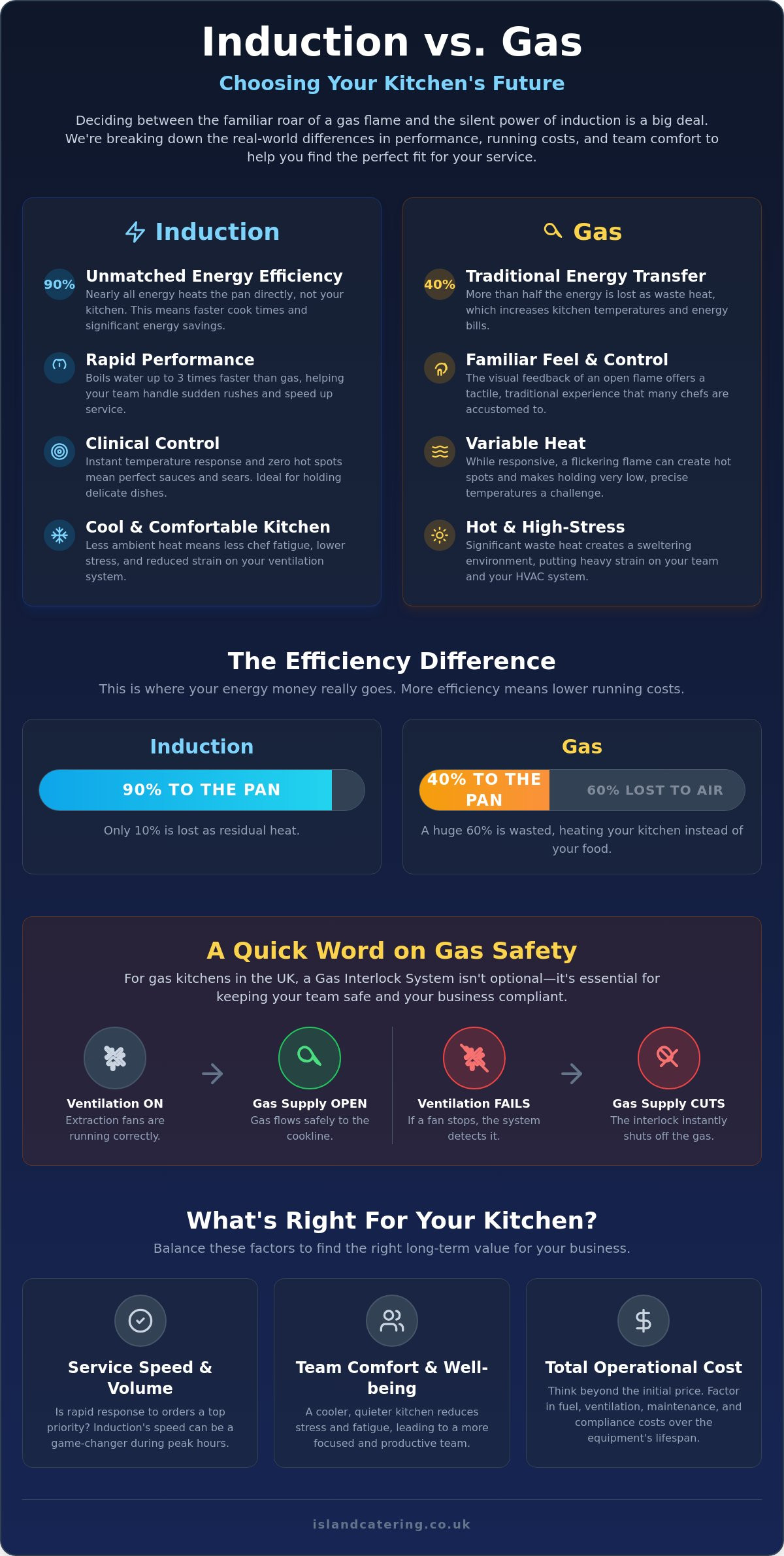
The visual roar of a blue gas flame offers a sense of control that many seasoned chefs find hard to abandon. It’s tactile, immediate, and deeply familiar in the heat of a busy service. However, as we look toward the operational demands of 2026, the raw speed of induction is becoming impossible to ignore. While a traditional gas burner loses a staggering amount of energy to the surrounding air, induction transfers approximately 90% of its energy directly to the cookware. This efficiency translates to boiling times that can be three times faster than gas, allowing your team to respond to a sudden rush with grace and composure.
Safety and compliance are equally vital when considering a gas setup. To operate legally in the UK, your line must be supported by a robust commercial kitchen gas interlock system. This ensures that the gas supply is cut if the mechanical ventilation fails, protecting your staff from the buildup of harmful combustion byproducts like carbon monoxide. It’s a necessary layer of protection that adds a level of operational complexity and maintenance not found with electric induction setups.
To better understand the safety protocols and hardware required for gas equipment, watch this brief overview of a modern interlock setup:
The beauty of induction lies in its clinical accuracy. Induction cooking principles dictate that electromagnetic fields heat the pan directly rather than the air. This targeted energy eliminates the troublesome hot spots that often lead to scorched sauces or unevenly seared proteins. You gain the ability to hold a delicate emulsion at a precise temperature for hours, something that’s notoriously difficult on a flickering gas simmer. The response is instant; when you turn the dial down, the heat stops immediately, offering a level of agility that rivals any open flame. Modern pan-sensing technology also means the hob only activates when a pot is present, further streamlining the workflow and enhancing safety during the peak of service.
A cooler kitchen is a more productive kitchen. Gas hobs are essentially large heaters that contribute to sweltering ambient temperatures, leading to rapid chef fatigue and a high-stress atmosphere. Because induction only heats the vessel, the workspace remains significantly more comfortable. This shift doesn’t just benefit your team’s well-being; it also reduces the strain on your extraction systems. With less heat and steam to clear, your fans can run at lower, quieter speeds, creating a more refined environment where communication is clear and the focus remains entirely on the culinary craft.
Managing the financial pulse of a professional kitchen requires a keen eye for detail and a long-term perspective on utility trends. While gas has historically been seen as the budget-friendly choice, the efficiency gap in 2026 tells a more nuanced story. A traditional gas burner operates at roughly 40% efficiency, meaning over half of what you pay for vanishes into the atmosphere as waste heat. In contrast, induction hobs achieve a staggering 90% energy transfer. Even with electricity priced at approximately £0.25 per kWh compared to natural gas at £0.07 per kWh, the sheer precision of induction often narrows the running cost gap significantly. You’re no longer paying to heat the room; you’re paying to heat the food.
The savings extend well beyond the meter. Because induction doesn’t radiate excess heat, your air conditioning and extraction systems don’t have to work nearly as hard to maintain a comfortable environment. This reduces your carbon footprint and lowers the mechanical wear on your ventilation hardware. However, for those committed to the artisanal flair of gas, remember that compliance with UK gas safety regulations is paramount. This includes the mandatory installation and upkeep of a commercial kitchen gas interlock system, which adds a layer of recurring certification and maintenance costs that induction setups simply avoid.
The financial impact of induction’s “instant-off” feature is most visible during the quiet hours between services. A gas ring left idling on a low simmer continues to burn through your profits, whereas an induction zone consumes zero power the moment the pan is lifted. For high-volume catering, calculating the ROI involves looking at these cumulative moments of waste. We often help clients map their current utility capacity to see if a switch to electric is viable without a costly upgrade to their existing power supply.
Labor is one of your highest costs, and scrubbing burnt-on grease from gas grates is a time-consuming task for any kitchen team. The seamless ceramic surface of an induction hob can be wiped clean in seconds, keeping your workspace looking pristine with minimal effort. While induction is incredibly durable, any high-end kit needs expert care to maintain its longevity. If a sensor fails or a glass top is damaged, we recommend professional commercial kitchen repair to ensure your service remains uninterrupted. Whether you choose the reliability of a Blue Seal gas range or a modern Lincat induction unit, we can help you find the perfect equipment balance for your unique culinary vision.
Deciding on your kitchen’s heart is a balance between your culinary vision and the practicalities of your building’s infrastructure. If you’re leaning toward a high-output induction suite, the first step is assessing your electrical capacity. While smaller modular units often run on a standard single-phase supply, heavy-duty professional hobs frequently require a 3-phase connection to deliver their full potential. This modularity offers a nimble alternative to the fixed, heavy footprint of traditional Blue Seal ranges. When you integrate these responsive hobs with a Rational iCombi Pro, you create a workspace that is both compact and incredibly capable.
There’s a common misconception that the ceramic glass of an induction hob is fragile. In reality, modern commercial glass is engineered to withstand the rigours of a high-volume kitchen, from heavy cast iron pans to the occasional accidental knock. This durability, combined with the lack of open flames, makes for a setup that is as resilient as it is safe. It’s a forward-thinking choice for teams that value a sleek, organized environment without sacrificing the power needed for a demanding service.
For those who prefer the soul of gas, compliance with UK gas safety regulations for commercial kitchens is non-negotiable. Every new or significantly altered gas line must feature a commercial kitchen gas interlock system. This hardware monitors your airflow and shuts off the fuel if the extraction fails, protecting your team from harmful emissions. It’s a critical safety measure, but it does add to your initial installation complexity. By switching to induction, you often simplify your ventilation needs and bypass the requirement for a commercial kitchen gas interlock system entirely. If you’re unsure about your current setup’s compliance, ring us on 01983756628 to chat about your kitchen’s specific needs.
High-end kit doesn’t always have to come with a brand-new price tag. Investing in reconditioned commercial catering equipment is a savvy way to access premium brands like Lincat while preserving your capital. We take immense pride in our refurbishment process. Every induction coil and ceramic surface is rigorously tested to ensure it stands up to the demands of a professional environment. We look for pristine glass integrity and responsive controls, ensuring your refurbished unit feels as reliable as the day it first left the factory. It’s an artisanal approach to equipment that respects both your budget and your craft.
Deciding between the raw power of gas and the clinical precision of induction defines the rhythm of your kitchen for years to come. The transition to induction represents a commitment to reclaiming your environment from sweltering heat while slashing persistent energy bills. If your craft still demands the visual feedback of a flame, ensuring your commercial kitchen gas interlock system remains fully compliant is your top priority for safety and legal standing. Both paths offer unique strengths for the modern UK caterer.
Our team provides the expertise needed to navigate these choices with confidence. From nationwide delivery of reconditioned gems to the technical precision of our Gas Safe and electrical certified engineers, we’re dedicated to your culinary continuity. We offer both planned maintenance and emergency repairs to keep your service seamless. Ring us anytime on 01983756628 to sort your kitchen equipment needs quick! It’s time to build a kitchen that matches your passion for excellence.
Yes, you require magnetic cookware for an induction hob to function correctly. Pans crafted from cast iron or specific grades of stainless steel are ideal, as the electromagnetic field needs a ferrous base to generate heat directly within the vessel. A simple test with a kitchen magnet will confirm if your current collection is suitable; if it clings firmly to the base, you’re ready to maintain your culinary rhythm.
Induction is significantly faster than gas in a high-pressure professional environment. Because energy transfers directly to the pan with approximately 90% efficiency, heat-up times are drastically reduced compared to the 40% efficiency of a flame. You can boil a large stockpot of water in roughly a third of the time it takes on a traditional gas burner, allowing your team to stay ahead of the pass during peak hours.
Induction typically proves more cost-effective to maintain over a five-year horizon. Gas ranges require mandatory annual safety inspections and the consistent upkeep of a commercial kitchen gas interlock system to remain legally compliant in the UK. Induction’s flat glass surface also reduces daily cleaning time, which lowers labor costs and prevents the stubborn buildup of carbon that often leads to mechanical failure in traditional burners.
You can often replace a gas range with induction, though it requires a professional assessment of your electrical capacity. Our Gas Safe certified engineers must safely decommission your existing gas lines and ensure any commercial kitchen gas interlock system is handled correctly. While you might need to upgrade to a 3-phase power supply to support heavy-duty hobs, the swap itself doesn’t usually necessitate a complete structural refit of your workspace.





No account yet?
Create an Account