


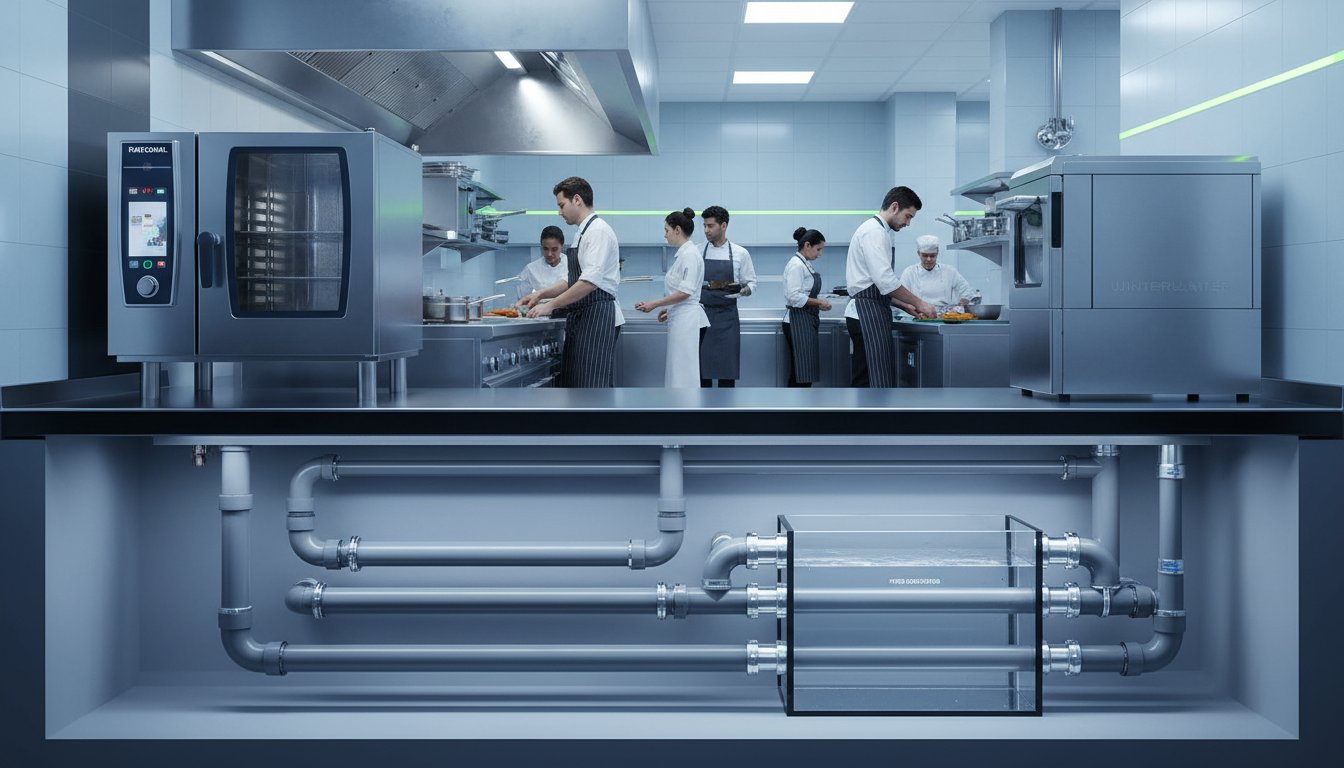
Your sophisticated Rational iCombi Pro or sleek Winterhalter glasswasher is only as reliable as the waste system hidden beneath it. We know the sheer dread of a Saturday night service grinding to a halt because of a drainage backup or a surprise environmental health inspection. It’s painful to see hard-earned profits swallowed up by high landfill taxes and those avoidable emergency call-out fees. That is why a robust commercial kitchen equipment maintenance schedule UK is your best defense against the dreaded fatberg and unexpected kit failures.
We love seeing your kitchen hum with the rhythm of a perfectly executed service, and we want to help you keep that magic alive. This guide will show you how a pro-grade waste maintenance plan protects your expensive investment, keeps you on the right side of the law, and ensures your kitchen never stops. We’ll explore how to satisfy UK water authority rules while extending the life of your ovens and dishwashers through smart, consistent care. If you ever feel overwhelmed by the technicalities or need a hand with your setup, ring us on 01983756628 and we can sort it quick for you.
We often spend our days admiring the artisanal crust on a fresh loaf or the precise steam of a combi oven, but your professional maintenance routine shouldn’t stop at the oven door. A truly effective commercial kitchen equipment maintenance schedule UK must embrace the systems that handle your food waste and grease. We think of these as the silent partners of your kitchen. Without them, even a top-tier Rational iCombi Pro cannot perform its best if the drains are backing up.
Staying on top of these systems is a core part of your Hazard Analysis and Critical Control Points (HACCP) plan. It is about more than just hygiene; it’s about operational survival. In our experience, a blocked drain is the quickest way to kill a busy Saturday night service. We always push for prevention because a flooded floor is a nightmare nobody wants to manage during a high-pressure milestone event.
To better understand how these preventive steps keep your business moving, watch this helpful video:
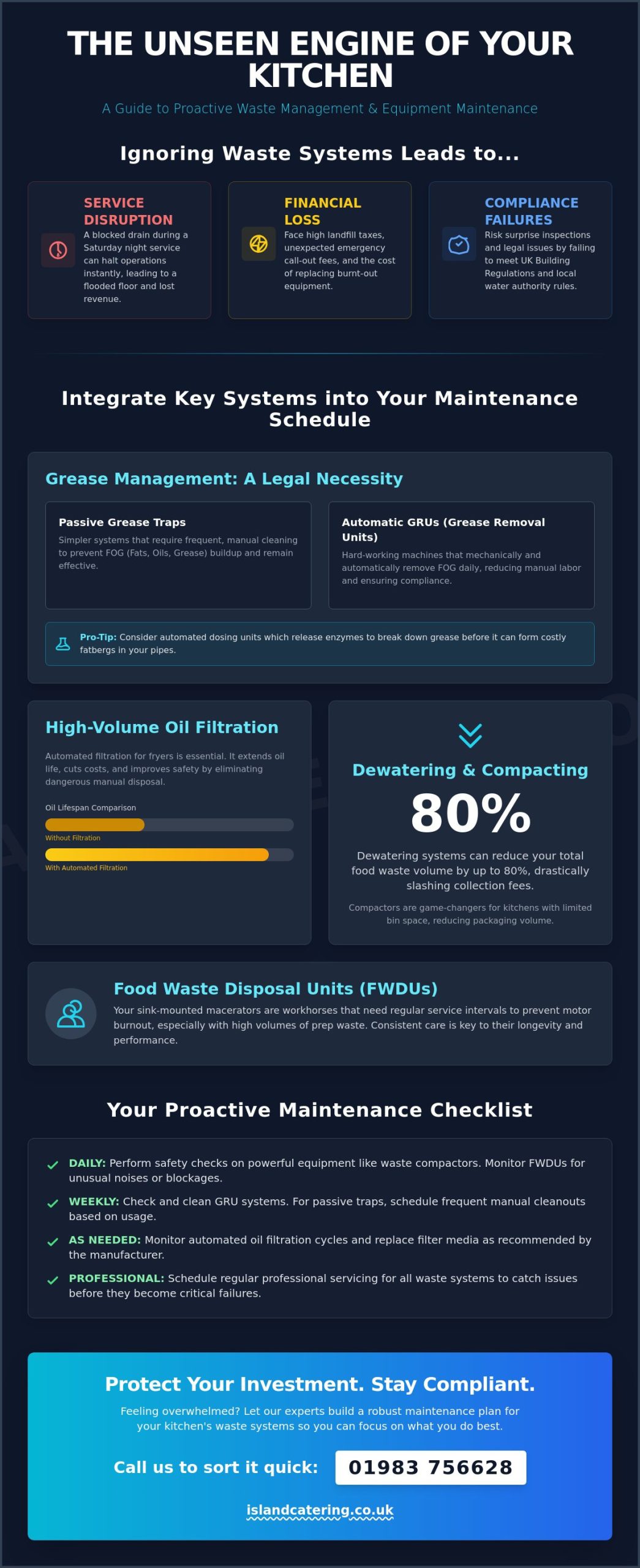
UK Building Regulations Part H makes grease management a legal necessity, not a choice. You have two main paths: passive grease traps or automatic grease removal units (GRUs). Passive traps are simpler but need much more frequent manual cleaning to stay effective. GRUs are hard-working machines that mechanically remove fats, oils, and grease (FOG) every day. We can help you pick a system that fits your specific kitchen footprint and volume. We also love dosing units; they release clever enzymes that break down grease before it creates those expensive fatbergs in your pipes.
Don’t forget your sink-mounted macerators. These workhorses need regular service intervals to prevent motor burnout, especially when they are processing high volumes of prep waste. Modern waste stations are brilliant because they reduce the actual weight of your waste. This doesn’t just help the environment; it slashes your collection fees too. If you’re worried about your current setup or need to update your commercial kitchen equipment maintenance schedule UK, ring us on 01983756628. We’ll help you sort it quick so you can get back to the cooking you love.
Running a high-volume kitchen is like conducting a complex orchestra. Every piece of kit must play its part perfectly to create a memorable experience for your guests. While much of your attention naturally falls on the pass, your commercial kitchen equipment maintenance schedule UK must also account for the heavy lifters that handle your waste. For startups looking to build a professional setup, we often suggest exploring reconditioned commercial catering equipment. This allows you to integrate essential waste systems without the heavy initial price tag.
High-volume fryers from trusted names like Lincat or Blue Seal are the workhorses of the modern kitchen. To keep your chips crisp and your oil costs manageable, automated filtration systems are a must-have. They extend the life of your oil significantly and reduce hazardous waste. Beyond the financial savings, these systems offer vital safety benefits by removing the need for dangerous manual oil disposal. This proactive approach aligns beautifully with standard UK food safety management procedures, keeping your team safe and your standards high.
If you find yourself battling mountains of cardboard and plastic packaging, a waste compactor can be a total game-changer. These units are essential for kitchens with limited external bin space. Dewatering systems are equally impressive; by removing liquid from food waste, they can reduce your total waste volume by up to 80%. It’s simple but effective. Because these machines involve powerful pressing mechanisms, daily safety checks are a non-negotiable part of your commercial kitchen equipment maintenance schedule UK. We want your staff to feel confident and secure while keeping your workspace tidy.
Managing high-volume waste shouldn’t feel like a chore that holds you back from your culinary passion. If you need advice on which filtration unit suits your menu or want to discuss space-saving compactors, ring us on 01983756628. We’d love to help you find the perfect fit for your kitchen and sort it quick for you.
We want you to have total peace of mind, so we ensure your waste equipment is only touched by engineers with the right electrical and Gas Safe certifications. This isn’t just about technical skill; it’s about the safety of your team and the longevity of your investment. If things do go wrong, we can sort quick for you with our national repair and parts service, getting your kitchen back to its rhythmic best without delay.
Keeping a detailed maintenance log for your grease trap isn’t just good practice; it’s a “must” for water authority inspections. Under the Food Safety Act, your waste management is a critical part of your overall hygiene rating. We want you to feel confident when an inspector walks through the door, knowing your records are as spotless as your stainless steel surfaces. Proper documentation proves you are taking every step to prevent fatbergs and environmental issues.
When a part fails, it’s tempting to look for a quick fix. However, using genuine components is the only way to keep your warranty intact and your safety standards high. We stock thousands of items to keep you cooking. Take a look at our guide to catering equipment spare parts UK to see what we have ready to ship. Ring us anytime on 01983756628 if you need a specific part for your IMC or Hobart waste unit and we’ll get you moving again. We love helping our community of caterers stay operational and inspired.
Your culinary craft deserves an environment that runs with effortless precision. By integrating waste systems into your commercial kitchen equipment maintenance schedule UK, you aren’t just ticking a compliance box; you’re protecting the heart of your business. We’ve seen how a well-managed grease trap or a properly serviced macerator can be the difference between a record-breaking night and a costly early closure. It’s about creating a space where your passion for food can truly shine without the distraction of technical failures.
With over 20 years of expertise in catering hardware, we bring a deep understanding of the unique pressures you face every day. Our team of certified Gas Safe and Electrical Engineers provides national UK coverage, ensuring that professional support is always within reach. Whether you need a critical spare part or a full system review, we can sort quick for you. Ring us on 01983756628 to sort your waste equipment today!
We love seeing your kitchen thrive. Ring us anytime to chat about your setup; we’re always ready to help you keep things running beautifully.
Yes, it is legal in England, though certain local water authorities may have specific restrictions on what enters the sewer system. In Scotland, the Waste (Scotland) Regulations 2012 prohibit most food businesses from disposing of food waste into public sewers via macerators. It’s always best to verify your local bylaws to ensure your commercial kitchen equipment maintenance schedule UK is accurate. We love helping you navigate these rules so you can focus on your culinary excellence.
Most passive grease traps need a thorough clean every two to four weeks to prevent foul odours and backups. If you’ve invested in an automatic grease removal unit, your team should empty the oil container daily to keep it efficient. Regular professional servicing every six months ensures the mechanical parts stay in top shape. If you’re struggling with a stubborn blockage or need advice, ring us and we’ll help you sort it quick.
Yes, oil filtration systems are a brilliant investment for any high-volume kitchen. By removing microscopic debris, they can significantly extend the life of your oil, sometimes doubling its usage time before it needs replacing. Integrating these into your commercial kitchen equipment maintenance schedule UK is a smart way to lower overheads while maintaining the quality your guests expect. It’s a simple way to protect your profits while ensuring every dish meets your high artisanal standards.
If your waste machinery fails during service, the first step is to stop using the affected units to avoid a messy flood. A broken macerator can quickly become a health hazard in a busy prep area, disrupting the flow of your team. Ring us on 01983756628 and we’ll work to get an engineer to you as soon as possible. We stock thousands of genuine spare parts, so we can usually get your kitchen hum back to normal fast.





No account yet?
Create an Account