


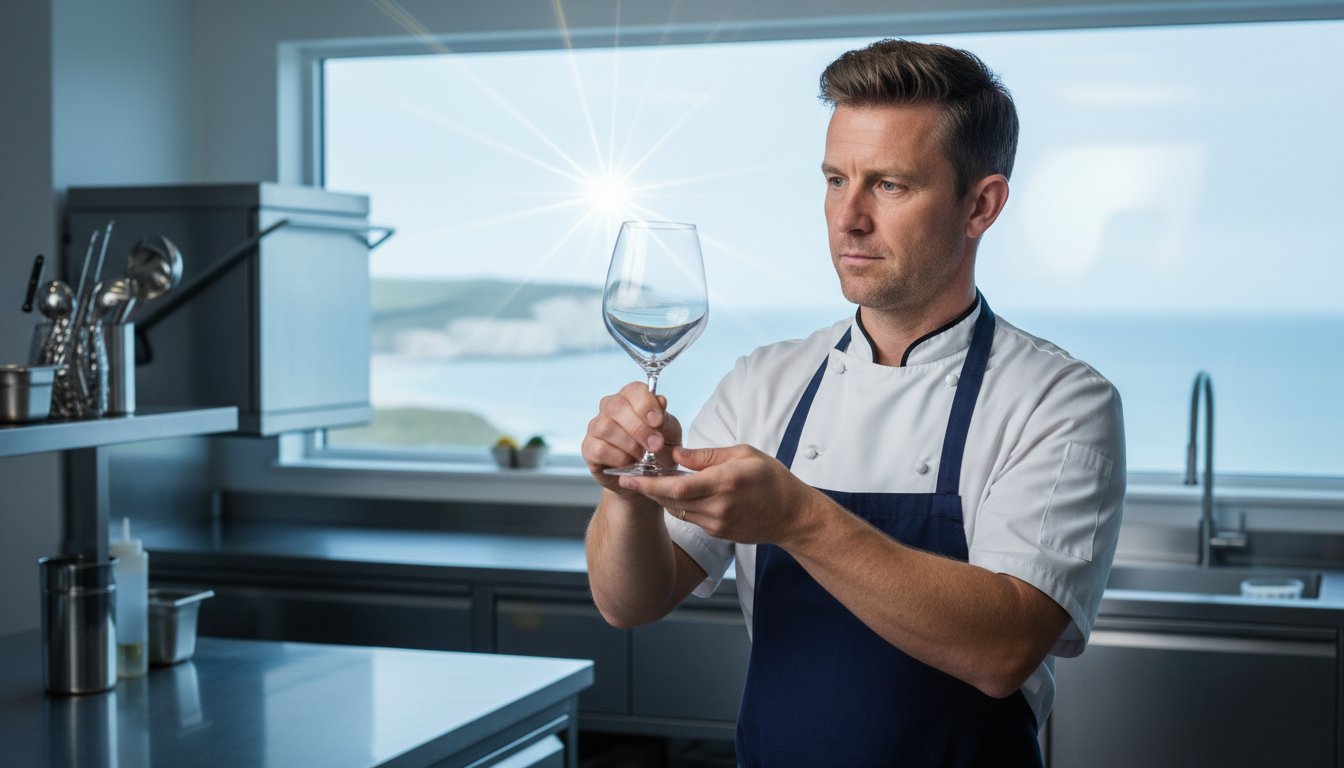
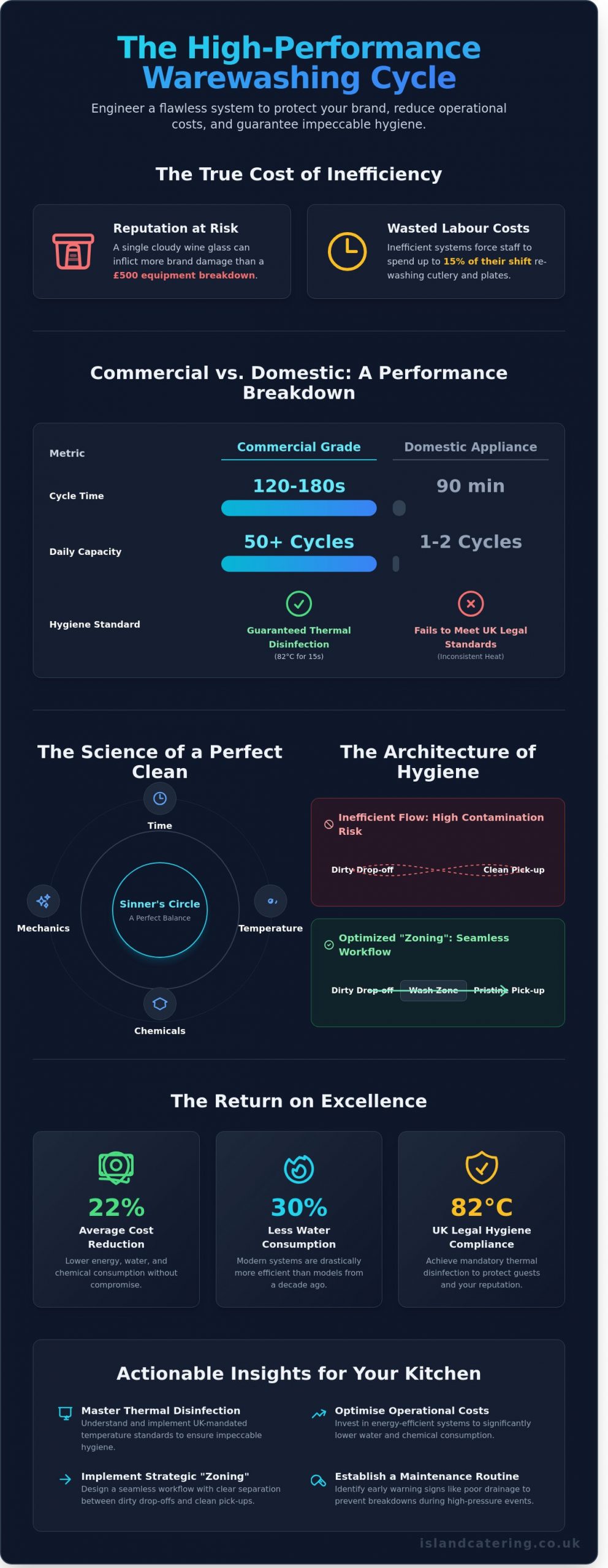
A single cloudy wine glass at a prestigious catering event can cost a catering business more in reputation than a £500 equipment breakdown. You’ve likely felt the frustration when a busy Saturday night service grinds to a halt because the glasswasher is playing up or plates are coming out smeared. Effective commercial warewashing is the invisible heartbeat of any exquisite culinary experience; it’s the difference between a seamless evening and a logistical nightmare. When your team is forced to spend 15% of their shift re-washing cutlery, the artistry of your menu begins to suffer under the weight of mechanical inefficiency.
We know that you value precision and artisanal quality in every dish you serve, yet rising energy costs and chemical waste can quickly erode your hard-earned margins. This guide will show you how to engineer a high-performance cycle that protects your brand, reduces operational costs by an average of 22%, and ensures flawless hygiene standards. We’ll explore the technical secrets to achieving crystal clear glassware, faster turnaround times, and a significantly longer lifespan for your kitchen’s most hardworking machinery.
In the heart of any bustling bar or Isle of Wight eatery, the rhythm of service depends on more than just the skill of the mixologist. Commercial warewashing is the industrial-scale process of cleaning and sanitising glassware, crockery, and utensils within intense, professional timeframes. It’s the silent engine that ensures every bespoke cocktail is served in a crystal-clear glass, free from the residues of the previous round. This process isn’t merely about aesthetics; it’s a fundamental pillar of operational excellence that keeps the atmosphere of an event fluid and sophisticated.
Hygiene isn’t just a preference; it’s a legal mandate. UK food safety regulations require machines to achieve thermal disinfection, typically reaching a rinse temperature of 82°C for at least 15 seconds. This intense heat ensures the total removal of bacteria, providing a level of safety that manual washing or domestic units simply cannot match. Beyond safety, efficient systems prevent the service bottlenecks that frustrate guests. When your front-of-house team has a steady stream of clean kit, the hospitality experience remains seamless and celebratory, allowing the focus to stay on the joy of the meal.
Looking toward 2026, the industry is shifting rapidly toward environmental stewardship. Modern systems now prioritise sustainability, with newer models designed to reduce chemical runoff and cut water consumption by 30% compared to machines from a decade ago. This evolution protects our local coastal waters while lowering operational costs, proving that high-end service and ecological responsibility can go hand in hand.
The differences between home appliances and professional units are stark. A domestic dishwasher might take 90 minutes to complete a cycle; a commercial machine delivers results in just 120 to 180 seconds. These units are engineered for durability, built to withstand 50 or more high-pressure cycles every single day without faltering. Most importantly, they guarantee thermal disinfection through high-heat rinse phases that domestic models often fail to sustain, ensuring every plate meets rigorous UK health standards.
Effective commercial warewashing relies on the Sinner’s Circle, a balance of four critical factors: time, temperature, chemical action, and mechanical force. If one element decreases, such as a shorter cycle time, the others must rise to compensate. In a professional setting, water quality is the silent partner. Hard water can leave unsightly spots on exquisite glassware, making the precise calibration of detergents and rinse aids vital for a polished, artisanal finish that reflects your brand’s quality.
A bespoke kitchen layout acts as the heartbeat of any successful Isle of Wight venue. When planning your commercial warewashing strategy, you must balance your current covers with your ambitions for 2026. A busy bar serving 150 covers nightly requires a different rhythm than a boutique cafe. You should design your space with distinct “zoning” to prevent cross-contamination. This involves creating a dedicated area for dirty drop-offs, situated entirely away from the exquisite, polished plates ready for service. This separation ensures your workflow remains as fluid as the service you provide.
Choosing the right machine involves calculating your peak hourly volume. If you anticipate a 20% growth in footfall over the next two years, your system needs the capacity to absorb that demand without bottlenecking. Efficient commercial warewashing isn’t just about cleaning; it’s about maintaining the pace of your culinary experience.
Small pubs and artisan bars often lack the luxury of floor space. These compact units sit discreetly beneath the counter, maintaining the aesthetic of your service area while delivering professional results. Specialised glasswashers are essential here. They use lower water pressure and precise temperatures to protect delicate stemware from clouding or etching. To find a premium fit for your boutique setting, explore our guide to Hobart Dishwashers for top-tier undercounter options.
For restaurants handling over 200 covers daily, passthrough machines are the ultimate workhorse. They offer a continuous, ergonomic flow that protects your team’s physical health. By using inlet and outlet tabling, staff can slide heavy racks in and out without bending. Modern models often feature steam recovery systems. These can reduce kitchen humidity by up to 30%, creating a more comfortable environment for your chefs to craft their seasonal menus.
High-volume production kitchens and bakeries face stubborn carbon and grease that standard machines can’t touch. Dedicated utensil washers use high-pressure jets to strip away burnt-on residue from heavy-duty cookware. Investing in one of these units can save your kitchen porter team 15 hours of manual scrubbing per week. This allows your staff to focus on maintaining the impeccable standards of your hospitality. If you are looking to refine your kitchen’s efficiency, we can help you design a bespoke equipment package tailored to your specific needs.
A common hesitation we hear at Island Catering Equipment Co. is that premium equipment feels like a heavy initial burden. However, viewing these machines as a simple expense overlooks the exquisite efficiency they bring to a busy bar. Investing in high-quality commercial warewashing is a commitment to both sustainability and your bottom line. A budget machine often masks its true cost through excessive utility bills and chemical waste. High-end manufacturers like Hobart and Winterhalter have refined their technology to ensure every drop of water and every watt of electricity serves a purpose.
Modern machines now use as little as 1.4 litres of water per rinse cycle. This 35% reduction compared to older models directly lowers your water and sewage rates. Precise chemical dosing systems remove the guesswork that often leads to staff using too much detergent. Over-dosing doesn’t just waste money; it leaves a chemical residue on your bespoke glassware that can ruin the head on a locally brewed ale or the delicate notes of a fine wine. It’s about finding that perfect balance between hygiene and economy.
Efficiency starts with containment. Double-skinned cabinets act as a thermal blanket, keeping heat where it belongs. This reduces the energy required to maintain wash temperatures and keeps your bar area quiet for guests. Premium models often feature heat exchangers. These clever components capture steam from the wash cycle to pre-heat incoming cold water. This single innovation can reduce energy consumption by up to 20% per cycle, saving hundreds of pounds annually for a high-volume venue. It’s a smart way to reclaim energy that would otherwise literally go down the drain. Pairing your warewashing efficiency with equally intelligent cooking technology, such as a rational oven, can deliver a comprehensive reduction in your kitchen’s overall energy consumption.
Hard water is the silent enemy of culinary excellence. In many UK regions, limescale builds up rapidly on heating elements. Just 1.6mm of scale can increase your energy costs by 12% and eventually lead to a total element failure. Soft water is essential for any professional commercial warewashing setup because it protects the machine’s internal components. An emergency repair for a blown element often costs upwards of £250, a fee that’s easily avoided with the right treatment.
Soft water ensures your detergents work at peak performance. It eliminates the unsightly streaks that force staff to hand-polish glasses, allowing your team to focus on creating memorable moments for your guests.
A glasswasher isn’t just a machine; it’s the silent partner in your bar’s success. Whether you’re serving artisanal cocktails in a Cowes lounge or pints in a busy Newport pub, the clarity of your glassware reflects your standards. Neglect leads to downtime. Data from UK service providers suggests that 60% of technical call-outs are preventable through simple daily routines. When the rhythm of a Saturday night is at its peak, a mechanical failure is more than an inconvenience; it’s a threat to the guest experience.
Effective commercial warewashing requires a disciplined approach. Train your team to listen for noisy pumps, which often signal bearing wear, or to notice slow drainage that suggests a pipe obstruction. If your glasses look cloudy, it’s usually a sign that your water softener needs attention or your salt levels are low. Professional servicing twice a year is non-negotiable. It protects your investment, keeps your warranty intact, and ensures your equipment meets the latest UK health and safety standards. Clear records of these services are also vital for insurance compliance.
Cheap “universal” components are a false economy. They often cause secondary failures that can lead to unexpected repair bills. Using Hobart Spare Parts guarantees that your machine operates at its original factory specification. Genuine parts ensure the delicate balance of water pressure and temperature remains constant. Keeping a small stock of critical components, like wash arm jets or spare filters, ensures your commercial warewashing capability isn’t compromised by a minor part failure during a high-pressure event.
Protect your bar’s reputation for excellence by booking a professional maintenance audit today.
Choosing the right commercial warewashing solution is an investment in the seamless flow of your bar’s operation. For 2026, the industry remains defined by brands that prioritise longevity over planned obsolescence. Your choice should reflect the specific demands of your menu; a high-volume craft cocktail bar requires different precision than a gastropub serving heavy Sunday roasts. Aligning your equipment with your peak covers ensures that your glass-to-hand cycle never falters during a busy Saturday night shift.
Hobart and Winterhalter continue to set the benchmark for professional excellence. Winterhalter is often the first choice for establishments where presentation is paramount. Their German engineering excels in glasswashing, using precise temperature controls and specialised chemical distribution to ensure a streak-free finish on delicate crystal. Hobart, conversely, is the undisputed workhorse for heavy-duty catering loads. Their machines are built with robust components designed to withstand 15 hours of continuous operation daily. Both brands maintain exceptional value in the secondary market; a five-year-old Hobart often outperforms a brand-new budget model in both energy efficiency and wash quality.
Sourcing premium machinery doesn’t always require the capital outlay of a factory-fresh unit. We believe in the provenance of quality engineering, which is why our refurbishment process is so meticulous. Our certified engineers strip every machine down to its chassis, replacing wear-and-tear components with genuine OEM parts to ensure a 95% first-fix rate during future maintenance. This approach allows bar owners to access elite commercial warewashing technology at 40% to 60% of the cost of new equipment.
Reliability is built on the support that follows the sale. When evaluating a supplier, look for those who maintain an extensive spare parts stock and offer 24-hour response times. From our base on the Isle of Wight, we provide the technical expertise and bespoke service needed to keep UK kitchens running at peak performance. We don’t just sell machines; we provide a safe pair of hands for your business. To find your next high-performance unit, explore our current stock of reconditioned commercial catering equipment today.
The rhythm of a successful kitchen relies on the seamless integration of hygiene and speed. By selecting the right commercial warewashing system, you ensure that every bespoke plate and exquisite glass reflects the high standards of your craft. You’ve discovered how modern systems reduce water consumption by up to 40% compared to older models; this significantly lowers your operational costs while maintaining impeccable sanitisation levels. Proactive care remains essential because a well-maintained machine is the backbone of a reliable service.
Island Catering provides more than just equipment; we offer a partnership rooted in over 20 years of catering equipment expertise. Our team of certified Gas Safe and Electrical Engineers delivers technical excellence across the Isle of Wight and beyond. We stock an extensive inventory of Hobart and Winterhalter spare parts, ensuring your kitchen stays operational during those high-pressure events. Whether you’re planning an intimate wedding or a large corporate gala, your equipment shouldn’t be a source of stress. We’re dedicated to helping you create flawless culinary experiences that your guests will remember for years to come.
Browse our range of professional warewashing solutions
A glasswasher uses lower water pressure and a cooler temperature of around 55°C to protect delicate stems and prevent the etching of your finest crystal. In contrast, a commercial dishwasher operates at higher pressures with a sanitising rinse of 82°C to strip fats and proteins from dinnerware. Choosing the right machine ensures your bespoke table settings remain exquisite and free from cloudy residue.
Yes, a water softener is vital for 60% of UK businesses located in hard water areas to prevent limescale from choking internal components. Without softened water, heating elements often fail 30% sooner and your glassware won’t achieve that signature Island Catering sparkle. It’s a small investment that protects your machinery and maintains the sensory experience of a perfectly presented drink—whether it’s a fine wine or a specialty coffee from a roaster like compoundcoffee.com.
You should arrange a professional service every 6 to 12 months to ensure your equipment handles the pressure of busy events. For venues on the Isle of Wight serving more than 150 covers daily, a bi-annual inspection is the safest choice. Regular maintenance prevents unexpected breakdowns during high-stakes weddings or corporate functions where reliability is paramount. When equipment does fail, having access to professional commercial kitchen repair Isle of Wight services ensures minimal disruption to your operations.
Poor cleaning results usually indicate blocked wash arms, dirty filters, or a lack of professional chemicals. If your plates don’t emerge with a pristine finish, check that the rinse boiler is hitting the required 82°C mark. Even a small blockage can reduce water pressure by 20%, leaving unsightly spots on your artisanal ceramics and slowing down your kitchen’s rhythm.
A 3-phase power supply is the superior choice for high-volume environments because it recovers heat up to 50% faster than a 13-amp plug. While a 13-amp machine is suitable for light use, a 3-phase connection ensures your commercial warewashing remains consistent during back-to-back cycles. This extra power allows your team to maintain a seamless flow of service without waiting for the water to reheat.
You can’t use domestic tablets because they’re designed for long cycles and produce far too much foam for a rapid 2-minute commercial wash. This excess sudsing can cause the machine to leak or damage the sensitive wash pumps. Always use bespoke liquid detergents and rinse aids formulated to work instantly, ensuring your kitchen stays operational and efficient.
A well-maintained commercial dishwasher typically provides 7 to 10 years of reliable service in a professional kitchen. High-end models from reputable manufacturers often last 25% longer than budget alternatives if they’re descaled regularly. We recommend choosing a machine that reflects the quality of your craft, as a durable unit is the backbone of any successful hospitality experience.
Thermal disinfection is a hygiene process where the machine holds the final rinse at 82°C for a minimum of 15 seconds to eliminate harmful bacteria. This ensures your commercial warewashing meets the stringent UK health and safety standards required for public catering. It provides the peace of mind that every plate and glass is biologically clean, supporting the creation of safe and lasting memories for your guests.





No account yet?
Create an Account