



Last Saturday night, a local chef we work with discovered that cloudy glassware was threatening his busiest service of the month. It’s a stressful moment that can stall your kitchen’s rhythm and leave you worrying about expensive repair bills. We understand that in a high-pressure environment, you need your equipment to be as reliable as your local ingredients. Most common commercial dishwasher problems are actually simple maintenance hiccups that we can help you sort quick. We’ll help you keep your Hobart or Winterhalter running at that crucial 180°F rinse temperature required for NSF standards.
We agree that nothing ruins a guest’s experience faster than a smudge on a plate or a delay in service. That’s why we’ve created this expert checklist to give you immediate confidence when things go wrong. We promise to help you identify the fault and decide if it’s a quick fix you can handle or if you need a professional engineer. We’ll walk you through everything from 2026 smart diagnostic features to basic drainage checks so you can get back to creating memories. If you’re stuck, ring us anytime on 01983756628 and we’ll help you get it sorted.
A busy kitchen relies on the rhythmic hum of a clean cycle. If that rhythm breaks, everything stops. We’ve seen plenty of common commercial dishwasher problems that start as tiny whispers before becoming full-blown shouts for help during a Saturday night rush. Understanding how commercial dishwashers work helps you spot when your Hobart Dishwashers or Winterhalter Glasswashers aren’t quite themselves. Whether it’s a strange acrid smell or a high-pitched whine from the pump, catching these signs early can save you a massive headache later.
To better understand how to spot these issues, watch this helpful video on troubleshooting parts:
If your plates are coming out with grit or cloudy spots, it’s usually a sign that the wash arms are struggling. Standing water at the bottom of the tank often points to a drainage disaster caused by a clogged filter or a tired drain pump. Sometimes, the most frustrating issue is the ‘no-start’ headache. Before you panic, check the door sensor and the fuse. If the machine doesn’t think the door is shut tight, it won’t fire up the cycle. We love helping you keep things moving, so always check the basics first.
We recommend giving your wash arms a quick spin by hand every morning. If they feel stiff or look like the jets are choked with debris, they won’t clean your artisan plates properly. Recognising the difference between a minor drip and a catastrophic seal failure is vital for your kitchen’s safety. Most of the time, cloudy glassware is actually a chemical balance issue rather than a broken machine. It might just be time to top up the salt or adjust your rinse aid settings to suit your local water.
Hard water is a silent enemy in many UK kitchens. It builds up slowly, choking rinse jets and coating heating elements in a white, chalky crust. This buildup doesn’t just affect hygiene; it hits your wallet too. Limescale increases energy costs by forcing elements to work harder to reach the required temperatures. If you notice your wash cycles taking longer or the water isn’t getting hot enough, limescale is likely the culprit. Ring us on 01983756628 and we can help you sort it quick.
If your machine has stopped mid-service, don’t panic just yet. We’ve put together this priority checklist to help you tackle common commercial dishwasher problems before you need to call in the cavalry. Most glitches are actually minor fixes that we can help you sort quick. By following a logical order, you can often find the culprit in minutes and get your kitchen back on track.
We always say a five-minute end-of-shift clean-down saves five hours of downtime later. It’s about taking pride in your tools and your craft. Wipe those door seals daily to prevent food traps that cause mystery leaks. For more on keeping your station spotless, check out our guide on commercial warewashing. These small habits keep your kitchen running like a well-oiled machine.
Your machine needs to hit specific NSF/ANSI 3 certification standards to ensure everything is truly sanitised and safe for your guests. If your glasses aren’t drying, your rinse aid might not be reaching the final cycle. Check your water intake valve if the machine is slow to fill; a tiny blockage here can throw off the whole rhythm. If you need a hand calibrating your Hobart or Winterhalter setup, ring us anytime on 01983756628 and we’ll get you sorted.
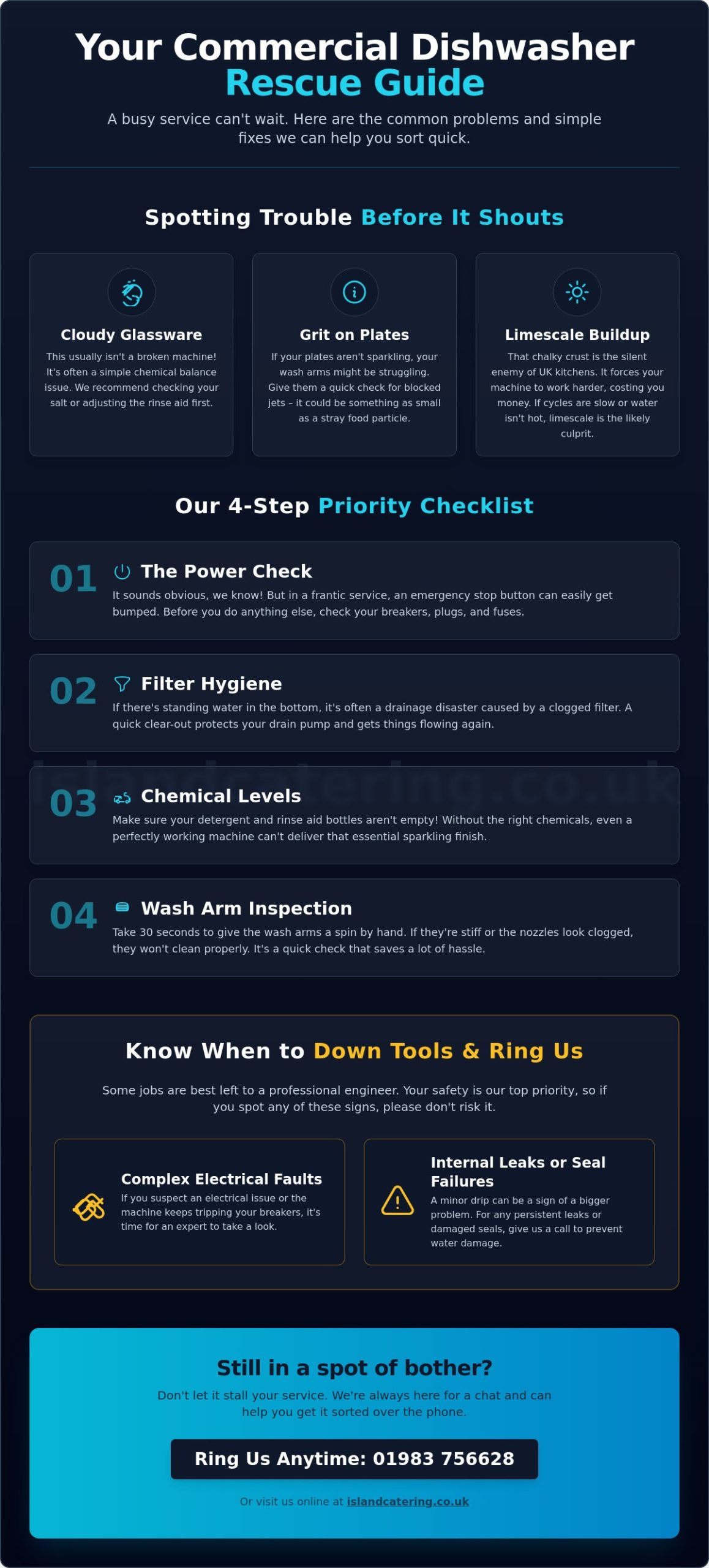
While we’ve covered the simple fixes you can handle yourself, some common commercial dishwasher problems require a certified engineer’s touch to ensure your kitchen stays safe and compliant. If you notice water pooling from inside the chassis rather than just a leaky door seal, it’s a major red flag. Internal leaks often signal a cracked internal hose or a failing pump seal that can lead to a catastrophic flood if ignored. Electrical faults are another area where you should never DIY. Circuit boards and heating elements are complex; attempting a home repair can be dangerous and usually voids your warranty.
If your Hobart or Winterhalter starts ‘talking’ in mysterious error codes, it’s usually a cry for help from the internal sensors. These codes are designed to protect the unit by shutting it down before a minor glitch becomes a total burnout. If you’ve tried a basic reset and the code persists, you might just need a specific component. You can find exactly what you need on our catering equipment spare parts UK page. For anything more complex than a simple basket swap, we’re here to help you get it fitted right.
We believe a scheduled check-up is always cheaper than an emergency Saturday night call-out. Our engineers don’t just fix what’s broken; they look for tiny signs of wear that could lead to a failure during your busiest service. Regular maintenance ensures your equipment consistently meets FDA Food Code requirements for sanitisation and heat levels. It’s about protecting your culinary reputation and your bottom line at the same time.
When the heat is on and your glasswasher fails, you need a team that acts with speed and care. We’re committed to getting your kitchen back to full power without the fuss or confusing technical jargon. We understand the pressure of a high-stakes event and the joy of a flawless service. Ring us anytime on 01983756628. We love helping you get things sorted quick so you can focus on the artisan craft you do best.
If the issue feels a bit too complex for a DIY fix, don’t worry. Our Gas Safe and Electrical Certified engineers have the expertise to get you back to full power. With thousands of spare parts in stock for nationwide delivery, we’ve got the tools to handle any emergency. We want to see your kitchen thrive, so let’s keep those glasses cloudy-free and your service running smooth. Ring us anytime on 01983756628 to sort your kitchen equipment quick! We love helping you get back to what you do best: creating lasting memories through your craft.
Your machine usually stops draining because the scrap tray is full or the drain pump has a blockage. We recommend checking the filter first to ensure no stray food debris is choking the system. If the water stays put after you’ve cleared the filters, the pump itself might need a professional look. We can help you sort this quick to keep your service moving. Ring us on 01983756628 if the water won’t budge.
Cloudy glassware is often caused by incorrect chemical dosing or a lack of salt in your water softener. Check that your rinse aid and detergent levels are sufficient and that the intake tubes aren’t blocked or kinked. This is one of the most common commercial dishwasher problems that we can resolve with a simple calibration of your chemical pumps. If your water is particularly hard, a dedicated softener is essential for a sparkling finish.
A leak from the bottom usually indicates a perished door seal or a loose internal hose connection. If the water is trickling from the front, it’s likely a food trap in the gasket preventing a tight seal. However, water coming from deep inside the chassis suggests a more serious issue with an internal pump or wash arm seal. Don’t let a small drip turn into a kitchen flood; we can identify the source and get it fixed fast.
We recommend a professional service at least every six months to keep your kitchen running at peak efficiency. High-volume establishments often benefit from quarterly check-ups to prevent unexpected breakdowns during your busiest hours. Our engineers check everything from heating elements to scale buildup, ensuring your Hobart or Winterhalter stays in top shape. Regular maintenance is the best way to avoid the stress and cost of a mid-service failure.
You should never use domestic tablets in a commercial machine because they create excessive foam that can damage the internal sensors and pumps. Commercial cycles are much faster, often lasting only two minutes, and require specific liquid chemicals that dissolve and rinse away almost instantly. Using the wrong products can lead to poor hygiene results and messy overflows. We stock a range of professional chemicals designed specifically for high-speed, high-pressure warewashing.





No account yet?
Create an Account