



What if your kitchen’s most reliable workhorse wasn’t the sparkling new range from a glossy catalog, but a masterfully restored unit that costs 55% less? We understand the deep-seated anxiety that comes with sourcing pre-owned kit. The fear of a combi-oven failing during a 150-cover Saturday service is enough to keep any chef awake. You deserve a bespoke kitchen that reflects your passion for culinary excellence without the staggering price tag of brand-new machinery. Learning how to buy used kitchen equipment shouldn’t feel like a gamble with your reputation or your bottom line.
It’s a common frustration to feel lost in the murky distinction between “used” and “reconditioned” gear. We’ve spent years refining our standards at Island Catering; now we’re sharing our professional engineering checklist to help you source equipment with absolute confidence. You’ll discover how to verify service histories and identify mechanical integrity so you can save up to 60% on your initial setup costs. This guide provides a clear path through the essential inspections that separate a bargain from a liability, ensuring your kitchen remains a sanctuary of creativity and reliability.
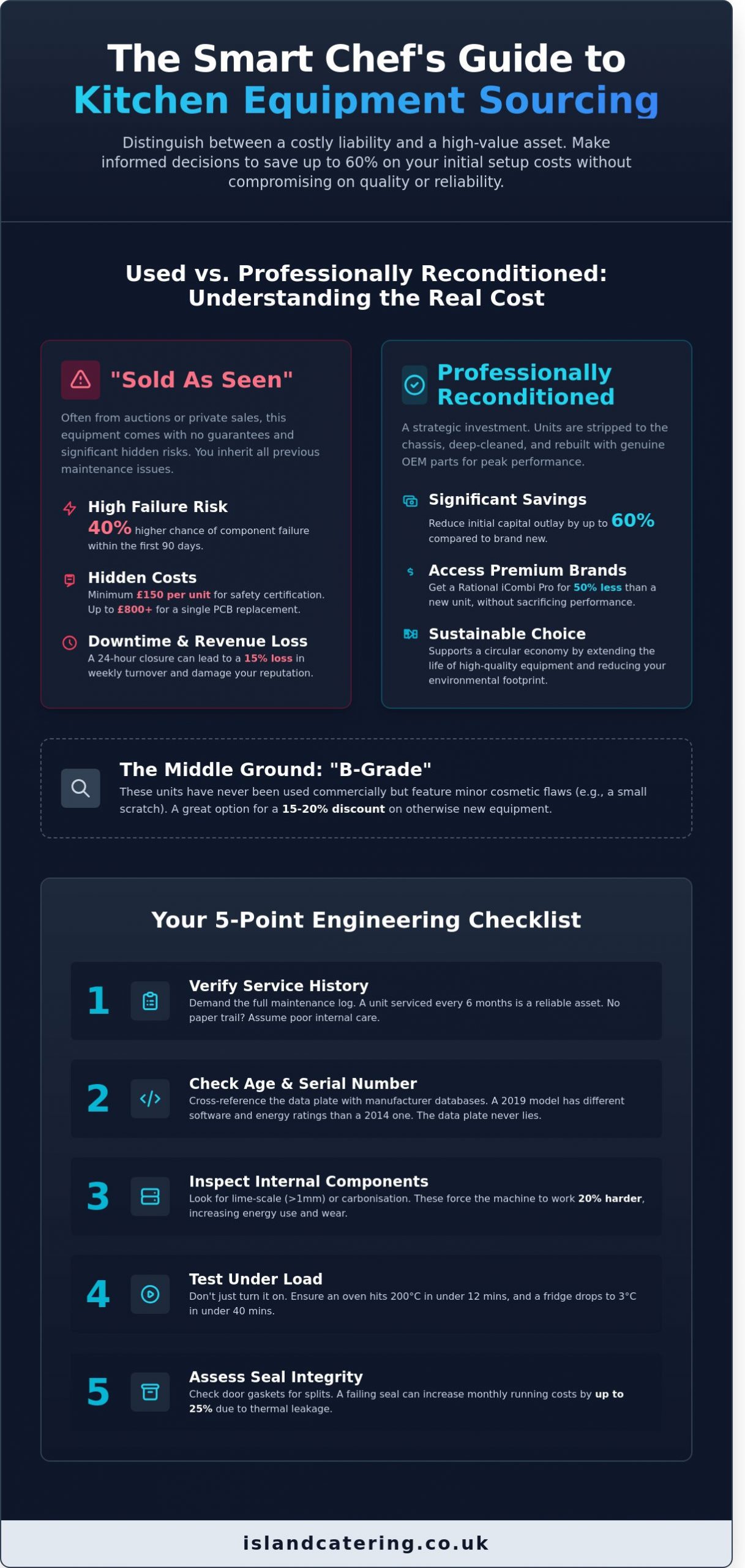
Building a high-performance kitchen requires a balance of culinary vision and fiscal precision. When you’re researching how to buy used kitchen equipment, the terminology you encounter dictates the longevity of your service. Raw “used” equipment is typically sold as seen, often sourced from 2023 liquidator auctions or sudden business closures. These units carry a 40% higher risk of component failure within the first 90 days because they haven’t been professionally assessed. You’re essentially inheriting the previous chef’s maintenance habits, which might be less than exquisite.
Professional reconditioning is a different craft entirely. This bespoke process involves engineers stripping a machine to its chassis, deep cleaning every internal surface, and replacing worn components with genuine OEM parts. It’s a rigorous standard that ensures a 2019 Hobart mixer performs with the same reliability as a brand-new model. Between these two lies the “B-Grade” category. These items usually feature minor cosmetic damage, like a 2cm scratch on a stainless steel door, but offer a 15% to 20% discount despite having never been used in a commercial environment.
The allure of a low auction price often masks the reality of immediate operational expenses. Private sales rarely include Gas Safe or electrical safety certifications, leaving you to pay a minimum of £150 per unit for professional testing before you can even plug them in. If a control board on a combi oven fails, a single replacement PCB can cost upwards of £800. Beyond the parts, the impact of unexpected downtime is a silent revenue killer. A 24-hour closure due to a faulty range can result in a 15% loss of weekly turnover and tarnish the hard-earned reputation of your hospitality brand.
Mastering how to buy used kitchen equipment involves seeing beyond the initial price tag to the total lifecycle of the machine. Opting for reconditioned units from premium brands like Rational or Hobart is a sophisticated way to access high-end technology. For example, a reconditioned Rational iCombi Pro can reduce your initial capital outlay by 50% compared to a new unit, while still delivering the precision your menu requires. This approach supports a circular economy, extending the life of high-quality stainless steel and reducing the environmental footprint of your kitchen. It’s a sustainable growth strategy that allows you to invest the saved capital into local provenance and seasonal ingredients instead.
Mastering how to buy used kitchen equipment requires a keen eye for detail and an uncompromising standard for quality. You’re not just purchasing a machine; you’re investing in the heartbeat of your kitchen. Every piece of kit must be as reliable as your head chef during a busy Saturday service on the Isle of Wight.
Choosing the right tools is the first step in delivering an exquisite catering experience for your guests. It’s about finding that perfect balance between artisanal craft and operational efficiency.
When you’re learning how to buy used kitchen equipment, your questions define your success. Ask if the unit has been descaled regularly using manufacturer-approved chemicals rather than harsh generic acids. Inquire about which critical wear-and-tear parts, such as fan motors, thermostats, or contactors, have been replaced in the last 12 months. Please provide the last service date and the engineer company name so I can verify the unit’s maintenance history.
Safety isn’t a luxury; it’s a legal mandate. For any electrical item, confirm the presence of a valid PAT test sticker dated within the last 12 months. Gas equipment is more complex and must be accompanied by a professional installation record from a Gas Safe registered engineer. Finally, check for the CE or UKCA marks to ensure the equipment complies with current UK catering regulations. Using non-compliant kit can void your business insurance, and in today’s connected world, this extends to digital safety as well; resources like reisinformatica.com offer guidance on protecting your business’s data.
Choosing a premium brand isn’t about vanity; it’s about the security of a long-term partnership. When you research how to buy used kitchen equipment, you’ll find that brands like Rational or Hobart offer a 10-year guarantee on spare parts availability. This provenance ensures your kitchen remains operational even when a component fails during a busy Saturday service. However, high-end engineering requires specific maintenance. Missing these brand-specific red flags can be an expensive oversight for any culinary professional.
This principle of reliability is how a specialized eatery builds its reputation. For example, a successful restaurant like Biryani House depends on its equipment to consistently produce high-quality, authentic dishes, turning the kitchen’s performance into a core part of its brand.
A Rational oven is the heartbeat of many exquisite kitchens. Before committing, power the unit on and check for specific error codes like Service 10 or Service 25. These often signal failures in the humidity sensor or the CleanJet pump. Inspect the interior cabinet carefully for “pitting,” which appears as small dark spots on the stainless steel. This corrosion often occurs when staff use non-standard chemicals or skip the rinse cycle. For a deeper look at what makes these units special, consult our Rational iCombi Pro guide. A well-maintained 2021 model should still feel like a bespoke piece of culinary technology.
Hobart and Winterhalter machines are the workhorses of hygiene. When inspecting these, focus on the rinse pumps and wash arms. If the jets are calcified from hard water, the motor has likely been under significant strain. Ensure the chemical dosing pumps are drawing fluid correctly; a pump that hasn’t moved in 6 months will likely have perished seals. Adhering to high commercial warewashing standards is impossible if the internal filters are torn or bypassed. A replacement Hobart wash pump can cost upwards of £450, so testing a full cycle is vital.
Refrigeration from Foster or Williams requires a different lens. Listen to the compressor cycle; it should be a steady, reassuring hum rather than a frantic rattle. When learning how to buy used kitchen equipment in the cooling category, remember that a healthy 600-litre cabinet should pull down from ambient temperature to 3°C in under 45 minutes. Check the condenser coils located at the top or bottom. If they’re choked with grease, the unit has been working 25% harder than necessary, shortening its lifespan. We’ve seen units on the Isle of Wight fail prematurely because coastal salt air combined with kitchen grease to corrode the delicate fins. Always verify that the door seals are supple and free from splits to ensure your seasonal ingredients stay perfectly preserved.
The journey from the seller’s floor to your kitchen line is where many investments face their greatest risk. Transporting heavy, delicate machinery requires more than a simple van and a couple of blankets. Precision components in a combi oven or the delicate compressors in a high-end refrigerator suffer internal damage from vibrations or improper tilting during transit. Professional transport companies use tail-lifts and specialized bracing to protect these sensitive systems. A single 45-degree tilt on a commercial fridge can migrate oil into the cooling lines, causing a total compressor failure within 48 hours of being switched on.
When you are learning how to buy used kitchen equipment, you must account for the logistical costs of moving items that often weigh over 150kg. Cutting corners on delivery often leads to fractured solder joints or misaligned doors that ruin the appliance’s thermal efficiency. Investing in “white glove” delivery ensures your asset arrives calibrated, level, and ready for the next stage of its life.
Expert installation is the heartbeat of a functional kitchen. Most manufacturers and reconditioned equipment sellers will void a warranty immediately if the unit isn’t commissioned by a certified engineer. For instance, data from 2023 shows that 68% of commercial dishwasher failures in the first year are attributed to poor water quality. Fitting a dedicated water softener is non-negotiable to prevent lime-scale from seizing heating elements within weeks of operation.
Understanding how to buy used kitchen equipment means looking beyond the initial price tag to the safety net provided. A “parts only” warranty often leaves you with a £150-per-hour labour bill when a sensor fails. A fair warranty for reconditioned professional equipment is usually 3 to 6 months for parts and labour. Anything less suggests the seller lacks confidence in their refurbishment process.
Long-term reliability depends heavily on the availability of catering equipment spare parts UK. If a specific brand lacks a robust local supply chain, a simple broken gasket or thermostat could shut down your service for two weeks while parts ship from overseas. Establishing a Planned Preventative Maintenance (PPM) schedule is vital. Routine checks every six months can extend the lifespan of a used range or fryer by up to five years, ensuring your kitchen operates with the same refined precision we bring to every bespoke event.
Explore our range of professional kitchen consultancy services to ensure your setup is built for longevity and culinary excellence.
Choosing the right partner is the final, most critical step in understanding how to buy used kitchen equipment without compromising your culinary standards. At Island Catering, we’ve spent 21 years perfecting the re-engineering of professional kitchen machinery. We treat every piece of kit as if it were destined for our own high-end events on the Isle of Wight. Our engineering pedigree means we don’t just polish the exterior; we rebuild the soul of the machine to ensure it survives the heat of a professional service.
Every unit that enters our workshop undergoes the rigorous Island Catering Audit. We strip the equipment to its bare chassis, inspecting every wire, seal, and sensor. Our specialists focus on Rational because these ovens are the gold standard of the modern kitchen, offering the precision required for exquisite, consistent results. By adhering to strict manufacturer standards, we ensure your investment performs with the same reliability as a brand-new unit. This meticulous attention to detail is why we’ve become a trusted name for chefs who demand excellence.
Our catering equipment refurbishment process prioritizes high-value brands like Hobart and Winterhalter. We believe engineering excellence provides more peace of mind than any sales brochure ever could. By replacing 100% of high-wear components with genuine parts, we transform pre-owned assets into reliable kitchen workhorses. This artisanal approach to machinery ensures your kitchen stays operational during the most demanding services, allowing you to focus on the joy of creating lasting memories through food.
Operational continuity depends on more than just the machine itself. We manage nationwide delivery using bespoke transport solutions to ensure your equipment arrives in pristine condition. Since 2003, we’ve supported over 500 professional kitchens across the UK, providing the technical backup needed to maintain a seamless flow of service. We’re a safe pair of hands in a high-pressure industry, combining technical expertise with a deep-rooted passion for hospitality. When you learn how to buy used kitchen equipment from experts, you’re buying a guarantee of performance.
You can browse our current selection of reconditioned assets to find the perfect match for your culinary vision. Our engineers are ready to discuss your specific menu requirements, whether you’re planning a bespoke wedding venue or a high-volume corporate space. Explore our range of reconditioned commercial catering equipment today to begin your journey toward a more efficient, professional kitchen that never misses a beat.
Securing high-performance gear shouldn’t feel like a risk to your business. Success depends on knowing the difference between a simple second-hand purchase and a professionally reconditioned asset. By utilizing our 10-point checklist and identifying specific red flags for brands like Hobart or Rational; you ensure your investment supports a seamless service. Mastering how to buy used kitchen equipment allows you to scale your operations while maintaining the artisanal standards your diners love.
Since 2004, Island Catering has provided a safe pair of hands for chefs across the country. Our certified Gas Safe and Electrical Engineers are specialists in Rational iCombi Pro and Classic models; ensuring every unit meets our rigorous reconditioning standards. We offer nationwide UK delivery to bring these exquisite tools to your doorstep. View our latest stock of expertly reconditioned catering equipment and discover how 20 years of expertise can transform your culinary space. We’re excited to see what you’ll create next.
Choosing reconditioned pieces allows a startup to preserve 50% of their initial capital for premium ingredients and skilled staff. While new items offer the latest technology, a bespoke selection of high quality used gear provides the same culinary excellence at a fraction of the cost. It’s a strategic move that helps new Isle of Wight ventures establish their footprint without the 100% markup of brand new units.
Most reconditioned catering equipment offers a reliable service life of 5 to 8 years when maintained correctly. Premium brands like Foster or Hobart are engineered for longevity; a unit that’s 3 years old still has 70% of its operational life remaining. Regular servicing every 6 months ensures these exquisite machines continue to perform with the precision your kitchen demands for every high pressure event.
You must prioritize the service history and the condition of the steam generator when inspecting a used Rational oven. Check the door seals for 100% airtightness to ensure energy efficiency and consistent heat distribution. A professional technician should verify that the internal sensors are calibrated. This ensures your seasonal ingredients are cooked with the exact precision required for a high end dining experience.
Yes, reputable dealers typically provide a 3 to 6 month parts and labor warranty on second hand commercial kitchen equipment. This period provides a safe pair of hands while you integrate the unit into your daily operations. Learning how to buy used kitchen equipment involves verifying these terms in writing. A 90 day guarantee is the industry standard for ensuring your investment remains protected.
Used equipment meets all UK health and safety standards provided it carries a valid PAT test certificate and a Gas Safe certification. Every item must comply with the Provision and Use of Work Equipment Regulations 1998. We ensure every piece of kit reflects our commitment to operational excellence. This rigorous testing guarantees that your kitchen remains a safe environment for creating lasting memories through food.
Savvy buyers typically save between 40% and 60% by choosing reconditioned units over brand new alternatives. For instance, a new commercial dishwasher costing £3,000 can often be found reconditioned for £1,200. These savings allow you to invest more in local Isle of Wight provenance and bespoke menu development. Learning how to buy used kitchen equipment effectively can reduce your total fit out costs by £15,000 or more.
If a unit fails within the warranty period, the seller should provide a repair or replacement within 24 to 48 hours. Most professional dealers offer an emergency call out service to minimize downtime during your events. It’s vital to have a clear agreement on response times before you commit. This level of reliability is essential for maintaining the seamless flow of a busy professional kitchen during wedding season.
Spare parts remain readily available for at least 10 years after a model’s production ends for major brands like Lincat or Blue Seal. You can usually source components within 24 hours from national distributors. Avoid obscure international brands where parts might take 14 days to arrive. Sticking to established names ensures your kitchen remains functional and your culinary standards stay consistently high for every guest you serve.





No account yet?
Create an Account