



A Rational oven can either speed up service and tighten consistency, or become an expensive mismatch that slows the kitchen down. If you are working out how to choose Rational oven equipment for a restaurant, hotel, school, bakery or care setting, the right starting point is not the model range. It is your menu, your service pattern and the pressure your team works under every day.
Too many buyers start with capacity alone. They ask how many grid shelves they need, compare prices, and stop there. In a commercial kitchen, that is rarely enough. The better question is what the oven needs to do across a full trading week – from breakfast prep and lunch peaks to overnight cooking, regeneration and cleaning.
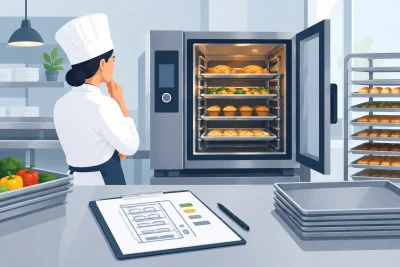
The first decision is size, but size needs to be matched to output, not guesswork. A combi oven that looks generous on paper can still be too small if your kitchen depends on heavy regeneration, batch cooking and fast turnaround during peak periods. Equally, an oversized unit can waste energy, tie up capital and take up valuable kitchen space without delivering a return.
Look closely at your busiest service. Consider how many covers you serve, which dishes rely on the oven at the same time, and whether you are cooking from fresh, chilled or frozen product. A pub with a broad menu and Sunday roasts has different demands from a school kitchen producing high-volume lunches, or a bakery using controlled humidity for consistent bake quality.
It also matters how disciplined your production flow is. If the team cooks in planned batches, a smaller unit may cope perfectly well. If the kitchen is reactive and menu items stack up during service, extra capacity gives you breathing room. In practice, the right oven is usually the one that handles your busiest window without forcing compromise elsewhere.
Grid count is useful, but it is not the full story. Tray size, product depth, loading pattern and recovery between batches all affect actual output. The same oven can perform very differently in two kitchens depending on what is being cooked. Roasting joints, steaming vegetables, baking pastries and regenerating plated meals place very different demands on the chamber.
That is why experienced buyers assess production style as well as nominal capacity. If your menu changes seasonally or your site has growth plans, leave some headroom. Buying to today’s minimum requirement can be a false economy.
A Rational oven earns its keep when it suits the food offer. If most of your trade depends on roasting, steaming, baking, regeneration and overnight cooking, a combi oven can take pressure off multiple pieces of equipment and improve consistency across shifts. If your operation is highly specialised, the decision is more nuanced.
For mixed hospitality kitchens, the value is usually straightforward. One machine can handle meat, fish, vegetables, bakery lines and finishing tasks with far more control than a standard convection oven. In care, education and institutional catering, precision and repeatability matter just as much as speed. In those environments, programme control and dependable results often matter more than headline power.
If you run a bakery or deli-style operation, humidity control becomes especially important. If your business depends on regeneration, then speed, even heat distribution and simple programme recall matter more. The model that suits a fine dining pass is not necessarily the best fit for banqueting, contract catering or high-volume pub food.
For many buyers, this is where the real decision sits. New Rational ovens offer the latest specification, manufacturer-backed features and a fresh lifecycle. That can be the right route if you are opening a new site, standardising across a group, or want maximum longevity from day one.
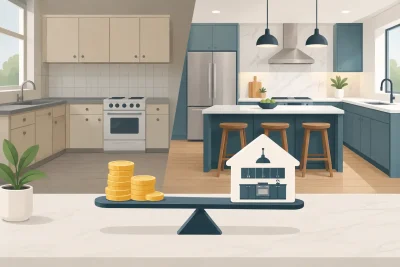
Refurbished units deserve serious consideration when capital cost is under pressure but performance still matters. A properly refurbished Rational oven can offer excellent value, particularly for independent operators, secondary sites and kitchens replacing failed equipment quickly. The key phrase is properly refurbished. There is a major difference between a cleaned-up used oven and a unit restored, tested and prepared by trained specialists.
A lower purchase price only makes sense if the machine is reliable. Ask what refurbishment work has been completed, whether critical components have been checked or replaced, and how the oven is tested before dispatch. Also look at aftersales support. Fast access to parts, engineers and technical advice matters just as much as the upfront saving.
For many professional kitchens, the best answer is not ideological. It is practical. Buy new when the site demands latest-generation features, long-term lifecycle planning and full budget support. Buy refurbished when you need proven Rational performance at a sharper price point and the supplier can stand behind the preparation standard.
One of the most common buying mistakes is choosing the oven first and checking the site later. Before you commit, confirm the available power supply, drainage, water treatment requirements, extraction and physical access into the kitchen.
A Rational oven is not an isolated purchase. It sits within your wider kitchen infrastructure. If the incoming utilities are wrong, installation becomes slower, more expensive and sometimes impossible without additional works. Measure doorways, corridors and final kitchen position properly. Check whether the unit needs a stand, base cabinet or stacking arrangement, and whether there is enough clearance for safe operation and servicing.
Water quality is another point that should never be treated as an afterthought. Poor water conditions can affect performance, cleaning and component life. In hard water areas especially, suitable water treatment is part of protecting the investment, not an optional extra.
The most advanced oven on the market is not the best oven for every kitchen. If staff turnover is high, training time is limited or multiple users need to produce the same results, ease of operation becomes critical.
When considering how to choose Rational oven controls, think about who will use the machine daily. A skilled brigade may want more manual flexibility. A multi-site operation or contract caterer may place higher value on repeatable programmes and straightforward touchscreen workflows. Simpler operation can reduce mistakes, support portion consistency and make training easier for new starters.
Cleaning matters in exactly the same way. Automatic cleaning systems save labour and help maintain standards, but you still need the team to use them correctly and consistently. In busy sites, an oven that is easy to clean properly is often a better commercial choice than one with features the kitchen will barely use.
It is sensible to focus on price, but purchase price alone does not tell you what an oven will cost the business. Downtime, energy use, cleaning chemicals, maintenance, parts availability and operator error all affect total cost of ownership.
A cheaper machine that fails during service or cooks inconsistently is expensive in all the ways that matter. Lost covers, wasted product and emergency engineer callouts quickly erase any saving. On the other hand, paying for a specification level your kitchen does not need can also be wasteful.
The strongest buying decisions balance output, reliability and support against budget. That is where specialist suppliers have an advantage. They can usually identify whether you need a current-generation new unit, a high-quality refurbished model, or a different size altogether based on how your kitchen actually operates.
A Rational oven is a core production asset. When it is down, the kitchen feels it immediately. That is why support should be part of the buying decision, not something dealt with after installation.
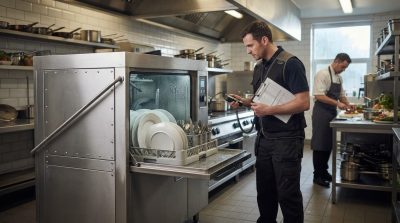
Before purchasing, ask who will handle servicing, engineer callouts and spare parts. Check whether support is available promptly and whether the supplier understands the brand in technical detail. This is especially important with used and refurbished equipment, where preparation quality and aftersales backup directly affect value.
An oven is only as dependable as the support structure around it. Suppliers with stock depth, engineering capability and category knowledge are usually better placed to keep your kitchen moving than generalist sellers.
If you want a straightforward route through the decision, start with five points: your busiest service period, your menu mix, the available utilities on site, the skill level of the team, and the budget including aftersales support. Once those are clear, the right Rational model range and size usually become much easier to identify.
For commercial buyers, the best oven is rarely the biggest or the cheapest. It is the one that fits your production reality, can be installed properly, and comes with the backup to keep working under pressure. That is the difference between buying equipment and buying a solution that earns its place in the kitchen.
If you are still weighing up options, slow the decision down just enough to ask the awkward questions now. It is far easier to choose correctly before the oven arrives than to work around the wrong one for the next five years.


No account yet?
Create an Account