


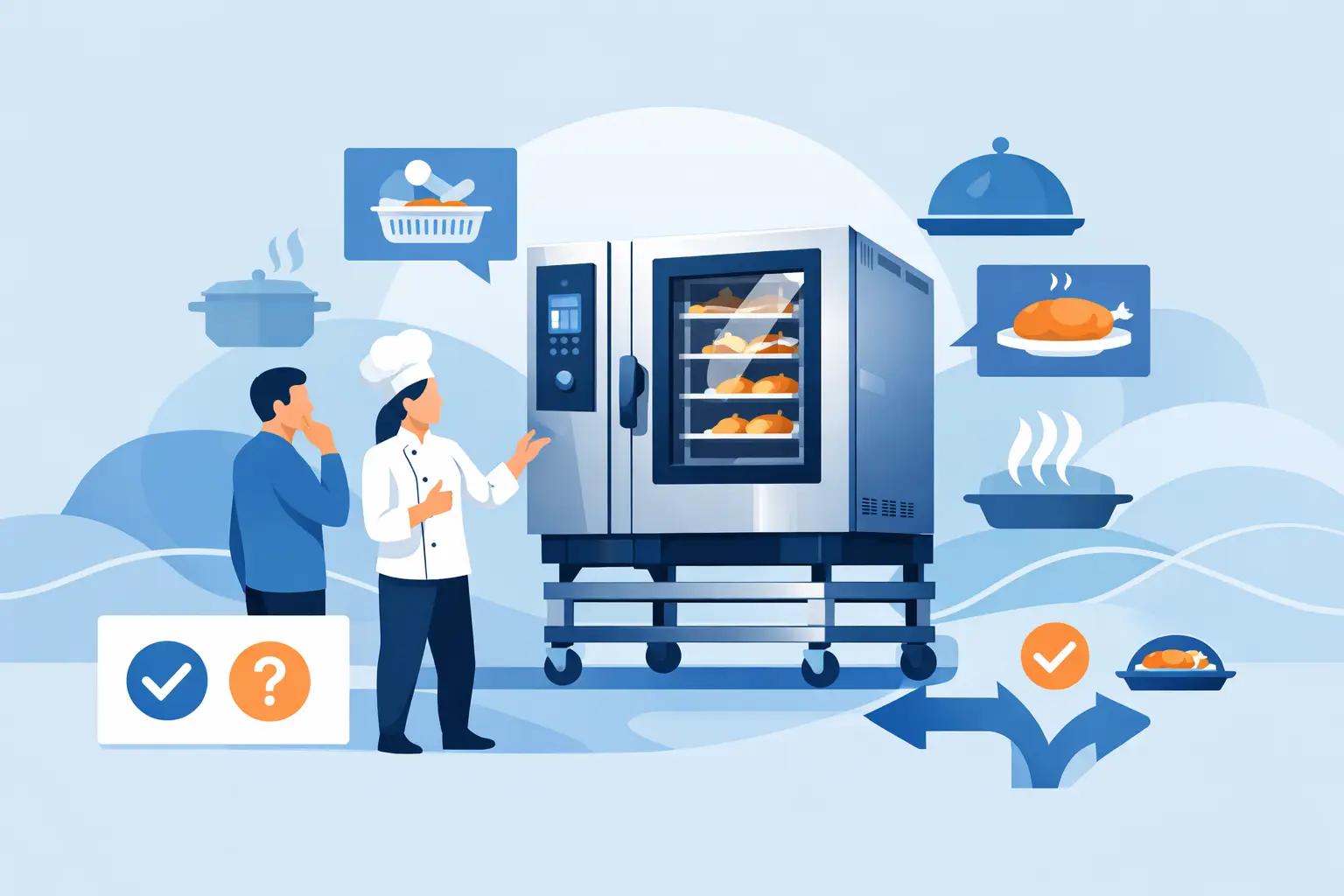
A rational cooker can remove a surprising amount of pressure from a commercial kitchen. When service is tight, labour is stretched and consistency matters across every cover, the right combi oven does more than cook – it standardises output, reduces waste and gives the brigade more control over timing. That only holds true, though, if you buy the right unit for your site rather than the one with the most features on paper.
In practical terms, a Rational cooker is built to handle multiple cooking modes in one machine. It can roast, steam, bake, regenerate and grill with a level of control that standard ovens and separate steamers struggle to match. For busy restaurants, hotels, schools and care settings, that means less equipment taking up space and fewer compromises during service.
The biggest gain is consistency. A combi oven is designed to manage heat and humidity precisely, which helps produce repeatable results across different shifts and staff members. That matters in sites where menu quality cannot depend on one experienced chef being on duty.
There is also the issue of throughput. A well-matched Rational unit can cope with high-volume cooking while maintaining product quality, whether you are turning out plated meals, batch roasting meats, baking pastry items or regenerating prepared food. The machine is only part of the equation, but in a production-led kitchen it often becomes the centre of the operation.
The right specification depends on what your kitchen is trying to achieve. A pub serving a compact menu has different demands from a hotel breakfast service, a school kitchen or a contract caterer producing volume at set times.
If your menu changes frequently and includes mixed cooking methods, programmability and flexibility matter more than headline capacity alone. A site that roasts in the morning, bakes at lunch and regenerates in the evening needs a unit that can switch tasks quickly without slowing the team down.
For institutional catering, output and reliability usually sit at the top of the list. Schools, hospitals and care homes need equipment that can produce consistent food in volume, often with simplified controls for varied staff experience. In those environments, ease of cleaning and dependable servicing can be just as important as cooking performance.
For restaurants and hotels, the balance can shift. Finish quality, speed of recovery between loads and control over humidity become more important, especially where the menu includes premium proteins, bakery items or delicate dishes. Here, buying too small creates bottlenecks, but buying too large can waste energy and tie up capital unnecessarily.
Many commercial buyers start with dimensions and budget, then consider tray count. In reality, capacity planning should come first. Not just how many trays fit into the oven, but what those trays represent during your busiest period.
A six-grid machine may look sufficient until you factor in peak service, regeneration demand and prep overlap. An operator cooking fresh and reheating prepared items in the same window will hit limits quickly if the oven is undersized. On the other hand, installing a larger floor-standing unit in a kitchen that rarely uses the extra capacity can increase running costs without adding much operational value.
This is where honest assessment matters. Look at peak covers, menu mix, production style and whether the oven will support one service period or several. If the cooker is expected to carry a large share of prep and service, sizing up often makes sense. If it is supporting a more specialist role, a smaller unit may be the better commercial choice.
For many buyers, this is the key decision. A new Rational cooker gives you the latest specification, manufacturer-backed reassurance and the longest life ahead of it. That can be the right route for new openings, high-output kitchens and operators with the budget to invest in current-generation equipment.
A professionally refurbished unit can be the smarter option where capital spend is tighter but performance still matters. The trade-off is not simply old versus new. The real question is who refurbished it, how it was tested and what support sits behind the sale.
A properly refurbished oven should be stripped, inspected, repaired where needed, cleaned thoroughly and tested to a high standard before dispatch. Cosmetic tidying is not refurbishment. Commercial buyers need confidence that heating elements, controls, seals, fans and core functions have been checked by technicians who understand the equipment properly.
That is why specialist supply matters. A refurbished Rational can offer strong value if it has been restored and tested by trained engineers, with clear aftersales support available if the site needs help later. For many kitchens, it is the most cost-effective way to access premium combi technology without paying new-equipment prices.
Not every kitchen needs every feature. It is easy to overbuy on software and underbuy on core suitability.
Automatic cleaning systems are usually worth serious consideration. In a busy commercial environment, they save labour, support hygiene standards and encourage the team to keep the machine in proper working order. Manual cleaning is possible, but in practice it is often delayed when service pressure builds.
Programmable cooking is another feature with clear value, especially for multi-site groups, production kitchens and operations managing staff turnover. It reduces variation and speeds up training. If dishes need to be repeated accurately across different users, stored cooking programmes can make a real difference.
More advanced control systems, specialist modes and enhanced monitoring functions depend on the site. Some kitchens will use them daily. Others will pay for options they rarely touch. The best buying decision is usually the one that matches your actual workflow rather than the most impressive specification sheet.
A rational cooker is a serious asset, but it is still a working machine in a demanding environment. Downtime costs money quickly. It disrupts prep, compromises service and puts pressure on the rest of the kitchen.
That is why purchase price should never be viewed in isolation. Technical backup, access to parts and engineer support have a direct effect on the total cost of ownership. A cheaper oven with weak support can become more expensive than a better-supplied unit with dependable service behind it.
Commercial kitchens should ask practical questions before buying. Who handles servicing? Are engineers familiar with Rational equipment? Are spare parts available? What happens if the unit fails during a critical trading period? These details are not extras. They are part of the buying decision.
For that reason, many operators prefer to buy from specialists rather than general equipment resellers. A specialist supplier can usually advise more accurately on model selection, installation requirements, servicing expectations and whether a refurbished unit is suitable for the site. That reduces risk before the oven even arrives.
Not every kitchen needs one. If your site has a very narrow menu, low output and limited need for steam or mixed-mode cooking, a simpler oven may be enough. Equally, if the team will not use the programming or maintain the cleaning routine properly, the machine may not deliver its full value.
There is also the question of infrastructure. Power supply, water treatment, drainage and available space all affect whether installation will be straightforward. Ignoring those points can create avoidable cost and delay.
The right answer is not always the most advanced appliance. It is the one that fits the kitchen, supports the menu and makes commercial sense over time.
A rational cooker should be judged on output, consistency, ease of use and long-term support, not just badge value. For some kitchens, a new unit is the right investment. For others, a high-quality refurbished model will deliver the better return. Island Catering Equipment works with both ends of that market, supplying new and professionally refurbished Rational ovens to operators who need performance without guesswork.
The best purchase usually comes from asking a few direct questions at the start. What volume do you really need to produce? How critical is programmability? What level of support will your site require after delivery? Get those answers right, and the cooker becomes more than a piece of equipment. It becomes one of the few machines in the kitchen that genuinely saves time, protects consistency and earns its space every day.
If you are buying for a live commercial environment, the safest move is to treat the oven as an operational decision rather than a catalogue purchase.





No account yet?
Create an Account