


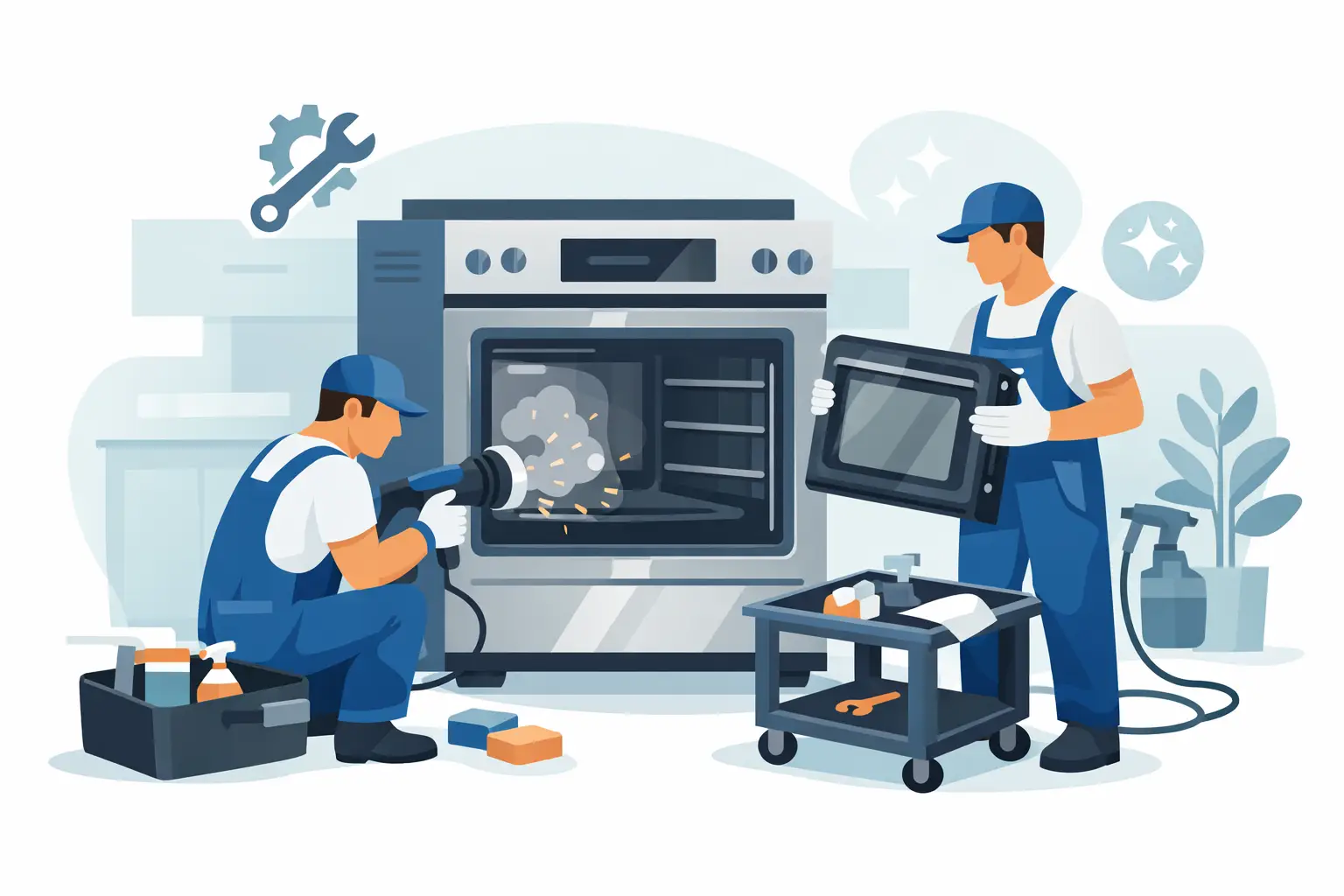
A refurbished combi oven is only good value if it performs like it should on a live service. That is why the professional oven refurbishment process matters far more than the label on the price tag. For busy commercial kitchens, the difference between a properly rebuilt oven and a quick cosmetic tidy-up is the difference between dependable output and costly downtime.
In the commercial catering sector, refurbished equipment has a clear place. It gives operators access to premium brands and high-capacity cooking technology without the full capital cost of buying new. But refurbishment is not one fixed standard. Some ovens are cleaned, switched on and sold. Others go through a structured technical rebuild carried out by trained engineers, with worn components identified, replaced where needed and performance checked under test conditions. Serious buyers need to know which type they are being offered.
At its best, the professional oven refurbishment process is a technical, workshop-led procedure rather than a simple resale exercise. The goal is to return a used commercial oven to a condition where it is fit for demanding kitchen use, safe to operate and capable of consistent results.
That starts with understanding the oven’s history and condition. Commercial ovens do not all arrive with the same level of wear. One may have come from a well-run hotel kitchen with a strong servicing routine. Another may have worked hard in a high-volume site with limited maintenance. A proper refurbishment process takes that variation seriously instead of applying the same light-touch approach to every unit.
For Rational combi ovens in particular, the work needs category knowledge. These machines combine steam, convection, controls, sensors, drainage, door systems and cleaning functions in one unit. If one part is off, performance suffers across the board. That is why experienced buyers look for refurbishment carried out by technicians who understand the platform, common fault patterns and the difference between a presentable machine and a reliable one.
The first stage is a full inspection. This is where the oven is assessed mechanically, electrically and visually before any refurbishment decisions are made. External panels, door seals, handles, hinges, control interfaces, fan systems, probes, heating elements, steam generation components and internal cavity condition all need checking.
This stage is not just about spotting obvious faults. It is also about identifying wear that may not have caused failure yet but is likely to create problems under regular commercial use. A slightly tired seal, intermittent sensor reading or worn latch might not stop the oven powering up in the workshop, but it can become a service issue once the machine is back in a working kitchen.
A credible supplier should also assess whether the oven is worth refurbishing at all. That is an important point. Not every unit should be put back into the market. If the underlying condition is poor, the right decision may be to strip it for parts rather than sell it on as a working machine.
Once the oven has been approved for refurbishment, the next stage is strip-down and deep cleaning. In a commercial combi oven, grease, limescale, carbon build-up and food residue can hide faults and affect performance. Cleaning is therefore part of the engineering process, not just a cosmetic step.
Panels are removed where needed, internal areas are accessed, and components are cleaned so they can be inspected properly. The cavity, racks, door glass, drainage areas and key working parts all need attention. A clean oven is easier to test accurately and easier to return to service with confidence.
At this point, components are evaluated for reuse or replacement. This is where refurbishment quality really starts to separate. Some parts may still have good service life in them. Others may be functional but too worn to justify leaving in place. Good refurbishment is commercial, but it should not be false economy. Saving a small amount by keeping a borderline component can lead to a much larger service cost for the customer later.
The repair stage is where the oven is brought back to operational standard. Depending on the model and condition, that may involve replacing door seals, probes, fans, filters, switches, latches, internal lighting, control components or other service items. It may also mean addressing steam-related parts, drainage issues or heating faults.
This part of the process needs judgement. Replacing every part regardless of condition would make many refurbished ovens commercially unviable. Replacing too little creates obvious risk. The right balance is to change components that affect safety, reliability, accuracy or expected service life, while keeping sound original parts where appropriate.
For buyers, this is one of the main advantages of working with a specialist rather than a general used equipment dealer. A specialist workshop knows where these ovens typically wear, what should be checked as standard and which issues are likely to return if they are only patched rather than repaired properly.
Any oven can look acceptable standing cold in a showroom. The real proof comes under test. A proper professional oven refurbishment process includes operational testing that checks whether the oven heats correctly, steams correctly, responds accurately to controls and holds stable performance.
That means running the machine, not just powering it up. Heating cycles need checking. Steam generation needs checking. Fans, sensors, controls and programme functions need checking. Doors must close correctly and maintain a proper seal. Drainage and cleaning systems should work as intended. Where relevant, safety checks and gas-related checks must also be carried out by qualified personnel.
This is where rushed refurbishment often shows up. An oven may power on, but if it struggles to reach temperature, loses steam pressure, throws intermittent errors or runs unevenly, it is not ready for a professional kitchen. Testing needs to be thorough enough to catch those faults before dispatch, not after installation at the customer site.
Presentation still matters. Commercial buyers want equipment that looks professional, especially if it is being installed in an open kitchen, hotel, school or care setting. Damaged trims, badly marked panels or neglected interiors create the wrong impression.
But appearance should follow technical work, not replace it. A polished exterior does not improve cooking results, reduce breakdown risk or protect service continuity. The strongest refurbished ovens are the ones where cosmetic finishing supports solid engineering work underneath.
The used equipment market is mixed. Some suppliers are genuine specialists with workshop capability, trained technicians and a structured sign-off process. Others are effectively traders moving stock quickly. That is why two refurbished ovens with the same model number can represent very different levels of value.
Price often reflects that, but not always clearly. A cheaper oven may still be the right buy if usage is light and the buyer accepts more risk. For most professional kitchens, though, reliability carries more weight than the lowest upfront figure. Lost service, engineer callouts, wasted food and emergency replacement costs can wipe out any saving very quickly.
For that reason, buyers should ask practical questions. Who carried out the refurbishment? What was inspected? Which parts are typically replaced? How was the machine tested? Is support available after delivery? Clear answers usually indicate a supplier that understands commercial expectations.
For restaurants, hotels, pubs, schools, bakeries and contract caterers, refurbished ovens can be a sensible way to control spend without stepping down in equipment quality. That is especially true with premium combi ovens, where the cooking capability, programmability and output can have a direct impact on labour efficiency and food consistency.
The key is to buy on process, not just price. If the professional oven refurbishment process is detailed, technically led and backed by proper testing, a refurbished oven can deliver strong value and dependable day-to-day performance. If the process is vague, the risk shifts to the buyer.
At Island Catering Equipment Co., that distinction is central to how refurbished units should be judged. In a market where every supplier can say an oven is serviced, checked or cleaned, the real question is whether the work has been done to a standard that stands up in a live commercial kitchen.
A refurbished oven should not be sold on promises alone. It should be sold on workmanship, testing and the confidence that when service starts, the machine is ready for it. That is the standard worth paying attention to.





No account yet?
Create an Account