


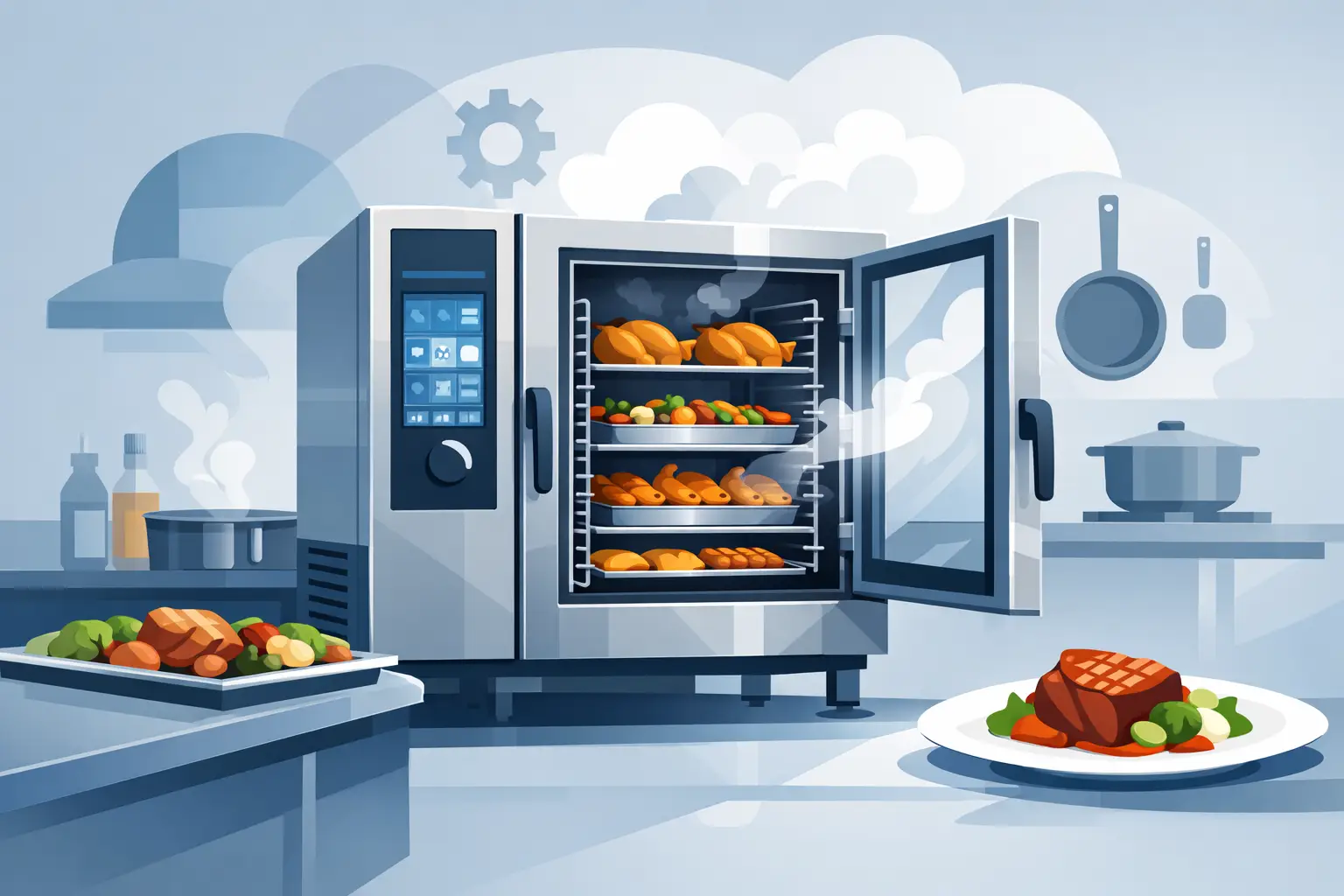
Service at 120 covers, banqueting at 300, a school lunch rush with no margin for delay – this is where a rational selfcookingcentre review needs to be useful, not theoretical. The SelfCookingCentre built its reputation in working kitchens because it reduced guesswork, tightened consistency and gave operators more control over output with fewer skilled hands on the pass.
For many buyers, the question is no longer whether Rational makes capable combi ovens. It is whether the SelfCookingCentre still represents good value against newer models, alternative brands and the growing availability of high-quality refurbished units. That depends on your menu, labour model, service pressure and budget.
The strongest case for the SelfCookingCentre is straightforward. It is designed to combine steam, convection and intelligent cooking control in one unit that can handle a wide range of production without constant adjustment by the chef. In a commercial kitchen, that matters because time spent correcting oven settings is time lost elsewhere.
In day-to-day use, the oven performs well across mixed cooking tasks. Roasting meats, regenerating plated meals, baking, steaming vegetables and finishing pastries can all be managed with a high level of consistency. The cooking intelligence was a major step forward when introduced and it remains effective for operators who want repeatable results without relying entirely on individual staff experience.
The control interface is one of the reasons the unit became so widely adopted. It is easier to train staff on than many older combi ovens, and service teams generally find it logical once they understand the operating modes. In kitchens with staff turnover, that ease of use has a direct operational value.
Capacity is another strength. Whether you are looking at a 6-grid or 10-grid machine, the SelfCookingCentre can deliver serious output from a relatively compact footprint. For sites where space is tight but demand is not, that balance is a genuine commercial advantage.
Performance is where the SelfCookingCentre continues to justify its place. It gives kitchens tighter control over colouration, moisture retention and regeneration than many standard convection ovens or basic combis. That means less shrinkage on proteins, better consistency on batch cooking and fewer service issues caused by uneven results.
For pubs, hotels, care settings and education catering, this matters as much as headline speed. A combi oven that saves ten minutes on one cycle but produces inconsistent trays is not efficient in practice. The SelfCookingCentre tends to deliver stable, repeatable output, which is why it has remained common in high-volume operations.
It also handles multi-product use well, provided the operator understands loading and programme selection. You still need sensible kitchen discipline. No intelligent oven removes the need for proper tray management, product spacing or realistic expectations around mixed loads. But compared with more basic equipment, the margin for error is narrower.
That said, there is a trade-off. If your kitchen runs a very simple menu and uses the oven for only a narrow range of tasks, some of the system’s intelligence may be more than you need. In those cases, a lower-cost combi may cover the basics well enough.
One of the practical benefits of the SelfCookingCentre is automated cleaning. In a professional kitchen, this is not a minor feature. It reduces labour time, supports hygiene standards and helps protect the cooking cabinet from the gradual build-up that shortens equipment life.
The cleaning system is generally reliable when used correctly, but it is only an advantage if staff follow the process properly. Missed cleans, incorrect chemicals or poor daily habits will create avoidable service issues over time. The oven is intelligent, but it is still a piece of hard-working catering equipment that benefits from routine care.
Maintenance is where buyers need to be realistic. Rational ovens are engineered to a high standard, but they are not low-tech machines. Sensors, steam systems, door seals, fans and control components all need attention over the lifespan of the unit. That is not a criticism – it is simply the reality of advanced commercial catering equipment used heavily.
This is why aftersales support matters almost as much as the machine itself. Buyers should consider not just purchase price, but parts availability, engineer access and the quality of any refurbishment or pre-delivery testing if buying used.
Upfront, it can be. A new Rational has always sat at the premium end of the market. Even older SelfCookingCentre units tend to retain strong value because demand remains high and the brand has a proven track record in commercial settings.
Running costs depend on utilisation. In a busy site that uses the oven across multiple dayparts, the efficiency gains can justify the spend. Better yield, reduced waste, lower training burden and faster programme execution all feed into the return on investment. In an underused site, the economics are weaker.
Energy use also needs context. A combi oven doing the work of several pieces of equipment can improve overall kitchen efficiency, even if the oven itself is a significant power user. Looking at the machine in isolation can be misleading. Buyers should judge it against the labour and equipment it replaces or reduces.
For many commercial buyers, this is the real decision point. A new unit offers the latest specification, manufacturer-backed peace of mind and a full service life ahead. If the budget is available and the site depends heavily on combi cooking, new equipment is often the cleanest long-term option.
A refurbished SelfCookingCentre can make far more sense where capital is tighter or where buyers want Rational performance without paying new-model pricing. The key issue is refurbishment quality. There is a major difference between a used oven that has been cleaned and resold, and one that has been fully inspected, repaired where required, tested properly and prepared by trained technicians.
That is where specialist suppliers matter. A professionally refurbished unit with clear testing standards and ongoing service support can offer strong value. A cheap oven with an unclear history can become expensive very quickly.
This rational selfcookingcentre review is positive, but it is not a blanket recommendation for every site. The oven suits operators who need consistency, menu flexibility and reliable output under pressure. Restaurants, hotels, event caterers, schools, care homes and production kitchens are the obvious fit.
It is also a strong option for businesses struggling with staff skill gaps. If your kitchen needs equipment that helps standardise results across shifts, the SelfCookingCentre does that well.
It is less compelling for very small sites with limited menus, low volume or minimal combi use. If you mostly reheat a narrow range of products or use the oven only occasionally, the premium may be difficult to justify. In that case, simpler equipment may be the better commercial decision.
The SelfCookingCentre earned its reputation for good reason. It is dependable, capable and still highly relevant in professional kitchens that need volume, control and consistency. It is not the cheapest route into combi cooking, and it does require proper maintenance, but in the right environment it remains a sound investment.
For buyers weighing up new against refurbished, the machine itself is only part of the equation. Stock quality, technical checks, service backup and honest guidance matter just as much. That is why many operators work with specialists such as Island Catering Equipment rather than buying on price alone.
If your kitchen needs one oven to cover serious ground and keep delivering under pressure, the SelfCookingCentre is still well worth considering. The right unit, backed by the right support, usually pays for itself in fewer headaches as much as in food output.





No account yet?
Create an Account