


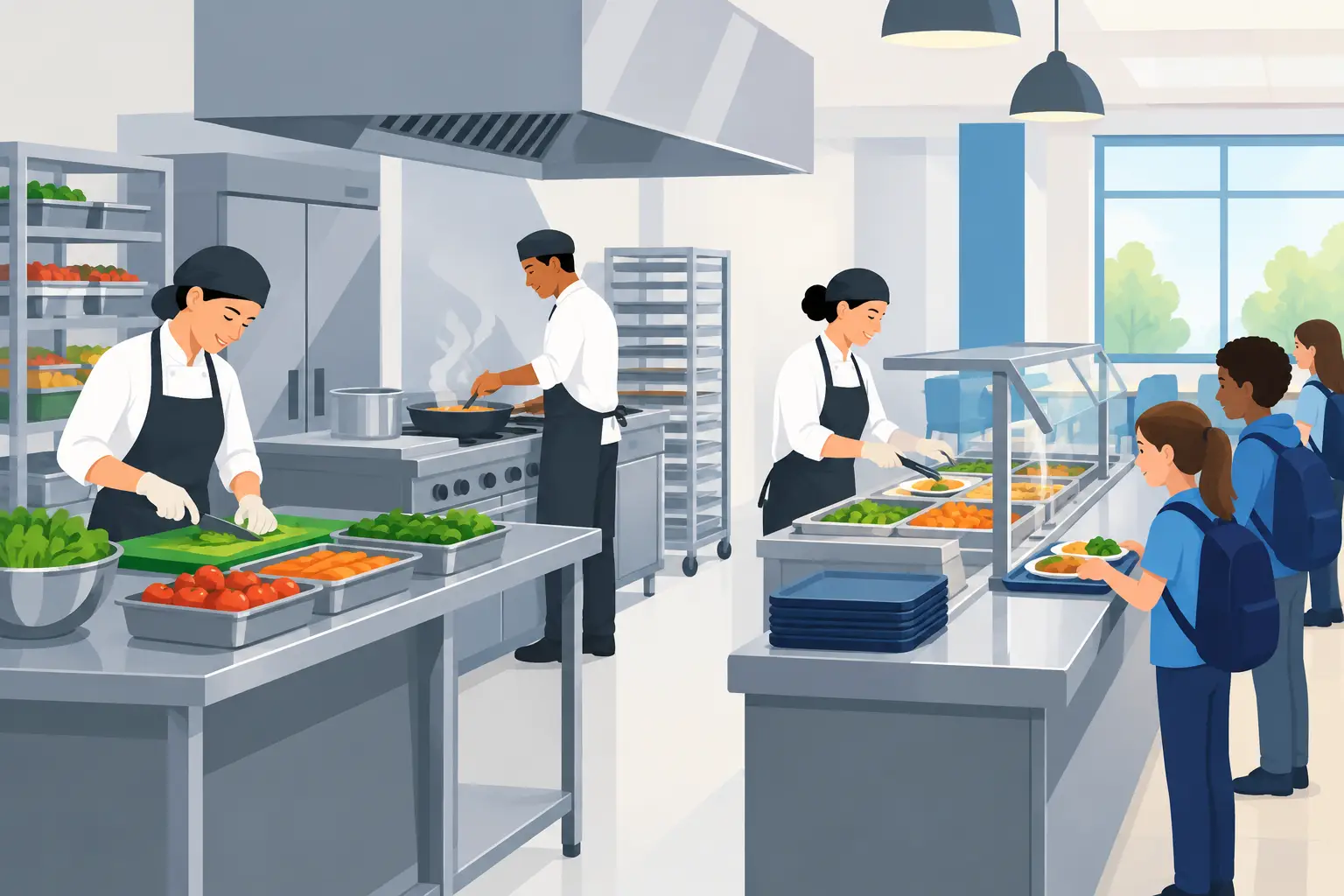
The lunch bell is fixed. Pupil numbers are fixed. What changes from one day to the next is the pressure placed on the kitchen. A well-planned school kitchen workflow gives the team enough control to produce safe, consistent meals at pace, without turning every service into a race against the clock. It is not simply a matter of buying bigger equipment. The sequence of delivery, storage, preparation, cooking, holding, service and wash-up must work as one operation.
For schools, the right workflow protects more than output. It helps maintain food quality, supports allergen controls, reduces avoidable handling and gives kitchen teams a more manageable working day. Where refurbishment or replacement is due, equipment should be selected around the actual service pattern, not just the size of the room.
Before changing a layout or specifying equipment, establish what the kitchen must deliver. The key figures are daily covers, the length of the lunch period, the number of serving points, menu type, dietary requirements and whether food is cooked on site or received from a central production unit.
A kitchen serving 300 meals across a 90-minute period has different requirements from one serving the same volume in a short, tightly managed 40-minute lunch break. The second kitchen may need more cooking capacity, faster regeneration and greater holding capacity, even though its total daily output is identical.
Look beyond average demand. Peak demand is what dictates the workflow. If a large year group arrives at once, the kitchen needs enough finished food ready to serve without holding delicate items for too long. This is where menu planning and equipment capacity need to be considered together.
The most reliable layouts move food forward from delivery to service, then move dirty ware separately towards wash-up. This reduces cross-traffic, improves hygiene control and makes it easier for staff to maintain pace during busy periods.
A typical flow should run from goods-in and dry or chilled storage, through preparation, cooking, hot holding and the servery. Used trays, plates and utensils should return through a separate route to the pot wash or dishwasher area. In smaller schools, complete separation is not always possible, but the aim remains the same: avoid raw food, clean equipment, cooked food and dirty ware competing for the same bench or access route.
Workstation positioning matters just as much as the room plan. Frequently used ingredients should be within easy reach of the preparation area. Refrigerated storage for prepared items should sit close to the cooking line, while serving utensils, trays and packaging should be available at the point of service. Every unnecessary walk creates delay when the queue is building.
Cooking everything early may appear safer, but it often creates quality problems and places unnecessary pressure on hot holding. Batch cooking allows the kitchen to produce food closer to service, replenishing counters as demand requires.
This approach works particularly well for roast meats, baked dishes, vegetables, pasta bakes and jacket potatoes, provided the team has reliable visibility of cooking times and holding levels. It also reduces waste where uptake is difficult to predict. Rather than commit all portions at the start of lunch, the kitchen can hold back part of the production until demand is clear.
The trade-off is that batch cooking requires equipment with sufficient recovery speed and staff who can follow a disciplined production plan. A combi oven is often central to this model because it can roast, steam, bake and regenerate food in controlled batches. A correctly specified Rational combi oven can replace several single-purpose cooking processes while giving teams repeatable programmes for regular menu items.
The point is not to fill every oven rack. It is to match the cooking capacity to the rate at which food leaves the servery. Overloading equipment can compromise cooking results, slow recovery and make service less predictable.
Hot cupboards, bain maries and heated servery units should protect temperature and availability, not compensate for poor production timing. Foods that hold well, such as sauces, soups and some traybakes, can be prepared earlier. Fried items, crisp toppings and certain vegetables often deteriorate quickly, so they need shorter holding periods or later production.
Make the distinction in the menu plan. A school can deliver a high-volume service without serving tired food, but only if each dish is assigned a realistic cook, hold and replenish time.
The cooking line gets most of the attention, yet many school kitchens lose time earlier in the process. Insufficient preparation tables, poorly placed sinks, limited refrigeration or cramped access to dry stores can slow the team before the ovens are even switched on.
Stainless steel preparation tables should give staff clear, hygienic working space for the volume being handled. Where raw and ready-to-eat foods are prepared on site, designated areas and clearly managed equipment are essential. Refrigerated counters or upright refrigeration close to the prep area can reduce repeated trips to a walk-in fridge, but only if they do not obstruct the route through the kitchen.
At service, look at the queue from the pupil’s point of view. The fastest line is usually the clearest one. Place main dishes first, followed by vegetables, sides and desserts, with payment or account checking positioned so it does not hold up food collection. If more than one main option is popular, separate service points may be more effective than adding more staff behind one congested counter.
Portion control also supports workflow. Standard ladles, scoops and serving utensils improve consistency, cost control and speed. They reduce decision-making at the counter and make it easier to forecast how much food should be produced.
Schools operate to immovable service times. An oven, dishwasher or refrigeration unit that fails during term time creates immediate operational risk. Equipment selection should therefore account for build quality, serviceability, energy use, cleaning requirements and access to parts, as well as purchase price.
For cooking equipment, assess the number of gastronorm trays required per batch, the available electrical or gas supply, ventilation arrangements and the skill level of the team. A unit with advanced controls can be highly effective where menus repeat and programmes are set up properly. However, a simpler specification may suit a smaller site with limited staff cover. The best choice depends on the kitchen’s actual operation, not the longest feature list.
Refurbished premium equipment can be a sensible route where capital expenditure is tight, provided the machine has been properly restored, tested and supported. The condition of core components, cleaning systems, seals, probes and controls matters far more than cosmetic appearance. Buying from a specialist supplier with technical knowledge and engineering support reduces the risk of a false economy.
Dishwashing deserves the same scrutiny. If trays and cutlery build up after the first sitting, the kitchen may not be ready for the next. Correct rack capacity, cycle times, water treatment and ventilation all affect throughput. A dishwasher should be sized around the busiest return period, not the quietest part of the day.
A kitchen cannot run efficiently if cleaning is left until the end of an exhausting shift. Daily cleaning routines should be built around how equipment is used, with clear responsibility for ovens, refrigeration, preparation surfaces, extraction filters, dishwashers and floors.
Combi ovens require particular attention. Automated cleaning programmes can save labour and improve consistency, but they still need the right chemicals, regular checks and staff who understand the cycle. Grease build-up, blocked drains and worn door seals can all affect performance if ignored.
Planned maintenance should be scheduled outside peak school periods wherever possible. Regular inspections, gas safety work and fast access to trained engineers help prevent a minor fault becoming a cancelled menu. Keep a simple record of recurring issues, service visits and parts replaced. It makes future replacement decisions more informed and gives the kitchen manager a clearer picture of whole-life cost.
The strongest workflow is one the team can follow when the usual cook is absent. Use concise production sheets that state preparation quantities, oven programmes, batch timings, holding instructions, allergen controls and expected service volumes. These are practical tools, not paperwork for its own sake.
Review the plan after busy services. If food repeatedly runs short, sits too long or causes queues at one point, adjust the production sequence, layout or menu rather than expecting staff to work faster. Small changes – an extra prep fridge, a better-positioned table, a second hot holding point or revised batch timing – can have a significant effect across a full term.
A school kitchen works best when every stage supports the next one. Invest in the capacity, layout and service support that suit your real lunchtime demand, and the team will have the control to serve pupils well when the pressure is at its highest.





No account yet?
Create an Account