


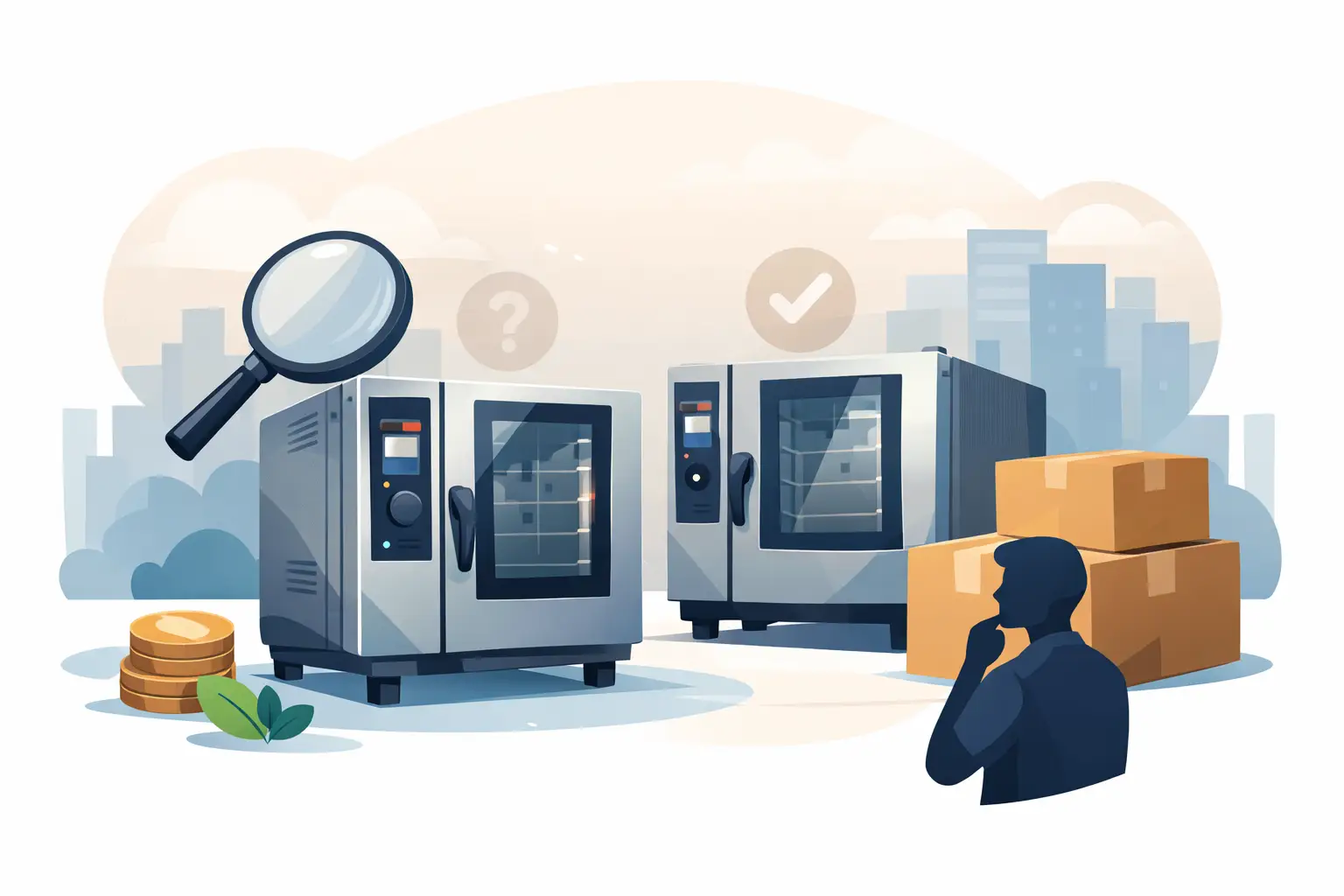
A second-hand Rational oven can save a commercial kitchen thousands, but only if the machine has been properly assessed, refurbished and tested before it goes back into service. That is the point many buyers miss. The badge on the door matters, but the condition behind the panels matters more.
For busy kitchens, the decision is rarely about buying cheap equipment. It is about protecting output while controlling capital spend. Rational combi ovens sit at the premium end of the market for good reason. They deliver consistency, speed and menu flexibility that many kitchens depend on every day. Buying used can make that technology more accessible, but the value only stacks up when the oven is technically sound and supported after the sale.
Most operators are balancing the same pressures: rising food costs, labour shortages, energy use and the need to keep service moving. A new combi oven is a major investment. If the kitchen needs Rational performance but the budget will not stretch to a brand-new unit, the used market becomes a practical route rather than a compromise.
That is especially true for independent restaurants, pubs, schools, care settings and growing catering firms that need reliable output without tying up too much cash in one piece of kit. A good second-hand Rational can provide the core cooking functions the kitchen needs at a lower entry price, leaving budget for extraction, refrigeration, prep equipment or service support.
There is also a straightforward operational case. Rational ovens are widely used, engineers know them, spare parts are available, and staff are often already familiar with the controls. In a working kitchen, that matters. Equipment that fits existing processes is easier to adopt and less likely to create disruption.
This is where buyers need to be careful. Not every used oven should be treated the same.
A second-hand Rational sold as seen is one thing. A professionally refurbished Rational is another. On paper, both may be described as used. In practice, they can be very different purchases.
An as-seen oven may have an unknown service history, worn components, poor cleaning habits from the previous site, and no meaningful testing beyond whether it powers on. That can be a false economy. The initial saving disappears quickly if the oven develops faults, struggles to hold temperature, leaks steam, or needs expensive parts shortly after installation.
A properly refurbished unit should have been inspected by trained technicians, cleaned down thoroughly, repaired where required, fitted with replacement parts where wear has been identified, and tested under working conditions. That process reduces the risk that often puts buyers off the second-hand market in the first place.
For a commercial kitchen, the distinction is simple. If you are buying for production, service and daily revenue, you do not want a gamble. You want a used oven that has been brought back to a reliable standard.
The right questions are more important than the headline price. Commercial buyers should look at condition, specification and support together.
Start with the model and capacity. A six-grid unit may suit a smaller site or support kitchen, while larger kitchens may need ten-grid or twenty-grid capacity to maintain throughput. The wrong size creates problems either way. Too small, and service becomes a bottleneck. Too large, and you may spend more than necessary while using extra floor space and utilities.
Then look at the power supply and services. Gas and electric models suit different sites, and installation requirements need checking early. There is no value in securing a competitively priced oven if the premises are not ready for it or if additional works wipe out the saving.
Service history is another key point. An oven that has been maintained properly is generally a better prospect than one with patchy records. Ask what work has been carried out, what parts have been replaced and whether the oven has been tested across its core functions, including steaming, combi cooking, fan operation, probes and cleaning systems where fitted.
Cosmetic condition matters less than internal condition, but it should not be ignored. Heavy damage to door seals, handles, control panels or the chamber can indicate hard use or poor maintenance. A clean exterior alone proves very little.
Finally, ask what support exists after purchase. Delivery, installation guidance, spare parts access and engineer back-up all have a real commercial value. When an oven is central to service, after-sales support is not an extra. It is part of the buying decision.
The strongest case for a second-hand Rational is not simply that it costs less than new. It is that it can produce a better return on investment for the right site.
If a refurbished oven gives you the cooking control, consistency and labour efficiency of a premium combi oven at a lower upfront cost, it can improve payback significantly. That is particularly relevant for kitchens replacing ageing equipment, opening a second site, or expanding production without committing full new-equipment budget.
A Rational oven can reduce the need for multiple separate appliances, improve batch consistency and speed up service across mixed menus. Those are not abstract benefits. They affect labour planning, waste, ticket times and customer experience. If buying used allows a business to access those benefits sooner, the commercial upside can be substantial.
That said, there are situations where new may still be the better route. If the site requires the latest controls, specific programmable features, maximum warranty cover or a longer expected asset life from day one, buying new can be justified. It depends on budget, usage intensity and how critical the oven is to the operation.
The used market rewards careful buying and punishes rushed decisions.
One common mistake is buying on price alone. Low-cost units from general auction channels or non-specialist sellers may look attractive, but hidden faults are where costs escalate. Steam generation issues, sensor faults, door seal failures, descaling neglect and electronic problems are not always obvious in a quick inspection.
Another risk is buying from a supplier without genuine Rational expertise. Combi ovens are specialist machines. Refurbishment quality depends on technical knowledge, not just cleaning and repainting. A supplier that understands the product properly is far more likely to identify wear points, test functions correctly and advise on model suitability.
There is also the issue of compatibility. Older units may still be perfectly usable, but buyers should think about parts support, staff familiarity and whether the model fits current production needs. An older oven at the right price can make sense. An older oven that becomes difficult to support is a different conversation.
For commercial kitchens, refurbishment standards are what turn a used oven from a risk into a sensible purchase.
A proper process should cover more than presentation. It should involve mechanical and electrical checks, component replacement where necessary, performance testing, chamber and fan inspection, door and seal assessment, and validation that the machine operates as intended under load. That is the level of work that gives buyers confidence.
This is where a specialist supplier has a clear advantage. A company focused on Rational equipment understands common faults, model differences, service requirements and the realities of installation in working kitchens. Buyers are not just purchasing a used machine. They are buying technical judgement, stock knowledge and support.
That is why many operators choose refurbished stock from dedicated Rational suppliers such as Island Catering Equipment Co. rather than taking a chance on the wider second-hand market. The lower purchase price still matters, but so does knowing the oven has been through trained hands and rigorous testing before dispatch.
If your kitchen needs dependable combi cooking, proven output and tighter capital control, the answer is often yes. But the right purchase is not simply any second-hand Rational. It is the right model, in the right condition, from the right supplier.
For a pub kitchen serving steady volumes, a refurbished unit can be a cost-effective upgrade from older, less efficient equipment. For a school or care setting, it can bring reliable production and menu flexibility without stretching public-sector budgets too far. For a restaurant group or contract caterer, it can be a sensible way to equip additional sites while keeping standards consistent.
The trade-off is straightforward. Buying used reduces upfront spend, but only if quality control is strong. Cut corners on refurbishment or after-sales support, and the saving can disappear into downtime and repair costs.
A second-hand Rational is not about settling for less. It is about buying intelligently, backing the kitchen with equipment that can do the job, and making sure the supplier can support it when service is on the line. That is the difference between a cheap oven and a good commercial investment.





No account yet?
Create an Account