



A service call in the middle of lunch prep usually starts the same way. The oven is slow to heat, cooking is uneven, or a fault code appears just as the kitchen is relying on it most. If you are asking why commercial ovens break down, the short answer is that most failures are not sudden at all. They build over time through heat, grease, limescale, electrical strain, missed servicing and day-to-day operating habits.
For a busy commercial kitchen, that matters because an oven rarely fails at a convenient moment. Downtime affects output, consistency, labour planning and food quality. The real issue is not just the repair bill. It is the disruption that follows.
Commercial ovens work under pressure for long hours, often in hot, humid environments where extraction, cleaning routines and staff turnover all play a part. Even well-built units have components that wear. Fans, door seals, probes, heating elements, igniters, control boards and drainage parts all have a service life. The harder the oven is worked, the more important routine maintenance becomes.
In many kitchens, breakdowns come from a combination of factors rather than one major fault. A fan motor may already be under strain, then grease build-up restricts airflow, then a door seal starts leaking heat. At that point the oven has to work harder to maintain temperature, and another part is pushed past its limit. That is why the same model can run reliably for years in one site and suffer repeated faults in another.
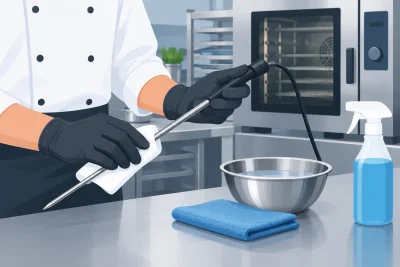
Grease, carbon and food debris do more than make an oven look neglected. They interfere with sensors, restrict airflow and force components to run hotter than they should. In combi ovens especially, blocked drains, dirty spray arms and residue around the cavity can lead to erratic performance and cleaning failures.
The trade-off is obvious. Deep cleaning takes time, chemicals and staff discipline. In a busy kitchen, it is easy for daily cleaning standards to slip when service is under pressure. But missed cleaning tends to become expensive later. Burnt-on residue is harder to remove, parts are exposed to more strain and small issues become service issues.
Automatic cleaning systems help, but they are not a substitute for proper daily checks. If operators rely on a wash cycle while ignoring filters, seals and drains, problems still develop. A cleaning programme only works if the oven is used correctly and the right chemicals are used at the right intervals.
Water quality is a major factor in combi oven reliability. In hard water areas, limescale builds up inside steam generators, pipework, valves and sensors. That build-up reduces efficiency, affects steam production and increases the likelihood of component failure.
This is one of the clearest answers to why commercial ovens break down earlier than expected. A quality oven installed without proper water treatment is already at a disadvantage. Descaling can help, but prevention is better. If filtration is missing, poorly maintained or bypassed, the oven is likely to suffer long before its time.
For sites that use steam heavily, this is not a minor issue. It directly affects cooking performance and long-term running costs.
Not every oven fault starts inside the oven. Commercial kitchens place heavy demand on electrical systems, and an unstable supply can damage sensitive components. Power surges, incorrect phase connection, loose terminals and poor installation all cause problems that may look like appliance failure when the root cause is elsewhere.
Modern ovens rely on control boards, sensors and digital interfaces. These systems improve precision, but they are less forgiving of poor power quality than older, simpler equipment. If an oven repeatedly trips, displays intermittent faults or behaves unpredictably, the issue may be with the supply rather than the machine itself.
This is where proper commissioning matters. A premium unit can still become unreliable if it is installed badly or connected to an unsuitable supply. Cutting corners at installation often costs more than doing the job correctly from the start.
Some oven parts are consumable in all but name. Door gaskets compress and split. Fans wear. Hinges loosen. Ignition components deteriorate. Temperature probes drift out of tolerance. None of that is unusual. What matters is whether those parts are checked and replaced before they trigger wider faults.
A worn door seal is a good example. It may seem minor, but escaping heat and steam force the oven to work harder and can affect cooking consistency. Over time, that extra strain can contribute to heating issues, longer cooking times and higher energy use.
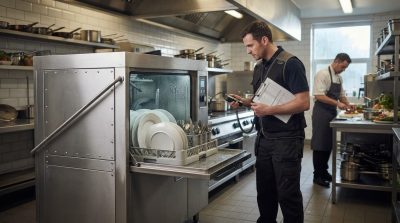
Regular servicing is not simply about finding faults. It is about catching wear before it turns into downtime. Kitchens that postpone engineer visits until the oven stops working usually pay more overall, especially if the failure happens during peak trading.
Heavy use is not a problem by itself. Commercial ovens are built for volume. The issue is heavy use without matching maintenance. A bakery running long production hours, a hotel serving breakfast through banqueting, or a school kitchen handling fixed meal times will all put different demands on equipment.
That means service intervals should reflect usage, not just the calendar. An oven used all day, every day may need more frequent inspection than one running lighter shifts. The same applies to cleaning, filter changes and water treatment checks. High-output kitchens cannot rely on minimum maintenance standards and expect maximum reliability.
Staff training has a direct impact on equipment life. Slamming doors, using the wrong cleaning chemicals, skipping rinse cycles, forcing racks into place and ignoring warning messages all shorten the life of a commercial oven.
Misuse is not always deliberate. In many kitchens, staff inherit equipment without proper handover. Features go unused, cleaning steps are skipped and fault codes are ignored because service has to continue. Over time, that creates a pattern of avoidable damage.
The better the oven, the more important correct use becomes. Advanced models offer more control, but they also rely on operators understanding programmes, cleaning systems and daily checks. Training is not an optional extra if reliability matters.
Commercial ovens do not operate in isolation. Poor extraction, high ambient heat and restricted airflow around the unit all increase stress on components. Electronics and motors do not perform well when surrounding temperatures are consistently excessive.
Grease-heavy environments make matters worse. If ventilation is inadequate, residue settles more quickly and internal cooling becomes less effective. That can shorten the life of electrical parts and lead to nuisance faults that are difficult to diagnose unless the wider kitchen environment is considered.
This is one reason repeated breakdowns should be looked at properly rather than treated as isolated repairs. If the same type of fault keeps returning, the cause may be operational rather than mechanical.
Older ovens do fail more often, but age alone does not tell the full story. A well-maintained oven with proper servicing can outperform a newer machine that has been poorly cleaned, badly installed or run with untreated water.
That is particularly relevant for buyers considering refurbished equipment. A used oven is only as reliable as the standard of refurbishment, testing and aftersales support behind it. When a unit has been restored properly by trained technicians, worn components addressed and performance tested before dispatch, it can offer strong value without the risk many buyers assume.
Island Catering Equipment Co. works with operators who need that balance – reliable output, controlled capital spend and support when issues arise.
Most oven failures can be reduced, though not eliminated entirely. Commercial kitchens should treat ovens as critical production equipment, not as fit-and-forget assets. That means matching service frequency to usage, maintaining water treatment, training staff properly and responding early when performance changes.
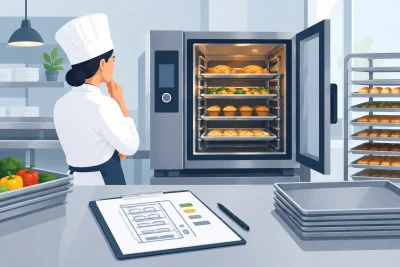
If an oven starts taking longer to heat, cooking unevenly, leaking steam, showing repeated error messages or failing cleaning cycles, do not leave it until the next outage. Early diagnosis is usually cheaper than emergency repair.
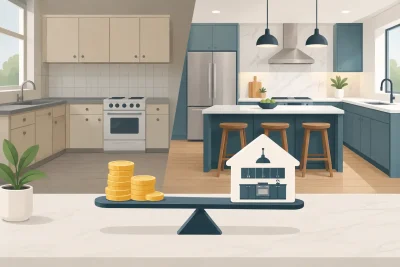
There is also a point where repeated callouts stop making financial sense. If the oven is becoming unreliable, parts are increasingly hard to source or performance is affecting service, replacement may be the more commercial decision. In those cases, expert guidance matters just as much as the equipment itself.
The most reliable kitchens are not the ones that never have faults. They are the ones that spot problems early, maintain equipment properly and choose support that keeps service moving when it counts.

No account yet?
Create an Account