


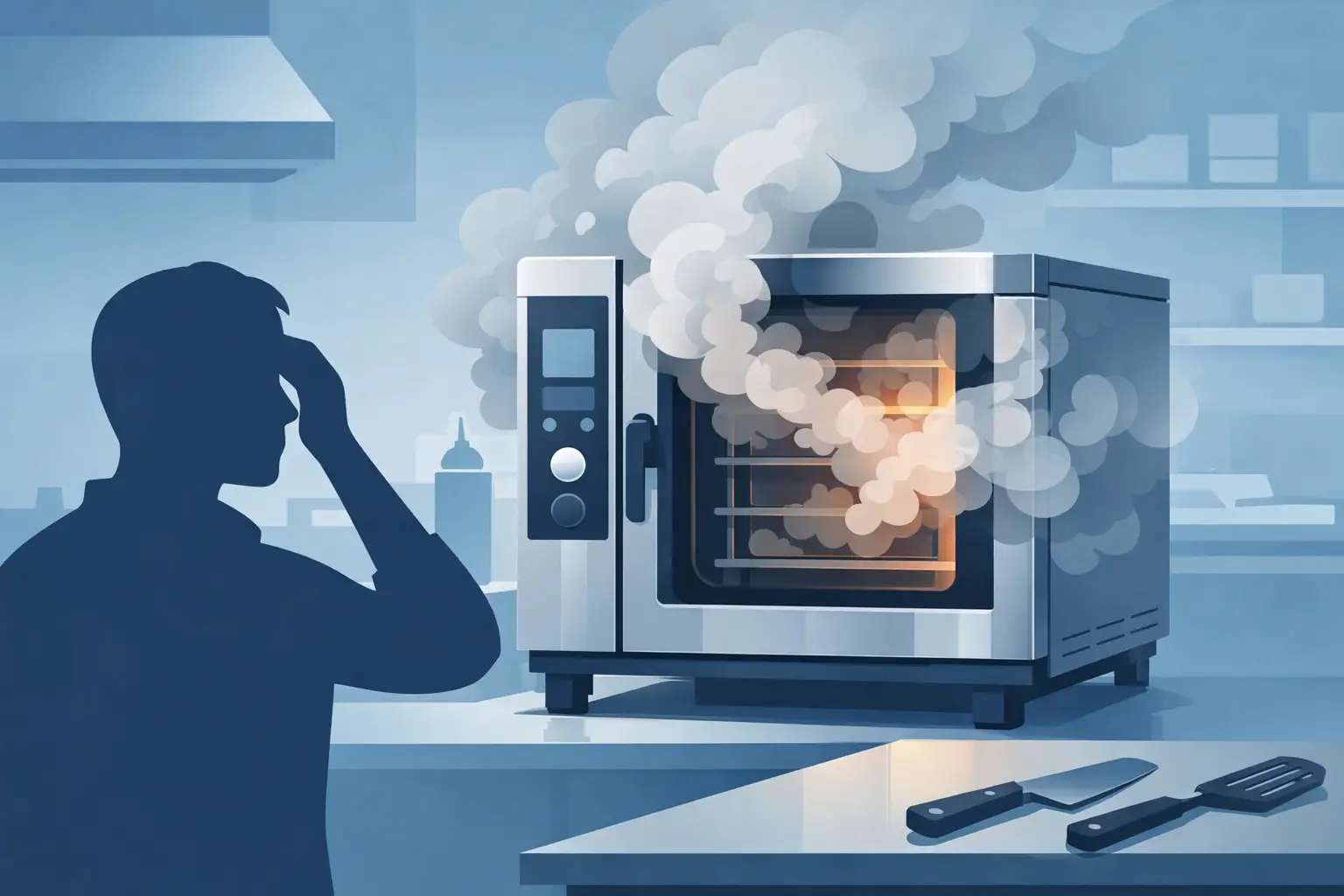
A combi oven that starts smoking mid-service gets attention for the wrong reasons. If you are asking why is my combi oven smoking, the first thing to establish is whether you are seeing normal steam and residue burn-off, or genuine smoke caused by grease, blocked drainage, poor cleaning, or a component fault.
In a commercial kitchen, that difference matters. A brief haze when running a high-temperature programme after roasting fatty meats is one thing. Persistent smoke, a burning smell, or smoke appearing during every cook cycle is something else entirely. Left unchecked, it can affect food quality, trigger call-outs, and shorten the working life of an expensive piece of kit.
Most smoking issues come back to contamination, cooking method, or maintenance. In simple terms, something inside the oven cavity is getting hot enough to burn. That may be leftover grease on the walls or fan guard, fat collecting in the drain area, residue on the heating elements, or food debris that has not been cleared properly after the last shift.
Combi ovens are designed to handle demanding output, but they are not self-managing. Even units with automatic cleaning systems still rely on correct chemical use, regular manual checks, and sensible loading practices. If these are missed, residue builds up quickly, especially in busy operations producing roasted meats, bakery items, and high-fat menu lines.
It is also worth saying that not every visible cloud is smoke. In combi mode, or when opening the door after a steam cycle, a large release of vapour is normal. Steam disperses quickly and tends to feel damp. Smoke lingers, smells burnt, and often points to grease or oil hitting high heat.
This is the most common cause by a distance. Fat splashes onto the cavity walls, door glass, fan cover, racks, and tray supports during roasting. If the oven is then run at a higher temperature, that residue starts to burn and creates smoke.
The problem is usually worse in kitchens that switch between different menu items without allowing time for a proper clean-down. A morning bakery cycle followed by meat roasting and then regeneration can leave layers of residue in places staff do not always inspect. On a combi oven, contamination spreads further than many expect because of the airflow pattern.
If grease has collected around the fan guard or internal air channels, smoke can become more noticeable and more consistent. The oven is effectively circulating burnt particles around the cavity. You may also see uneven cooking at the same time, which is a useful clue that the issue is not just surface-level dirt.
On some units, residue near heated components creates a sharper burning smell. That often points to a deeper clean being overdue rather than a simple wipe-over.
Combi ovens rely on proper drainage, especially during steam and cleaning cycles. If the drain is partially blocked with grease, limescale, or food waste, dirty water and residue can sit in the base of the cavity and continue heating. That can produce unpleasant smells and what looks like smoke, particularly during hotter programmes.
A blocked drain may also cause knock-on problems with cleaning performance. If the cleaning cycle cannot clear waste correctly, the oven remains dirty and the issue repeats.
Using the wrong cleaning products, incorrect dosing, or incomplete rinse cycles can all cause problems. Chemical residue left inside the oven can burn off during the next cooking programme. That may create fumes, strong odours, or visible smoke-like vapour.
This is one area where shortcuts cost money. Commercial combi ovens need the right chemicals and the right process. If staff substitute products or interrupt the cycle, the oven may look clean at a glance while still carrying residue in the areas that matter.
Smoking sometimes starts with one tray, not the whole oven. If oil, glaze, marinade, or rendered fat spills from overloaded containers, the liquid can hit hot surfaces and burn almost immediately. That is common when GN pans are filled too high or when staff use unsuitable trays for high-fat products.
In these cases, the oven may be technically sound. The issue is loading practice and pan choice rather than a fault with the appliance.
A damaged door gasket does not usually create smoke on its own, but it can worsen heat control and airflow inside the oven. That may make residue burn more aggressively or allow smoke and vapour to escape in a way that seems abnormal.
If staff have also reported inconsistent cooking times, moisture loss, or excess heat around the door, the seal is worth inspecting.
Less commonly, smoke can indicate a failing component such as wiring, a motor issue, or a heating-related fault. This tends to come with a distinct acrid smell rather than the usual burnt-grease odour. If that happens, the oven should be switched off and checked by a qualified engineer.
This is the category where guessing is a bad idea. Continuing to run the oven risks a larger failure, more downtime, and potentially a safety issue.
A small amount of vapour during steam cooking is normal. A brief burn-off after a cleaning cycle or after cooking especially fatty products can also happen occasionally. What is not normal is regular smoke during standard operation, recurring burning smells, smoke from the same area every day, or kitchen extraction having to work harder than usual just to cope with one oven.
If the smoke only appears at very high temperatures after roasting, the cause is usually grease or spillage. If it appears across multiple programmes, including lighter cooking cycles, the problem is more likely to be poor cleaning, drainage, or a developing fault.
Start with the basics. Inspect the cavity walls, door glass, racks, tray supports, fan cover, and base of the oven for visible grease and burnt-on debris. Check whether the drain area is clear and whether the last cleaning cycle completed properly. If your oven uses automatic cleaning, confirm the correct chemicals were fitted and that no staff interrupted the programme.
Next, look at how the oven has been used. Have trays been overloaded? Has a high-fat product been cooked without a drip tray? Has oil or marinade spilled over recently? In many kitchens, the answer sits in the previous shift rather than in the machine itself.
Also consider your extraction. Poor canopy performance will not usually make the oven smoke, but it can make normal vapour and light residue burn-off seem much worse in the room. If several appliances are creating heat at once, weak ventilation can exaggerate the issue.
If the oven has been cleaned correctly and is still smoking, the issue is likely beyond daily operator maintenance. Recurring smoke can point to hidden grease build-up behind covers, drainage issues, worn seals, sensor problems, or electrical faults that need professional attention.
For busy sites, this is not something to leave until the next quiet week. A combi oven underperforming in a commercial kitchen rarely stays a small issue. What starts as smoke and odour can become inconsistent cooking, aborted programmes, higher cleaning costs, and avoidable downtime.
Regular servicing is the sensible answer, especially on high-output Rational units working every day. A proper service does more than tick a compliance box. It picks up wear early, keeps performance stable, and reduces the chance of failure during peak trading.
The long-term fix is usually operational rather than dramatic. Clean the oven properly and on schedule, not just when it looks dirty. Use the correct chemicals. Train staff not to overload pans or let oils spill into the cavity. Check the drain area daily. Inspect seals, trays, and racks as part of routine kitchen checks.
For sites pushing serious volume, periodic deep cleaning and planned maintenance make commercial sense. The cost is far lower than losing service because an oven is full of burnt residue or running with an unresolved fault. If the unit is older or heavily used, more frequent inspections are often justified.
A combi oven should produce reliable results, not uncertainty every time it heats up. If smoke has become a pattern rather than a one-off, treat it as an early warning. That is usually the point where experienced support saves time, protects the oven, and keeps the kitchen moving.





No account yet?
Create an Account