


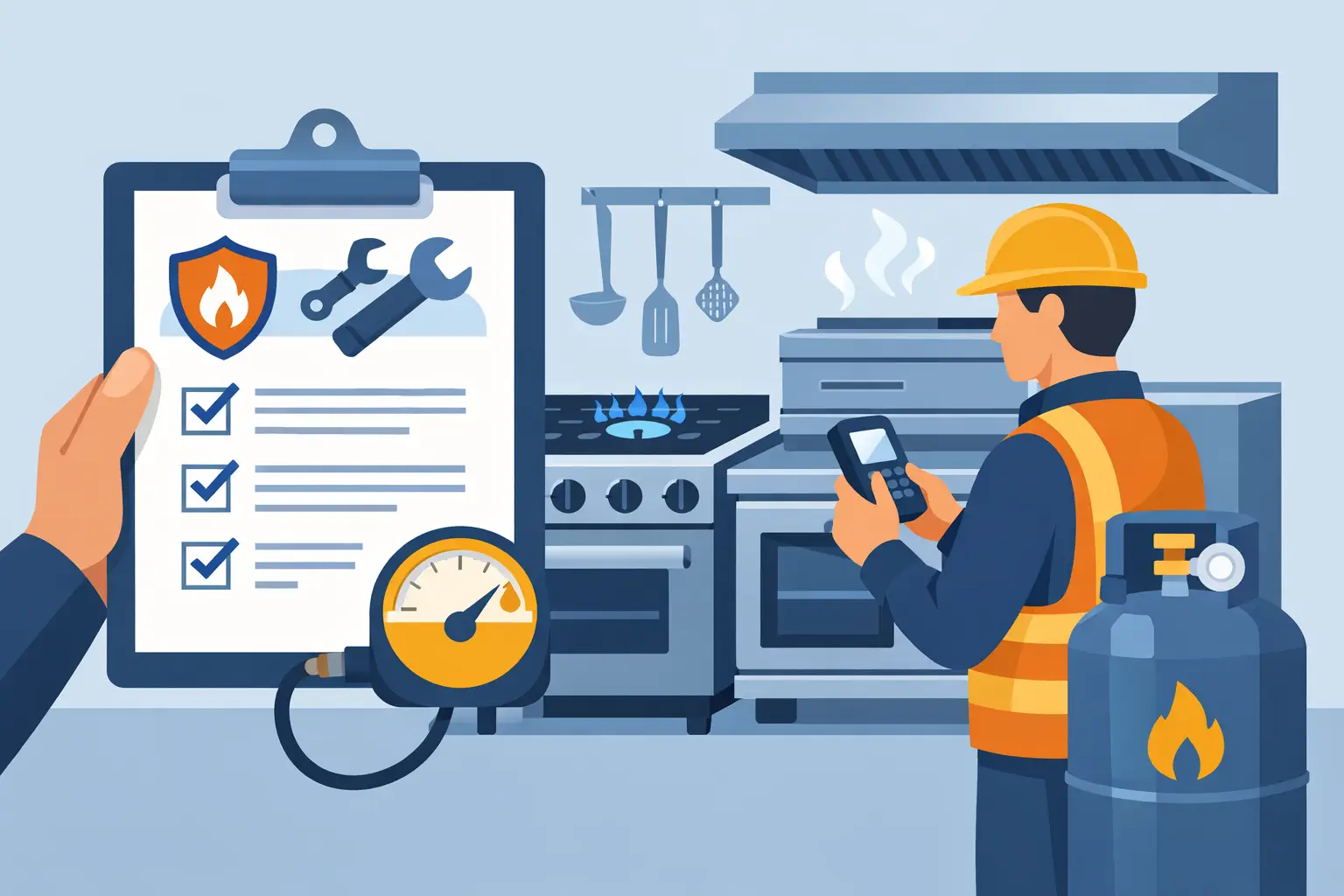
A commercial kitchen can absorb a lot of operational pressure. A missed service visit, a rushed installation or an appliance that has been moved without proper checks can all create a serious petrol risk. That is why a petrol safety certificate for catering equipment matters – not as a box-ticking exercise, but as a basic control for safety, compliance and uninterrupted service.
For restaurants, schools, pubs, hotels and contract caterers, the issue is simple. If your kitchen runs on petrol, you need to know the equipment has been installed correctly, tested properly and kept safe to use. When that part is overlooked, the cost is rarely limited to a repair bill.
A petrol safety certificate for catering equipment is a record that petrol appliances, pipework and associated installations have been inspected and tested by a suitably qualified Petrol Safe registered engineer. In a commercial setting, this usually applies to equipment such as ovens, ranges, chargrills, fryers and other petrol-fired catering appliances.
The certificate itself is evidence that checks have been carried out. It may confirm soundness testing, flue performance where relevant, ventilation suitability, burner operation, petrol pressure, flame supervision devices and the general safe condition of the appliance. The exact scope depends on the equipment on site and whether the visit relates to a new installation, an annual inspection or remedial work.
Many operators use the term broadly, and in practice that is how the trade often speaks about it. The critical point is not the label on the paperwork. It is whether the inspection has been completed properly and whether the engineer is qualified to work on commercial catering equipment.
If you operate a professional kitchen with petrol appliances, you should assume you need one. That includes independent restaurants, pub kitchens, hotel kitchens, bakeries, takeaway sites, school catering departments, care homes and large-scale institutional kitchens.
Landlords, tenants and facilities teams can all have responsibilities here, depending on the property arrangement. In some premises, the landlord is responsible for parts of the petrol installation, while the tenant is responsible for the catering equipment and its ongoing maintenance. That split is where mistakes happen. If responsibility is unclear, it needs resolving before there is a compliance problem or a safety incident.
Mobile catering is not exempt from scrutiny either. Vans, trailers and temporary event kitchens still rely on safe petrol systems. The testing approach may differ slightly because of the setup, but the need for competent inspection remains the same.
There is a legal angle, of course, but most serious operators care just as much about continuity. A petrol appliance that is not burning correctly can affect performance long before it becomes an obvious safety issue. Fryers recover poorly, ovens run inconsistently, and chefs start working around faults instead of fixing the cause.
A proper inspection can identify issues such as unstable pressure, poor combustion, failing safety devices or inadequate ventilation. Those are not minor technicalities. They affect output, reliability and the safe running of the kitchen.
There is also the insurance point. If there is an incident involving petrol equipment, insurers and investigators will want to see evidence of inspection and maintenance. Missing records can become a much bigger problem than the original fault.
A credible inspection is more than a quick glance at the appliance badge. In a commercial kitchen, the engineer should assess the installation as a working system.
That usually includes the condition of the appliance, the integrity of the petrol supply, operating pressures, signs of leaks, effectiveness of flame failure devices, burner performance and any visible issues with flues or extraction arrangements where applicable. Ventilation is especially important in catering environments because petrol appliances rely on suitable airflow to operate safely.
The engineer should also check whether the appliance is suitable for the location and whether anything has changed since installation. Kitchens evolve. Equipment gets relocated, extraction gets altered, and new appliances get added onto older pipework. What was safe two years ago may not be safe now.
In most commercial catering environments, annual inspection is the practical minimum. For many businesses, that aligns with planned preventative maintenance and makes sense from both a compliance and operational standpoint.
That said, annual does not mean only annual. If you install new petrol equipment, move existing appliances, alter the pipework or suspect a fault, checks should be carried out straight away. High-use kitchens may also benefit from more frequent servicing between formal inspections, especially where equipment runs hard every day.
The right schedule depends on the site. A school kitchen used during term time has a different usage pattern from a busy city-centre restaurant or a care home producing meals every day. The certificate interval may be similar, but the maintenance need is not always the same.
This is one area where commercial buyers need to be careful. A new appliance does not remove the need for proper petrol commissioning on site. Manufacturer quality is important, but installation standards still determine whether the unit operates safely in your kitchen.
Used equipment needs even more attention. A professionally refurbished petrol oven or fryer can be an excellent investment if it has been restored and tested to a high standard, but once it arrives on site it still needs correct installation and final checks in the live kitchen environment. A sound appliance can still become unsafe if connected to an unsuitable supply, poor ventilation or incorrect extraction.
For that reason, the best suppliers do more than move boxes. They understand the link between equipment specification, installation, servicing and ongoing support. That matters particularly with high-value petrol equipment where downtime is expensive and replacement is not a quick decision. At Island Catering Equipment Co., that service-led approach is part of the job.
In commercial catering, the same issues come up repeatedly. Appliances are connected by people without the right commercial petrol qualifications. Pipework has been altered during a refit but not properly tested. Ventilation is inadequate for the equipment load. Safety interlocks are missing or not functioning as they should.
There are also the smaller failures that add up. Blocked burner ports, damaged seals, unstable flames, grease build-up affecting operation, and missing servicing records all suggest the equipment has not been managed properly. None of these points should be treated as cosmetic in a petrol kitchen.
One practical problem is that faults often develop gradually. Staff get used to workarounds. An oven that takes longer to recover or a fryer that never seems quite right can be accepted as normal until an inspection forces a proper diagnosis.
Not every petrol engineer is the right fit for a commercial kitchen. You need a Petrol Safe registered engineer with the correct commercial catering competencies, not someone whose experience is mainly domestic boilers and cookers.
That distinction matters because commercial kitchens are more demanding environments. The appliance types are different, the petrol loads are higher and the ventilation requirements are more complex. A specialist engineer will understand not just how to test the equipment, but how the kitchen actually operates under service pressure.
Speed matters too. If an engineer identifies a fault that puts an appliance out of use, you need realistic advice on repair, parts and whether the unit is worth keeping. For many operators, the best outcome is working with a supplier that can support both compliance and equipment replacement if needed.
A petrol safety certificate for catering equipment is only useful if it reflects the real condition of the kitchen. Filing the document away is sensible. Assuming that paperwork alone keeps the site safe is not.
Good operators treat petrol safety as part of planned equipment management. They keep records, book inspections on time, act on remedial work quickly and replace unreliable units before they become a recurring risk. That approach protects staff, keeps service moving and avoids the false economy of running defective equipment for too long.
If you run a professional kitchen, the right question is not whether you can get by without a certificate. It is whether your current setup would stand up to proper scrutiny. If the answer is uncertain, it is time to get it checked before the kitchen tells you the hard way.





No account yet?
Create an Account