



That “steal of a deal” on a used fridge often feels more like a high-stakes gamble when you’re staring at a compressor and just hoping for the best. We know the anxiety that comes with trying to kit out a professional kitchen on a budget. It’s a tricky balancing act between finding a bargain and making sure your fresh ingredients stay perfectly chilled for your guests. If you’re worried about how to inspect used commercial refrigeration without getting caught out by hidden repair costs, we’re here to help you sort it quick.
We believe every chef deserves the peace of mind that their equipment will pass a health inspection every single time. Our expert guide will show you exactly how to spot a reliable bargain and avoid a total kitchen disaster. We’ll walk you through the essential mechanical checks, brand-specific tips for units like Foster or Williams, and the new 2026 EPA leak inspection rules you need to know before you hand over your hard-earned cash. It’s all about making sure your next second-hand purchase is a reliable workhorse that helps you focus on the joy of the craft and creating lasting culinary memories.
Before you even plug it in, your eyes are your best tool. Learning how to inspect used commercial refrigeration starts with looking past the shiny exterior to find the hidden wear that costs you money later. We always start with the door gaskets. If those magnetic seals are cracked or brittle, they won’t hold the cold, forcing the unit to work overtime and driving up your energy bills. It’s the most common cause of temperature loss we see in professional kitchens.
Next, run your hand along the interior walls. If you feel “bubbling” or bowing under the metal liner, it’s often a sign of a refrigerant leak trapped behind the wall. This is a major red flag for the fundamental vapor-compression refrigeration cycle, as it usually means the internal structure is compromised. We recommend being very cautious here, as these leaks are notoriously difficult and expensive to fix once they’re behind the skin.
To better understand how these components work together and why cleanliness matters, watch this helpful video:
Take a £5 note and trap it in the door as you close it. If the note slides out easily without any resistance, the magnetic gasket is shot. Replacing seals is a quick sort for us if the frame is straight, but if the door itself is warped or the hinges are sagging, you’ll never achieve the airtight fit required for a busy kitchen environment.
Pull out the bottom grate and inspect the evaporation tray. Finding mould or stagnant water here signals poor drainage and is an instant red flag for a health inspector. We also suggest checking the shelving clips. If they’re rusted shut or missing, you’ll struggle to adjust the height for your specific GN pans, which makes organizing your prep a real headache during a high-pressure service.
Once you’ve finished the visual checks, it’s time to get technical. We always ask sellers to have the unit plugged in and running for at least two hours before we arrive. This gives the system enough time to stabilize so you can see its true performance. Listening is just as important as looking when you’re learning how to inspect used commercial refrigeration. You want to hear a clean, smooth click when the compressor kicks in. If you hear a loud metallic bang or feel excessive vibration through the floor, it’s a sign the internal mounts or valves are failing.
Check the digital controller carefully. You’re looking for a steady temperature reading without any flashing error codes or “high temp” alarms. Open the door and feel the air coming from the evaporator fan. It should feel crisp and dry. If the air is humid or lukewarm, the unit is struggling to pull moisture out of the cabinet. This is vital for maintaining food safety processing rules and keeping your inventory fresh. If you’re ever worried about the reliability of a second-hand unit, you can always browse our stock of reconditioned catering equipment for peace of mind.
If the seller hasn’t turned the unit on yet, perform a pull-down test. Time how long it takes for the fridge to drop from room temperature to a steady 3°C. Pull-down time is the critical metric for compressor health; if it takes hours to move just a few degrees, the system is likely low on gas or the compressor is simply tired.
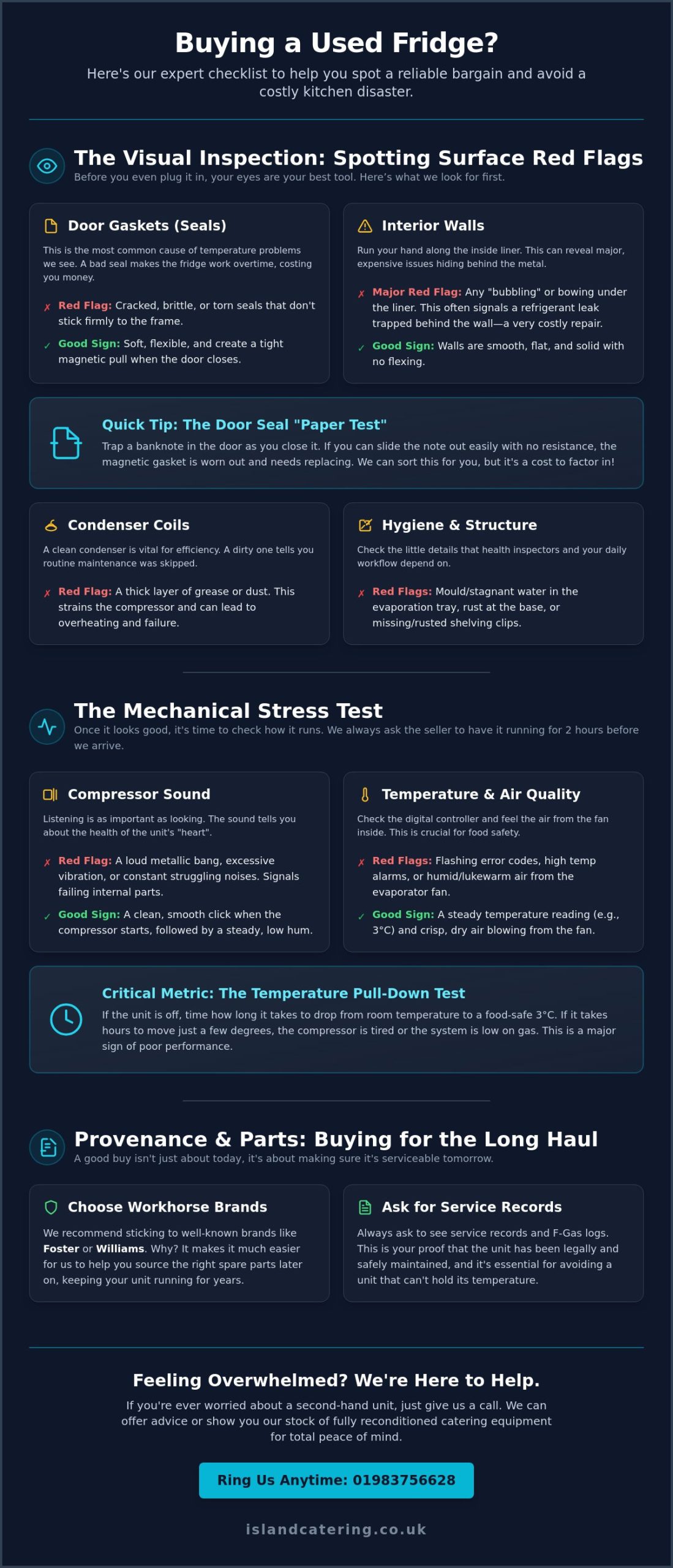
Buying a used fridge isn’t just about the price you pay today. It’s about how much that unit will cost you in six months when a fan motor fails during a busy Saturday service. We always suggest that chefs stick with “workhorse” brands like Foster Refrigeration Cabinets or Williams Refrigeration Counters. The reason is simple: catering equipment spare parts UK are much easier to source for these established names. If a door hinge snaps on a budget import from five years ago, you might be looking at a total replacement. With the big brands, we can usually get you the right part to sort quick any minor issues.
Always ask to see the service log before you commit. If a seller can’t show you a history of F-Gas checks, you should probably walk away. It’s not just about hygiene; it’s a legal requirement for many systems. Check the data plate on the back or side for the refrigerant type. If it says R22, don’t touch it. That gas is nearly impossible to service now due to environmental bans. Following proper refrigerant management is vital for both the planet and your long-term maintenance costs. Knowing how to inspect used commercial refrigeration means knowing when a unit is a ticking legal and financial time bomb.
A ten-year-old Foster often outlasts a two-year-old budget unit that was built to a price point rather than a professional standard. Quality units are designed for the high-heat, high-stress environment of a professional kitchen. If you want the savings of a second-hand unit without the “gamble” factor, check out our guide on reconditioned commercial catering equipment. It explains how a professional service and an engineer’s seal of approval can save you thousands in the long run.
Trust your gut. If a deal feels too good to be true, it probably is. Don’t risk thousands of pounds in fresh stock on a dodgy compressor that might quit during a summer heatwave. We love helping local businesses get the right kit at the right price. Ring us on 01983756628 if you need a second opinion or want a reliable reconditioned unit sorted quick for you. We’re always happy to chat and share our expertise to keep your kitchen running smoothly and your ingredients perfectly chilled.
We’ve covered the essentials today, from spotting sneaky door seal gaps to running a proper pull-down test. Knowing how to inspect used commercial refrigeration is a skill that saves you from the heartbreak of spoiled stock and the stress of emergency repairs during a busy service. By focusing on visual red flags and mechanical performance, you can find a bargain that actually works for your business. Stick with those reliable workhorse brands we mentioned; they’re much easier for us to help you maintain over the years.
If the thought of doing all these technical checks yourself feels a bit daunting, don’t worry. Our team of certified Gas Safe and electrical engineers expertly recondition every unit we sell. We ensure each fridge or freezer delivers proven performance before it ever reaches your kitchen. With nationwide delivery across the UK, we make it easy to get high-quality equipment exactly where you need it. Need a reliable fridge that won’t let you down? Ring us anytime on 01983756628 to see our latest stock and we’ll help you sort quick. We love helping chefs find the perfect kit, so let’s get your kitchen kitted out properly!
It is absolutely worth it for the significant cost savings, provided you know how to inspect used commercial refrigeration effectively. Choosing a pre-owned unit from a reliable brand allows you to invest more of your startup budget into quality ingredients or front-of-house decor. We recommend looking for reconditioned units that have been through a professional workshop to ensure they will pass your first health inspection without any unexpected drama.
A properly maintained unit typically lasts between 15 and 20 years, while neglected equipment might fail in under 10. The difference usually comes down to how often the previous owner cleaned the coils and checked the seals. If you are buying a unit that has already seen a few years of service, focus on the compressor health to ensure you are getting a machine that still has plenty of life left for your kitchen.
Worn-out door gaskets and dirty condenser coils are the most frequent issues we encounter. These might seem like small things, but they force the motor to work much harder, leading to higher energy bills and eventual failure. We also see many units with minor drainage blocks or failing fan bearings. Most of these are issues we can help you sort quick with the right spare parts if the main compressor is still strong.
You can certainly replace a compressor, but it is often the most expensive and complex repair possible. Before you buy, listen for any heavy knocking or excessive vibration, as these are signs the heart of the machine is struggling. If a compressor fails, it is often more cost-effective to ring us on 01983756628 to discuss a fully reconditioned replacement rather than attempting a high-cost repair on a very old cabinet.





No account yet?
Create an Account