


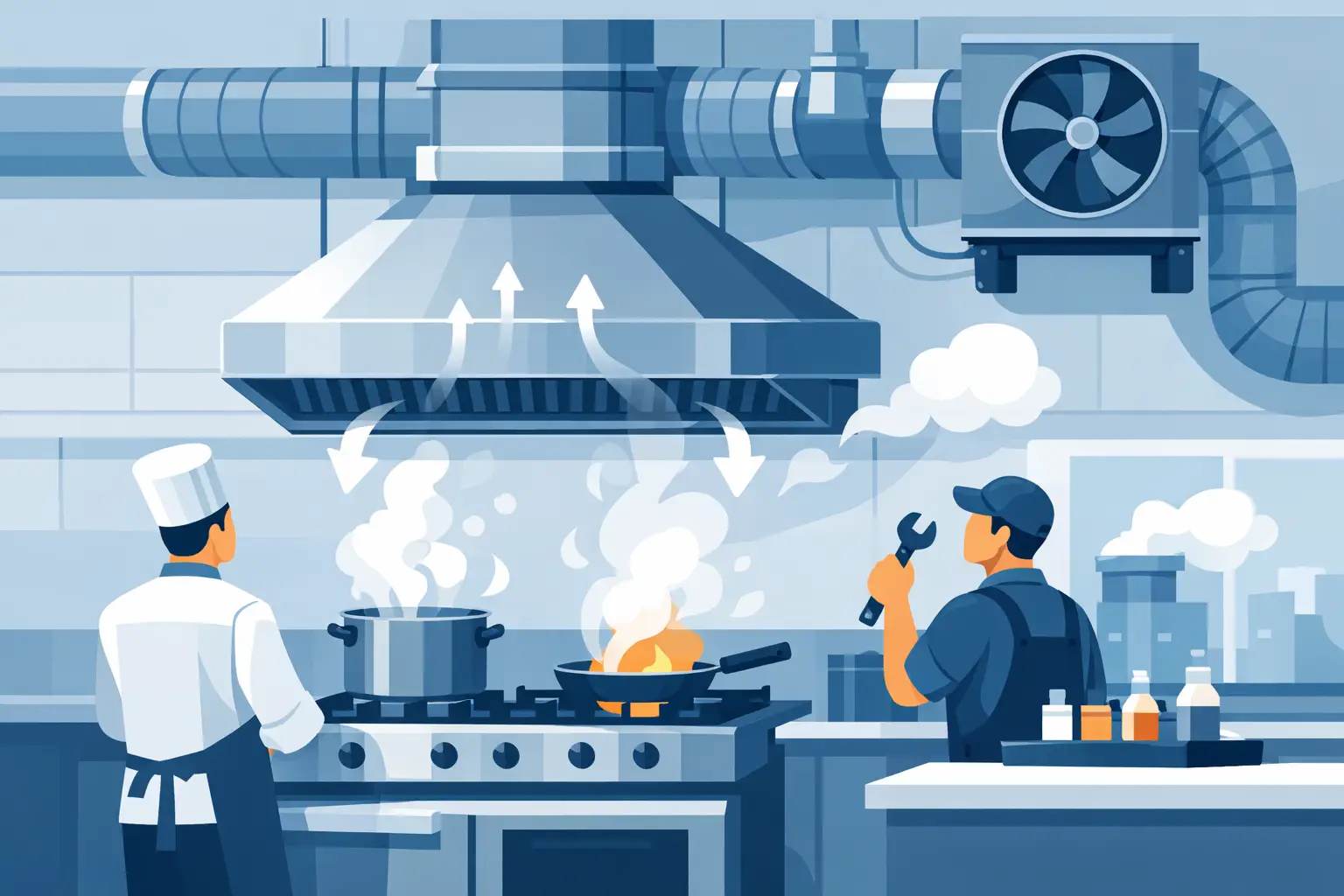
A busy pass can expose a poor extraction system in minutes. Heat builds around the cookline, grease settles on nearby surfaces, staff become uncomfortable and cooking equipment is pushed harder than it should be. Professional kitchen ventilation systems are not an optional finishing touch. They are a core part of a safe, productive kitchen design.
For restaurants, pubs, hotels, schools and high-output catering operations, the right system protects people, premises and equipment. The wrong one can create persistent cleaning issues, poor working conditions, neighbour complaints and expensive remedial work after the kitchen is already trading.
A ventilation specification should begin with the appliances beneath it. A light-duty electric range does not create the same airborne grease, heat and moisture load as a bank of gas fryers, a chargrill and a solid-top range. The canopy may look similar, but the required capture, extraction and fire protection can be very different.
This is why buying a canopy by width alone is a mistake. The canopy must overhang the cooking line sufficiently to capture the rising thermal plume, while the fan, ductwork and make-up air arrangement must move the required volume of air without creating excessive noise or draughts.
High-grease appliances deserve particular attention. Chargrills, fryers, wok burners and griddles produce grease-laden vapour that needs effective filtration and a properly designed extract route. Steam-heavy appliances, including combination ovens and warewashing equipment, may require a different approach, especially where condensation is a concern.
A Rational combi oven can reduce the footprint of a traditional cookline and deliver controlled, repeatable production, but it does not remove the need to assess ventilation. The oven model, cooking programme, room layout and local installation requirements all matter. Some applications may use specialist condensation technology, while others require a suitable extraction solution. Check the manufacturer’s installation guidance before finalising the kitchen layout.
A complete system is more than a stainless steel canopy. Each element has to work with the next, and weaknesses in one part affect the whole installation.
The canopy captures heat, smoke and vapour at source. Wall-mounted canopies are common where the cookline sits against a wall, while island canopies are used above central cooking suites. In either case, the canopy needs to be sized around the equipment layout, including any future appliances that could increase the cooking load.
Baffle filters are widely used above grease-producing equipment. They separate a proportion of airborne grease before it reaches the ductwork, helping to reduce build-up. Filters need to be accessible, correctly fitted and cleaned regularly. A blocked or neglected filter restricts airflow and increases fire risk.
The extract fan creates the airflow that carries contaminated air outside. Its performance must be calculated for the full system, not just selected from a headline airflow figure. Duct length, bends, changes in direction, filter resistance and discharge arrangement all create resistance that the fan must overcome.
Ductwork should be routed as directly as practical, with suitable access for inspection and cleaning. Long runs and unnecessary bends reduce efficiency, increase fan demand and make grease management more difficult. Where ductwork passes through a building, fire safety requirements and access provisions need careful consideration from the outset.
Extraction without adequate replacement air causes problems. The kitchen can become negatively pressurised, making external doors difficult to open and reducing the performance of gas appliances or the canopy itself. Staff may also feel cold draughts if replacement air is introduced badly.
A balanced approach supplies fresh air where it supports canopy capture without disrupting the rising air above the cookline. The aim is not simply to replace extracted air, but to maintain a comfortable and workable environment. This is especially relevant in compact kitchens with several powerful extraction points.
Controls should suit how the kitchen actually operates. Variable-speed fan controls can reduce energy use during quieter periods, although they must never compromise capture when appliances are in use. Demand-controlled ventilation may be worthwhile for larger sites with long trading hours, but it adds cost and should be specified against a realistic operating profile.
Gas interlock systems are commonly used to prevent gas appliances operating unless the extract system is running. This is a practical safeguard, not an inconvenience. Fire suppression systems may also be required depending on the cooking risk, equipment and insurer requirements. These elements should be considered early, rather than added as costly alterations later.
Commercial buyers often ask for an extraction rate, but no single figure can responsibly cover every kitchen. Required airflow depends on the type and duty of appliances, canopy geometry, cooking methods, room conditions and the duct route. A system that looks powerful on paper can still perform poorly if the canopy does not capture the plume or the supply air blows across it.
Noise is another trade-off. Increasing fan speed may improve extraction in one area, but it can also create a louder kitchen, higher energy consumption and more vibration. A correctly designed system gets the basics right first: canopy position, duct route, filtration and air replacement. Fan power then supports that design rather than compensating for it.
Discharge location matters too. Extract air must be released where odours, smoke and grease vapour will not cause avoidable issues for neighbouring properties, staff areas or fresh-air intakes. For city-centre restaurants, basements and mixed-use buildings, this can be one of the hardest parts of the project. Planning constraints, landlord conditions and environmental health requirements should be checked before equipment is ordered.
Ventilation systems collect grease because that is their job. The risk begins when grease is allowed to remain in filters, canopies, ductwork and fans. Cleaning is not a cosmetic task. It supports airflow, reduces fire risk and helps prevent odours from becoming embedded in the kitchen.
Daily or routine cleaning should cover accessible canopy surfaces and filters in line with the kitchen’s cooking volume. Heavy frying and chargrilling demand more frequent attention than low-grease cooking. Periodic specialist cleaning is required for ductwork and extract components, with records retained for insurers, landlords and compliance purposes where necessary.
When specifying a system, ask straightforward questions: Can filters be removed safely? Are there access panels in the duct run? Can the fan be reached for servicing? Will the chosen ceiling and wall finishes withstand regular cleaning? If the answer is no, the system may be cheaper to install but more expensive to operate.
Ventilation affects the rest of the kitchen more than many projects allow for. It influences appliance position, gas services, electrical loads, ceiling space, lighting, fire systems and the location of refrigeration. A poorly placed canopy can make an otherwise efficient cookline awkward to use, while excess heat near refrigeration can raise running costs and shorten equipment life.
The best time to resolve these issues is before installation. Establish the menu, expected covers, peak production periods and equipment list. Then design the cookline and ventilation arrangement together. If the menu may expand to include chargrilling or intensive frying later, allow for that possibility now rather than assuming the existing extract system can absorb the additional load.
For replacement projects, do not presume an existing system is suitable simply because it has been in place for years. New appliances, altered menus, changed building use and higher production volumes can all mean the system needs reassessment. Existing ductwork may also require cleaning, repair or resizing before a new canopy or fan is connected.
A professional ventilation package should be assessed on installed performance and support, not just purchase price. The lowest-cost option can become expensive when airflow is inadequate, ductwork is inaccessible or replacement parts are difficult to source. Specify equipment from suppliers that understand commercial cooking loads and can support the wider kitchen with practical technical advice.
Island Catering Equipment Co. works with professional kitchens that need equipment decisions to stand up to daily service, not just look right on a drawing. Where ventilation forms part of a wider kitchen upgrade, matching it properly to the cookline, output and available space helps avoid disruption once trading begins.
A well-designed ventilation system is largely unnoticed during service – and that is exactly the point. The kitchen stays clearer, cooler and easier to manage, while your team can focus on producing food at the required pace.





No account yet?
Create an Account