


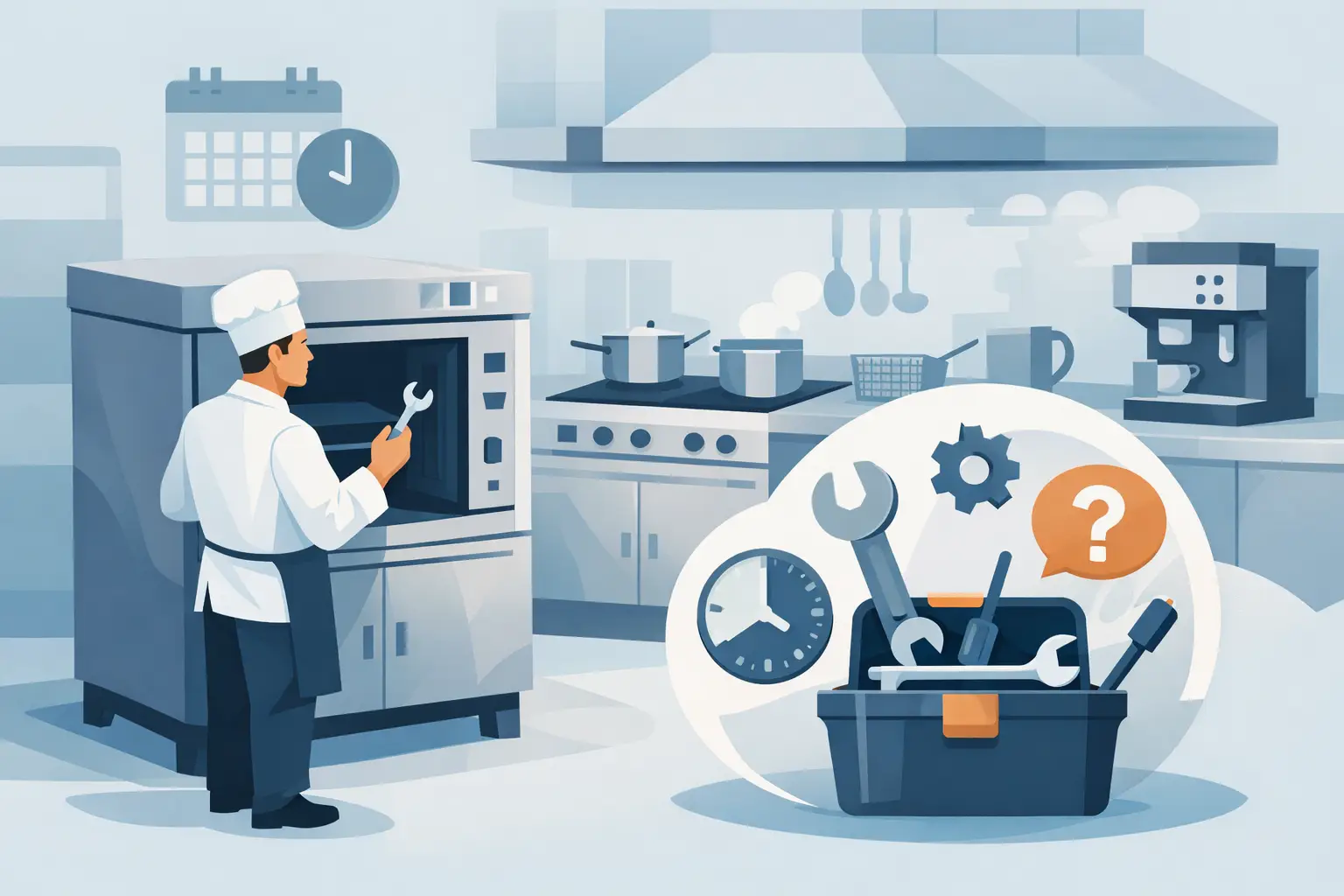
A combi oven that takes longer to reach temperature, a dishwasher leaving residue, or a fridge running constantly are not minor irritations in a professional kitchen. They are early warnings of lost output, higher utility costs and potential breakdown. When should catering equipment be serviced? The practical answer is before performance drops, with planned intervals based on the equipment type, workload and manufacturer requirements.
For busy restaurants, hotels, schools, care homes and contract caterers, servicing is not simply a compliance task. It protects the equipment your operation relies on at peak service. A planned visit is usually less disruptive and less expensive than an emergency engineer callout when a key appliance fails.
Most commercial catering equipment should receive a professional service at least once a year. That is a sensible baseline for ovens, refrigeration, warewashing equipment, fryers and cooking appliances operating in normal commercial conditions. However, annual servicing is not a one-size-fits-all rule.
High-output kitchens often need more frequent attention. A Rational combi oven producing several hundred covers a day, for example, works in a demanding environment of heat, steam, grease, limescale and repeated door cycles. Depending on usage, water quality and cleaning discipline, a six-monthly inspection can be the more commercially sensible option.
The same principle applies to heavily used dishwashers, glasswashers and refrigeration. Equipment in a hotel breakfast operation, a high-volume pub kitchen or a school catering unit may have long daily running hours and little margin for downtime. Servicing schedules should reflect those conditions rather than follow the minimum interval by default.
Gas appliances require particular care. Commercial gas equipment must be maintained by a suitably qualified Gas Safe engineer, and annual gas safety checks are essential for appliances, pipework and associated safety controls. If an appliance shows signs of poor combustion, inconsistent flame quality or pilot failure, it should be taken out of use and assessed without delay.
A new appliance still needs routine maintenance. In fact, the first year is when correct cleaning, water treatment and adjustment have the greatest influence on long-term reliability. Conversely, an older, professionally refurbished unit can provide excellent service if it has been properly restored, installed correctly and maintained on schedule.
Start by checking the manufacturer’s maintenance guidance. This sets out the work that should be completed, including inspections of seals, fans, heating elements, probes, drainage, filters and safety devices. It may also identify tasks that are required to maintain warranty cover.
Then consider your operating pattern. Equipment warrants a shorter service interval when it is used for extended shifts, runs at consistently high temperatures, is exposed to hard water, or is critical to your menu. A fryer that is only used at weekends has different requirements from one serving food throughout lunch and evening service. A backup oven also carries lower operational risk than the only combi oven in the kitchen.
A useful approach is to combine an annual full service with interim checks. For high-use equipment, a six-monthly preventative maintenance visit can identify worn parts before they stop service. This gives managers time to order components and arrange work around quieter trading periods.
A professional service should be more than a quick visual inspection. The engineer should test the appliance under operating conditions, identify wear, check safety systems and carry out the manufacturer-recommended maintenance work.
For combi ovens, this commonly includes checking the door gasket and alignment, fan motor operation, heating performance, steam generation, drain system, core probe, cleaning function and calibration where appropriate. Limescale must be taken seriously, especially in hard-water areas. Untreated scale reduces heating efficiency, affects steam performance and can shorten the life of expensive internal components.
Refrigeration servicing should focus on temperature performance, condenser cleanliness, evaporator condition, door seals, drainage and fan operation. A blocked condenser makes the compressor work harder, increasing energy use and putting stock at risk. If chilled equipment cannot reliably hold the required temperature, it is a food safety issue as well as an engineering issue.
For warewashing equipment, inspect wash and rinse temperatures, pumps, spray arms, filters, dosing, hoses, seals and drainage. Poor results are often blamed on chemicals when the underlying cause is scale, blocked jets, inadequate rinse temperature or a worn component.
Fryers need regular attention to thermostats, high-limit safety devices, burners or elements, baskets, drains and oil filtration systems. Carbon build-up and neglected oil management can affect recovery times and food quality long before the fryer stops working altogether.
Ventilation should not be overlooked. Canopies, filters, extraction systems and associated ductwork need cleaning and inspection at an interval that reflects cooking volume and grease output. A clean, functioning extraction system supports a safer working environment and helps other equipment operate more effectively in a hot kitchen.
Planned servicing reduces failures, but operators should still act promptly when equipment behaviour changes. Slower heat-up times, uneven cooking, poor steam production, unusual noises, water leaks, error codes and repeated tripping are all reasons to arrange an inspection.
With refrigeration, watch for fluctuating temperatures, excessive ice, warm cabinet interiors, alarms, condensation and compressors that appear to run continuously. With dishwashers, poor wash results, leaks, slow filling, unusual noise and low rinse temperature need attention. These faults rarely improve through continued use.
Staff should be encouraged to report changes early, rather than working around them. Recording faults in a simple equipment log helps spot repeat issues and gives an engineer useful information before attending site. It also makes it easier to decide whether repair remains cost-effective or whether replacement should be planned.
A kitchen team’s daily care routine has a direct effect on service costs. Cleaning filters, emptying and rinsing grease traps, wiping door seals, checking spray arms, removing food debris and using the correct cleaning products all reduce strain on commercial equipment.
For Rational combi ovens, following the correct automatic cleaning programme and using approved care products is essential. Skipping cleaning cycles may save a few minutes at close-down, but it allows grease and deposits to build up around critical components. That can lead to poor results, failed cleaning programmes and avoidable repair work.
There is a clear division of responsibility. Operators should complete routine cleaning and basic visual checks. A trained engineer should carry out electrical, gas, refrigeration and internal mechanical work. Attempting repairs without the right competence can create a safety risk, invalidate warranty arrangements and turn a straightforward repair into a larger job.
The best maintenance schedule is one your business can actually follow. Book routine work before seasonal peaks, major functions or school term starts, rather than waiting until the equipment is already under maximum pressure. For many operators, quieter midweek periods or planned closure days provide the least disruptive window.
Keep service records with installation dates, maintenance history, replacement parts and engineer reports. This is valuable for compliance, budgeting and resale. It is also particularly useful when managing several sites, where a central record can reveal whether certain models, locations or water conditions are causing repeat faults.
Using genuine or suitable quality replacement parts matters. Cheaper components can be tempting when a kitchen is under pressure, but poor-fit seals, probes, filters or controls may compromise performance and create another callout soon after. The right part, fitted correctly, is normally the lower-cost decision over the life of the appliance.
Servicing frequency should ultimately be based on risk: how hard the equipment works, how essential it is to service, and what a failure would cost your operation. Annual servicing is a sensible minimum for most appliances, while six-monthly preventative maintenance is often justified for high-use or business-critical equipment.
Island Catering Equipment Co. supports commercial kitchens with specialist servicing, engineer callouts, gas safety work and maintenance for leading equipment brands. The objective is straightforward: keep the equipment safe, efficient and ready for the next service, rather than waiting for a fault to dictate your schedule.
A well-timed service may not be visible to customers, but the results are: consistent food, protected stock, fewer interruptions and a kitchen that can keep trading when it matters most.





No account yet?
Create an Account