


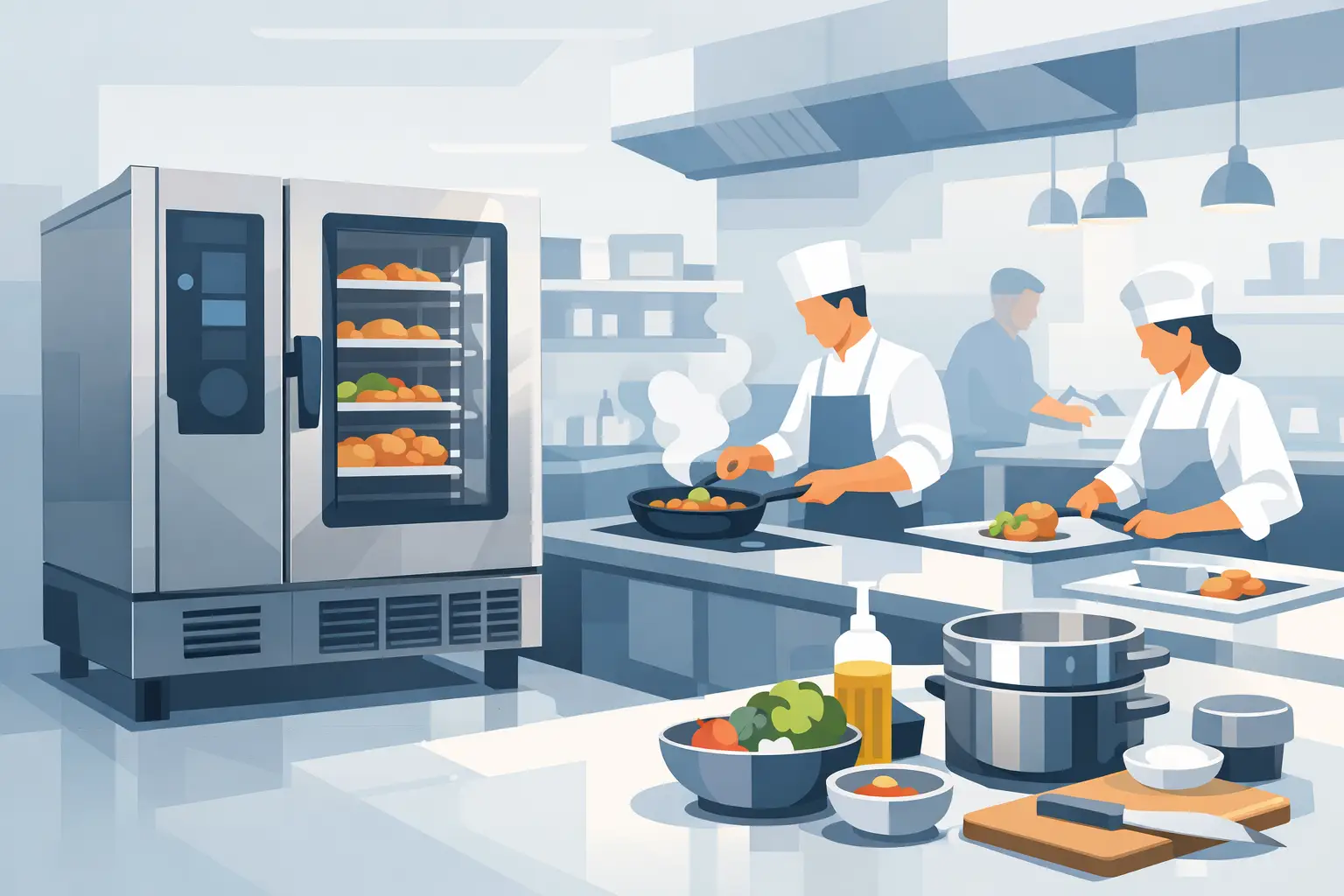
A combi oven has to earn its footprint. When one unit is expected to roast, steam, regenerate, bake and hold service together at peak times, ease of use and dependable results matter more than a long feature list. This Rational iCombi Classic review looks at where the oven delivers for professional kitchens, where buyers should set realistic expectations, and whether it is the right investment for your operation.
The iCombi Classic is Rational’s straightforward commercial combi oven range. It is designed for kitchens that want the core advantages of a high-quality combi – controlled heat, steam, humidity management and repeatable cooking – without paying for every advanced automation feature found on the iCombi Pro.
That distinction is important. The Classic is not a budget domestic-style appliance dressed up for commercial use. It is a serious, high-output oven intended for restaurants, pubs, hotels, schools, care homes, contract caterers and production kitchens. Its appeal is practical: operators retain direct control of the cooking process while gaining the consistency, capacity and build quality associated with the Rational name.
Available in a range of tray capacities and power configurations, the oven can be specified around the volume of food produced rather than simply the physical space available. A compact six-grid unit may suit a tight restaurant kitchen or pub, while larger models can support banqueting, school meals and high-volume regeneration. Choosing capacity properly is critical. Buying too small creates bottlenecks at service; buying unnecessarily large can increase capital cost, energy use and ventilation requirements.
The strongest reason to consider the iCombi Classic is its cooking versatility. Combining dry heat with controlled steam allows chefs to roast meats with a good finish while limiting moisture loss, steam vegetables in volume, bake, poach, regenerate plated components and cook mixed loads more efficiently than with separate ovens and steamers.
For a busy kitchen, the gain is not simply that the oven can perform several jobs. It is that the same cooking environment can be repeated shift after shift. Once a team has established reliable settings for a chicken crown, baked potatoes, fish portions or overnight braises, the result is less dependent on one experienced chef standing at the pass. This supports consistency across changing shifts and sites.
The manual-led approach will suit many experienced operators. Cooks can set temperature, time, humidity and fan speed according to the product and desired result, rather than relying entirely on pre-programmed intelligence. That makes the Classic particularly attractive where chefs value control, menus change regularly, or the kitchen already has established cooking methods.
It does, however, demand sound training. A combi oven can improve results considerably, but it will not correct poor loading, unsuitable trays, overcrowding or weak procedures. Teams need to understand when to use dry heat, combi heat and steam, and how humidity affects colour, yield and texture. The controls are designed to be accessible, yet proper commissioning and staff familiarisation remain part of getting value from the machine.
A full rack can produce impressive output, but loading discipline matters. Airflow must move freely around trays, particularly when roasting or baking. Similar products should be grouped where possible, and larger loads should be allowed sufficient recovery time after the door is opened. These are operational details, but they directly affect whether an oven delivers the consistency buyers expect.
For regeneration, batch cooking and prep work, the iCombi Classic can help release pressure on hobs and grills. This is often where the return becomes most visible. Rather than tying up a chef turning trays or monitoring several appliances, the oven can take on repeatable production while the brigade focuses on finishing and service.
The Classic range is well suited to kitchens that want a clear operating interface rather than excessive menu navigation. Direct controls help experienced users make quick adjustments during service, and the oven’s core functions are easy to understand once staff have been trained.
The key trade-off is between simplicity and automation. Operators who want the oven to guide production planning, automatically optimise mixed loads or provide the most advanced cooking intelligence should compare the iCombi Pro. The Pro is built for sites where automation, labour reduction and highly structured processes justify a higher purchase price.
The iCombi Classic makes more sense where a capable kitchen team wants dependable combi performance and direct command over the cook. For many independents, pubs, restaurants and smaller institutional kitchens, that is not a compromise. It is exactly the right level of technology.
A core temperature probe is a particularly valuable feature for roasting, low-temperature cooking and food safety control. It reduces guesswork when preparing joints, poultry and delicate products, helping staff cook to a target internal temperature rather than relying on timing alone. As with every probe, it needs correct placement and routine care to provide dependable readings.
Cleaning is a major consideration in any Rational iCombi Classic review because a neglected combi oven quickly becomes inefficient, unhygienic and more likely to suffer avoidable faults. The iCombi Classic incorporates automated cleaning support to reduce the time required for routine wash-down, but automatic cleaning is not a reason to ignore daily checks.
Staff should remove food debris, inspect door seals, clean the drain area, use the correct cleaning chemicals and follow the recommended cleaning cycle. These habits protect cooking performance and reduce the risk of blocked drains, poor seals and residue affecting flavour or airflow.
Water quality also matters. Scale is a common cause of heating and steam-generation problems in commercial combi ovens, particularly in hard-water areas. A correctly specified water treatment system and regular filter changes should be treated as part of the installation, not an optional extra. Saving money at the point of purchase by overlooking water treatment can lead to greater costs in callouts, parts and downtime.
The same applies to planned servicing. Rational ovens are hard-working pieces of commercial equipment, often operating for long periods at high temperatures. Preventive maintenance gives an engineer the opportunity to inspect seals, fans, probes, drainage, electrical components and gas systems where applicable before a minor issue develops into a service-stopping fault.
A new iCombi Classic gives buyers the latest available specification, a manufacturer-backed warranty position and the reassurance of a fresh installation. It is often the right route for a new opening, a multi-site rollout or a kitchen where the oven will carry a large share of daily production.
Professionally refurbished Rational ovens can offer a more cost-effective route into premium combi cooking, particularly for independent operators, replacement purchases and projects with a fixed capital budget. The value depends entirely on the refurbishment standard. Cosmetic cleaning alone is not enough.
A worthwhile refurbished unit should be inspected by trained technicians, tested under operating conditions and supplied only after worn or defective components have been addressed. Buyers should ask about the oven’s condition, servicing carried out, included accessories, electrical or gas requirements, warranty and delivery arrangements. Island Catering Equipment Co. supplies new and refurbished Rational ovens with specialist technical knowledge and ongoing service support, which is particularly valuable when choosing between sizes, fuel types and installation requirements.
The purchase price is only one part of the decision. Before committing to an iCombi Classic, assess whether the site has sufficient electrical or gas capacity, suitable water and drainage connections, correct ventilation and enough clearance for safe access and servicing. Delivery, positioning and installation can also affect the final project cost.
Energy use should be viewed against what the oven replaces. If a combi takes over work currently split between a convection oven, steamer, boiling pans and several smaller appliances, it may improve labour use and reduce unnecessary cooking steps. If it is only used occasionally for a narrow range of dishes, the financial case is less compelling.
There is also the cost of downtime. A cheaper oven with limited parts availability or no specialist support can become expensive when it fails during a busy week. For businesses relying on a combi for core production, access to knowledgeable engineers, genuine-compatible parts and prompt maintenance is part of the purchasing decision.
The Rational iCombi Classic is a strong fit for professional kitchens that need high-quality combi cooking but do not require the most advanced automated systems. It is especially suitable for operators with trained chefs, stable cooking processes and a clear need for reliable roasting, steaming, baking and regeneration from one piece of equipment.
It may be less suitable for a site looking to minimise chef input as far as possible, manage highly complex mixed production automatically or standardise detailed programmes across a large estate. In those cases, the iCombi Pro may justify its additional cost.
For the right kitchen, the Classic offers a commercially sensible balance: serious Rational performance, direct operational control and a lower entry point than the flagship range. Match the grid size to genuine production demand, protect the oven with correct water treatment and planned maintenance, and train the team to use its combi functions properly. That is how it becomes a dependable production tool rather than an expensive oven used only for roasting.





No account yet?
Create an Account