



A Saturday night service is the worst time to discover a combi oven is heating unevenly, a dishwasher is leaving residue, or an extraction system has been ignored for months. In most cases, those failures do not come out of nowhere. A proper commercial kitchen maintenance schedule catches wear early, protects output, and gives you far more control over repair costs.
For busy operators, maintenance often gets pushed behind prep, staffing, stock control and service. That is understandable, but it is expensive. Equipment that is cleaned inconsistently, descaled too late, or left unchecked after small faults will usually cost more over its life, whether that shows up as engineer callouts, lost covers, wasted energy or shortened asset life.
Commercial kitchens run hard. Ovens, fryers, refrigeration, dishwashers and extraction are all under daily pressure, often for long hours and with little downtime between shifts. That workload means even premium equipment needs structured attention. Build quality matters, but no machine performs well for long if routine care is left to chance.
A good schedule does three jobs at once. First, it reduces breakdown risk by making sure daily and weekly tasks are actually completed. Second, it helps maintain consistent performance, which matters just as much as avoiding total failure. A Rational combi oven that is no longer cooking evenly may still switch on, but it is already costing you in quality and timing. Third, it creates accountability. If tasks are assigned clearly, problems stop being everybody’s job and nobody’s job.
There is also a compliance angle. Gas appliances, ventilation, refrigeration and warewashing systems all need proper oversight. The exact requirements vary by site, but a documented maintenance routine makes it easier to demonstrate that equipment is being managed responsibly.
The right schedule is not a generic checklist pulled from the internet. It should reflect your menu, trading hours, water quality, site conditions and equipment mix. A school kitchen operating daytime service has very different demands from a high-volume hotel banqueting kitchen or a quick-service site running from morning to late evening.
Start by separating tasks into four levels: daily, weekly, monthly and planned professional servicing. Daily tasks are usually cleaning, visual checks and simple function checks. Weekly tasks go a step further, covering filters, seals, drain points and a more thorough inspection of performance. Monthly work tends to focus on wear, calibration, build-up and any early signs that a part is nearing the end of its life. Planned servicing covers the technical work that should be completed by qualified engineers.
This structure works because it matches the way faults develop. Grease build-up, scale, blocked drains, damaged seals and poor airflow rarely appear overnight. They worsen gradually, which gives you a window to act if you are looking properly.
Daily maintenance should be simple enough to complete during opening and closing procedures. If it takes too long, teams will skip it. If it is too vague, standards will drift.
For combi ovens, daily care usually means proper cleaning cycles, checking door seals, removing food debris, clearing the drip area and confirming the unit is reaching and holding temperature correctly. In hard water areas, cleaning and care become even more important because limescale can affect efficiency and internal components surprisingly quickly.
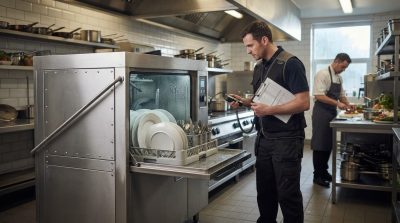
Refrigeration should be checked for operating temperature, blocked vents, damaged gaskets and signs of ice build-up where it should not be forming. Dishwashers need filter cleaning, spray arm checks and a quick look at wash results. If glasses, plates or pans are coming out poorly, that is a maintenance signal, not just a washing issue.
Fryers need regular oil management, crumb removal and inspection of any obvious carbon build-up. Extraction can be overlooked because it sits above the action, but visible grease, reduced airflow and unusual fan noise should never be left for later.
Weekly tasks are where many kitchens regain control. This is the point to inspect moving parts, test controls, clean filters properly and note any change in performance that operators may have worked around during service.
For ovens, that might include checking racks, hinges, probes, fan operation and wash systems. For refrigeration, it often means cleaning condensers where accessible and safe to do so, as well as checking door closure and temperature stability over time rather than at a single moment. Warewashing equipment benefits from deeper cleaning of internal components and checks on chemical dosing or rinse performance.
Monthly maintenance should be more deliberate. Review service logs, identify repeat issues and look at equipment that has become slower, noisier or less efficient. Small changes often point to bigger faults developing. A fryer taking longer to recover temperature, a dishwasher using more rinse aid than normal, or a combi oven producing inconsistent results all deserve attention before they become service-stopping failures.
This is where many kitchens get it wrong. Daily care belongs with the site team. Technical servicing does not.
Your staff should absolutely handle routine cleaning, visual inspections and basic operating checks. They know the kitchen, they see the equipment every day, and they are the first line of defence against neglect. But once the job involves gas, electrics, calibration, internal component replacement, advanced diagnostics or manufacturer-specific service work, it should be passed to a qualified engineer.
That matters even more with specialist equipment. Modern combi ovens, for example, are sophisticated machines with sensors, steam systems, controls and cleaning functions that need knowledgeable support. Guesswork repairs can turn a minor issue into a costly one. A commercial kitchen maintenance schedule should make this boundary clear so teams do not improvise under pressure.
Not every asset carries the same operational risk. If one stainless table has an issue, service can continue. If your primary oven, pass-through dishwasher or main refrigeration bank fails, the impact is immediate.
That is why critical equipment should be tagged for priority maintenance. In many kitchens, this includes combi ovens, refrigeration, dishwashers, extraction systems and any gas cooking line that supports peak output. If you rely heavily on one item, whether bought new or professionally refurbished, the schedule around it should be tighter than the rest of the kitchen.
This is also where buying from a specialist supplier makes a difference. Island Catering Equipment Co., for example, operates in a market where service support, spare parts access and equipment knowledge are just as important as headline purchase price. For trade buyers, that aftersales depth can shape how quickly issues are diagnosed and resolved.
The first mistake is making the schedule too ambitious. If every shift requires pages of checks, the system will fail within a week. The second is treating all equipment the same. Heavy-use assets need more attention than occasional-use machines.
Another common problem is relying on memory. If checks are not logged, they may as well not have happened. Even a simple record kept by station, appliance and date is enough to spot patterns and prove tasks are being completed.
There is also a tendency to focus only on cleaning. Cleaning matters, but maintenance is broader than hygiene. You are also looking for wear, drift in performance, blocked airflow, signs of scale, damaged seals, unusual sounds and error codes. A unit can look clean and still be heading towards failure.
Finally, many operators wait for a breakdown before arranging professional servicing. That approach can work for low-value equipment, but it is a poor strategy for core appliances with high replacement cost or direct service impact.
Keep it realistic. Assign tasks by role, not by vague responsibility. A head chef, kitchen manager, porter and opening shift may each own different checks. Put the schedule where the work happens, not buried in an office file. If possible, align tasks with existing opening, closing and quieter prep periods.
Use manufacturer guidance as the starting point, then adjust for real kitchen conditions. A combi oven in constant use may need more frequent attention than the manual suggests. A site in a hard water area may need descaling-related checks far sooner than a similar kitchen elsewhere. It depends on usage, environment and local water quality.
Review the schedule every few months. If the same issue keeps returning, the answer may be better servicing, staff retraining or part replacement rather than another tick on a sheet.
The strongest maintenance routines are not complicated. They are consistent, specific and backed by proper technical support when it is needed. If your kitchen depends on equipment performing every day, your maintenance schedule should be treated the same way – as part of service, not something separate from it.
The best time to deal with wear is before your customers ever notice it.




No account yet?
Create an Account